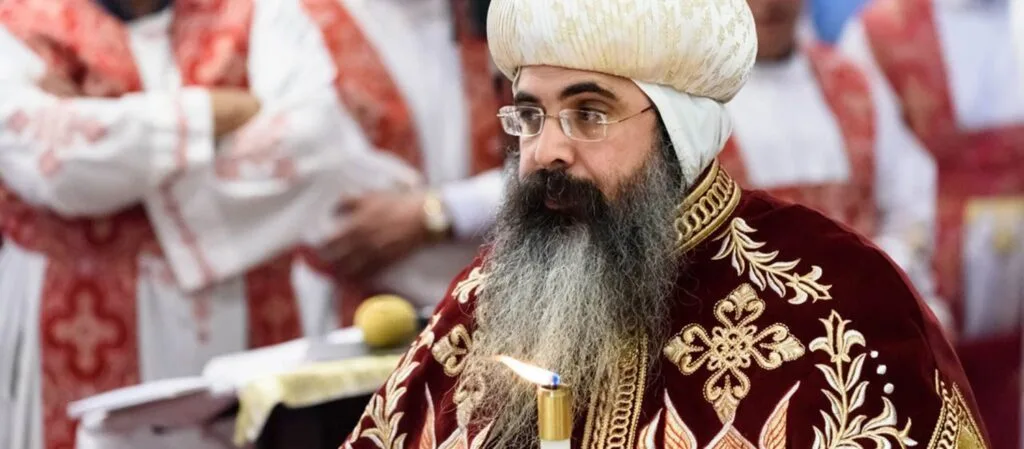
Coptic Bishop Kyrillos Explains Synod’s Suspension of Dialogue with Catholics
 By Claudette
Posted Nov 10, 2026 at 12:54 AM
Bishop Kyrillos, co-chair of the Joint International Commission for the Theological Dialogue between the Catholic and Oriental Orthodox Churches, told Aleteia that the documents published so far are only “extensive reports.” In his view, they do not state where the churches share a common faith. Representatives of the Eastern churches had raised this point for five years.
Kyrillos said he had always found the meetings good but felt they were “rather a preliminary stage.” “We never went to the second phase,” he said, asking how the churches might resolve their differences once they had identified where they are similar. “We only establish them and write them down, and then we go on.”
According to Kyrillos, the differences include those that followed the Council of Chalcedon (451) and led to the separation between the Oriental Orthodox and Catholic Churches, as well as others concerning the doctrine of purgatory, the salvation of unbelievers, the sacraments and the priesthood. He said the Commission produces a positive working atmosphere and always new reports, “but the result is much less than it should be, because we are not fully dedicated to the difficult discussions and issues.” At the Commission’s last meeting, he proposed an informal dialogue with theologians alongside the official one, a step that bears on the same call to work toward unity in practice (John 17:21).
The Joint Commission marked its 20th anniversary in January. Shortly afterward, the Synod of the Coptic Church decided to suspend the dialogue after consultations with sister churches. Kyrillos said discontent with the official dialogue was one of the main reasons for the suspension. Another important reason, he said, was the blessing statement *Fiducia supplicans*.
A decision by the Synod affirmed the Coptic Church’s position that it rejects any form of same-sex relations, and therefore considers any form of blessing for such relationships unacceptable.
The Oriental Orthodox Churches are Eastern churches that separated from the Roman Imperial Church after the Council of Ephesus (431) or the Council of Chalcedon (451). In Christology, they differ from the Catholic and Byzantine Orthodox Churches by emphasizing more strongly the unity of the divine and human nature in Christ, whereas the Council of Chalcedon taught the doctrine of two natures. The largest of the Oriental Orthodox Churches is the Coptic Church, whose main focus is in Egypt.
Source: Read the original report (translated from German)

Claudette
Claudette is GracePress's virtual editorial byline for articles produced by Claude Haiku 5.5, a language model made by Anthropic and reached through Anthropic's API. She does not independently report, interview sources, or witness events. Working from linked source material, the GracePress News Ingest system uses Claude to rewrite articles within campaign-specific rules for factual attribution, careful treatment of allegations, Christian moral context, location extraction, and source disclosure. Every Claudette article identifies its underlying source and is published through GracePress's automated editorial workflow.

