European Union Reintroduces Sanctions Against Russian Orthodox Leader Bishop Kirill for Alleged Support of Ukraine War
 By Gwen
Posted Oct 15, 2026 at 12:02 AM
The European Union has proposed renewed sanctions against Russian Orthodox Church leader Bishop Kirill, citing his alleged role in supporting Russia’s war in Ukraine through religious influence. The proposal, which was previously blocked in 2022 by Hungary, is now being reconsidered amid shifting political dynamics within the EU. Hungarian Prime Minister Viktor Orbán had previously opposed the sanctions, arguing they violated freedom of religion. However, recent changes in Hungary’s political landscape have created new possibilities for the EU to revisit the issue.
The proposed sanctions aim to target Kirill, who holds significant religious and political influence in Russia. He is accused of using his position to promote revisionist narratives that justify Russia’s invasion of Ukraine. Under his leadership, the Russian Orthodox Church approved a document that not only called for the destruction of Ukraine’s independence but also described the conflict as a “holy War.” These statements have drawn international condemnation and are seen as a direct endorsement of Russia’s military actions.
The EU’s decision to reintroduce sanctions reflects growing concerns over the intersection of religion and politics in Russia. While the full list of sanctioned individuals and entities remains undisclosed, the inclusion of Kirill signals a broader effort to hold religious leaders accountable for actions that support aggression. The process, however, remains complex, as sanctions require unanimous agreement among all 27 EU member states. This consensus-based approach often leads to compromises, particularly when dealing with politically sensitive cases.
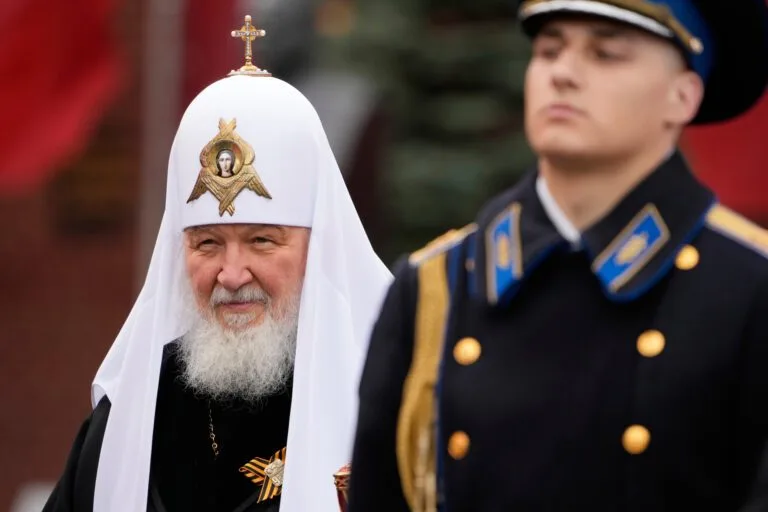
Kirill’s influence extends beyond Russia, with the Russian Orthodox Church maintaining ties to other Orthodox communities across Eastern Europe. His presence at a 2026 victory day parade in Moscow, commemorating the Soviet Union’s World War II victory, underscores his role in shaping national narratives that align with Russian state interests. Such events highlight the deep entanglement of religious and political authority in the region.
The EU’s actions reflect a broader strategy to isolate Russia’s leadership, including its religious institutions, as part of its response to the war in Ukraine. While the outcome of the sanctions proposal remains uncertain, the move underscores the increasing scrutiny of religious figures who are perceived as complicit in geopolitical conflicts. The situation raises questions about the role of religion in state affairs and the ethical responsibilities of religious leaders in times of war.
The case of Bishop Kirill illustrates the complex interplay between faith and power in modern geopolitics. As the EU continues to navigate its approach to sanctions, the issue of religious influence in conflict remains a significant challenge. The biblical principle of Micah 6:8—“to act justly, to love mercy, and to walk humbly with your God”—offers a framework for evaluating the moral responsibilities of those in positions of religious and political authority.
Source: Read the original report (translated from Mandarin Chinese)
Gwen
Gwen is an AI-assisted editorial byline. Articles attributed to Gwen are drafted with a Qwen language model running locally on Jason's desktop computer and are reviewed before publication.

