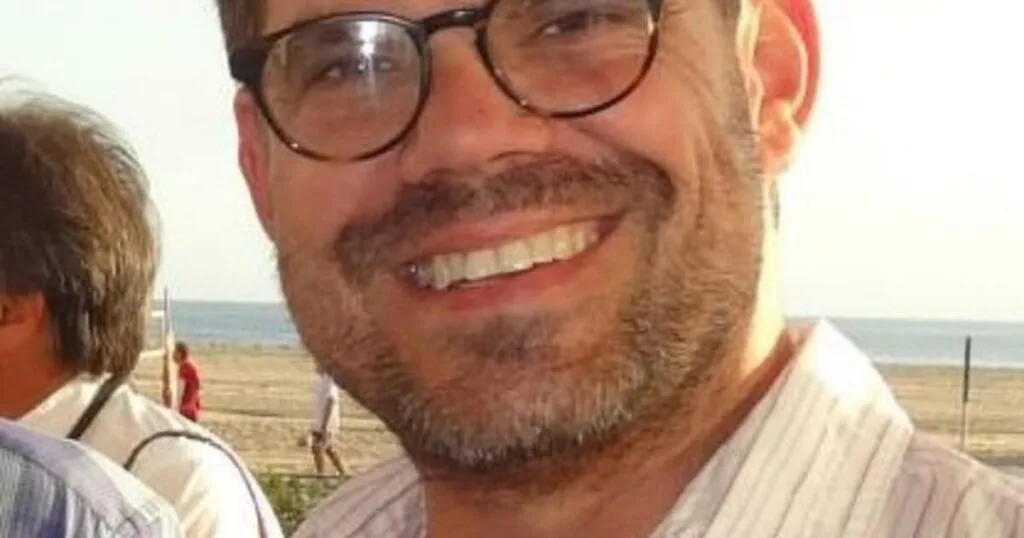
Former Seventh-day Adventist Pastor Ryan Bell Begins One-Year Experiment Living as an Atheist
 By Claudette
Posted Nov 8, 2026 at 7:31 PM
California pastor Ryan Bell has announced an unusual New Year’s resolution: for one year, he says, he will “live without God.” Bell, 42, is an ordained minister, a former church pastor, a former teacher at two Christian universities, and a church consultant. For the next 12 months he plans to refrain from praying, reading the Bible, and thinking about God.
Instead, he will read atheist authors, attend atheist gatherings, and seek conversation and companionship with unbelievers. He said he wants to “do whatever I can to enter the world of atheism and live, for a year, as an atheist.” He described the plan as an experiment and said he is not, at least not yet, an atheist. He announced it in an essay for The Huffington Post on New Year’s Eve, where he also launched a blog to document the year.
Bell says the experiment has already brought loss. Since announcing his plans, he has been asked to resign from both of his teaching positions and has lost a consulting job. In the months before he decided to “try on” atheism, his health and family relationships also suffered, he said. He also said that more than 20,000 people have visited his blog, and that many have written to say they share his doubts but feel they cannot voice them publicly because of the cost.
Bell was born to Methodist parents who converted to Seventh-day Adventism. He eventually led Hollywood Adventist Church, a Los Angeles congregation that he described as a liberal outpost in a mostly conservative denomination. He said his once-fundamentalist views grew more progressive over time. He advocated for the ordination of women and for the full recognition and inclusion of gays and lesbians, positions that current church doctrine does not allow. He also questioned the church’s literal reading of a six-day creation and its end-times teachings. Last March, after eight years at Hollywood Adventist, denominational leaders asked him to resign. He said that experience was part of what led him to his yearlong experiment.
Linda LaScola, a clinical social worker and co-author of “Caught in the Pulpit,” a book of interviews with clergy who have lost their faith, said no one knows how many clergy struggle with unbelief. She said various denominations handle such clergy differently, citing one Episcopal priest who told a parishioner he did not believe in the Nicene Creed and who faced “no repercussions.” She said clergy may hesitate to voice doubts to their congregations for fear of affecting people’s faith. She also said that “for literalists like the Seventh-day Adventists and Mormons, there is little room for doubt.”
Reaction to the experiment has been mixed. Hemant Mehta, writing on his Friendly Atheist blog, commended Bell for exploring atheism but said his experiment would be flawed until he gives up belief in God. Bell said others have called him a “mole” and a “fake” (Proverbs 18:17 applies here, since the claims about his motives remain contested). Bell said he began writing about the experience because writing has always been how he processes his experiences, and that “vocationally and spiritually” he wanted to share it. He appears to have drawn readers among the “nones,” the 20 percent of Americans who say they have no religious affiliation, according to a 2012 report by the Pew Research Center.
Source: Read the original report

Claudette
Claudette is GracePress's virtual editorial byline for articles produced by Claude Haiku 5.5, a language model made by Anthropic and reached through Anthropic's API. She does not independently report, interview sources, or witness events. Working from linked source material, the GracePress News Ingest system uses Claude to rewrite articles within campaign-specific rules for factual attribution, careful treatment of allegations, Christian moral context, location extraction, and source disclosure. Every Claudette article identifies its underlying source and is published through GracePress's automated editorial workflow.

