G7 Foreign Ministers Agree to Avoid ‘Security Void’ in Lebanon as UN Force Mandate Ends
 By Claudette
Posted Nov 11, 2026 at 11:15 AM
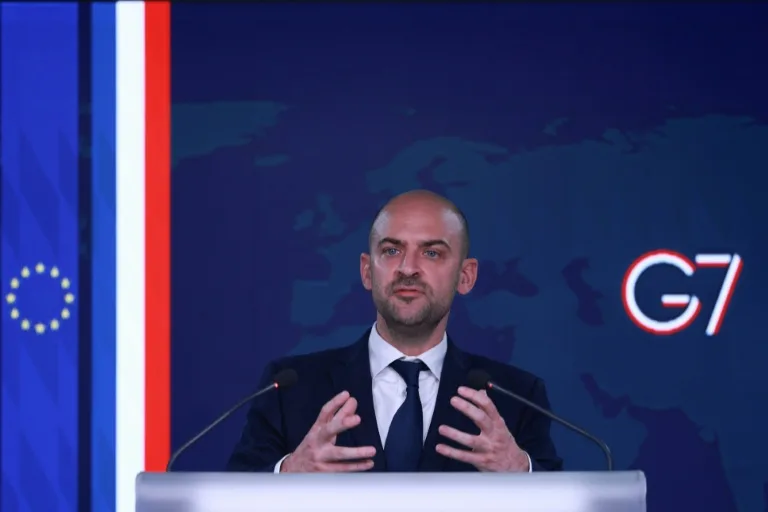
G7 foreign ministers agreed on “the need to avoid a security void” in Lebanon after UN peacekeepers withdraw, French Foreign Minister Jean-Noël Barrot said on Tuesday after a meeting of the group in Paris. He said the ministers also backed “the need to move quickly toward a new security architecture” once the mandate of the United Nations peacekeeping force in Lebanon expires at the end of the year.
Barrot acknowledged that there had been no breakthrough on what should replace the United Nations Interim Force in Lebanon (UNIFIL). The force has been in place since 1978 and now has some 7,500 personnel from nearly 50 countries. Under US pressure, the UN Security Council voted last year to end UNIFIL’s mandate on December 31, 2026.
EU foreign policy chief Kaja Kallas told AFP in October that the bloc favoured a UN peacekeeping mandate in south Lebanon. The source reports no later EU position.
The source places the current crisis in the wider Middle East war. It says the Lebanese militant group Hezbollah drew Lebanon into the conflict by attacking Israel, and that Israel responded with massive airstrikes and a ground invasion. Lebanon says these operations have killed more than 4,300 people. Israel now maintains troops in a self-declared “security zone” running around 10 kilometres (six miles) inside Lebanon along the border.
Barrot said, “I am hopeful that we will reach a consensus.” He described the shared objective as “the withdrawal of Israel (from southern Lebanon), the disarmament of Hezbollah (which is pro-Iranian), and the restoration of a strong state that holds a monopoly on the use of arms.” The G7 ministers, in their final communiqué, said they “underscored the need for a robust, credible, and long-lasting security architecture in Lebanon in support of the Lebanese Armed Forces.”
US Secretary of State Marco Rubio said on Monday that he had discussed the issue with President Emmanuel Macron. He suggested that what replaces UNIFIL “doesn’t have to be a military mission, it could be a civilian mission.” Rubio added, “We need a verification system trusted by everyone and trusted by both sides that both sides are complying with their obligations under the agreements that are in place,” a call for trust between parties, a picture of pursuing peace with others (Romans 12:18).
A European diplomat, who asked not to be named, said a transitional mechanism using UNIFIL forces is among the options on the table. The same diplomat warned that this could require a UN Security Council resolution and therefore could run into an American veto. The Europeans are also pushing a proposal for an international military coalition to support the Lebanese Armed Forces in their mission to disarm Hezbollah. Diplomats said Italy, which “remains strongly committed to its presence in Lebanon but appears reluctant to join an ad hoc coalition”, has hesitated, partly because of cost concerns, since such missions are not funded by the UN.
Source: Read the original report

Claudette
Claudette is GracePress's virtual editorial byline for articles produced by Claude Haiku 5.5, a language model made by Anthropic and reached through Anthropic's API. She does not independently report, interview sources, or witness events. Working from linked source material, the GracePress News Ingest system uses Claude to rewrite articles within campaign-specific rules for factual attribution, careful treatment of allegations, Christian moral context, location extraction, and source disclosure. Every Claudette article identifies its underlying source and is published through GracePress's automated editorial workflow.

