Germany’s food banks report 50% rise in applications for services in 2022
 By Gwen
Posted Nov 5, 2026 at 2:08 AM
A member of a women’s association in Berlin, Zabine Vert, read about a group of volunteers in New York City who distributed unsold food to people in need. She and other members proposed doing the same in Germany. In an interview with DW, she said, “We have put forward the idea of doing the same here. We wanted to provide food for people who cannot afford to buy it.”
Thirty years ago, she and the other members of the organization established the first Tafel in Germany. The name is a German word meaning “table.” That first food bank grew into the country’s largest and became an independent registered association. The idea spread across Germany, and the source reports 936 food banks in all states.
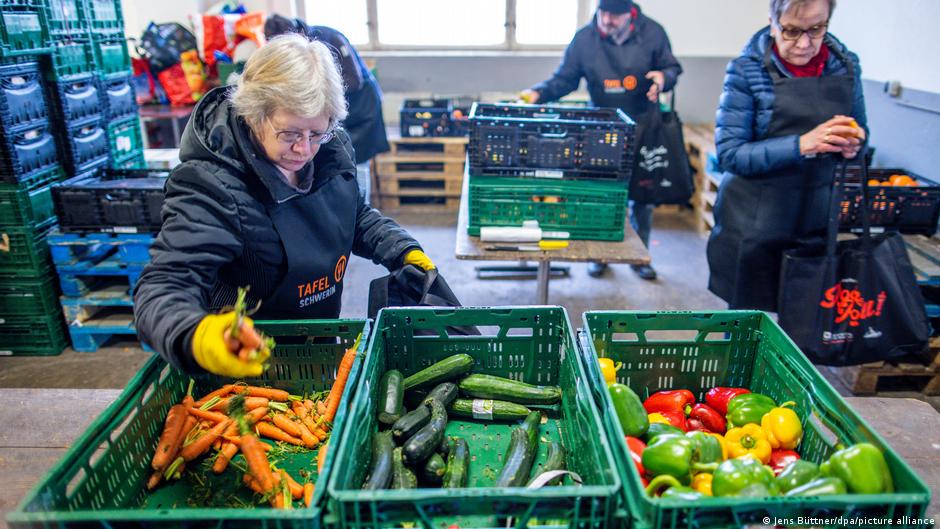
Tafel volunteers collect food from grocery stores, retailers and bakeries several times a week, and sometimes daily, including items that are still edible but would otherwise be discarded. The source describes two aims: reducing the waste burden on shop owners, and supporting people living in poverty, which it calls the more important objective. Some supermarket chains deliver surplus goods to food banks in the evening once or twice a week. Volunteers sharing food with the needy reflects the practice of sharing bread with the hungry (Isaiah 58:7). Before receiving food, people must show a document from the Social Welfare Office. Vert described the approach with a smile: “We apply the classic Robin Hood principle by taking from the rich to give to the poor, but legally.”
The source says German food banks serve not only displaced persons but also many families, parents, pensioners and refugees in poor economic conditions. Some of these households, it notes, need help covering important expenses such as school textbooks for their children. Figures from Tafel Deutschland, the German food bank union, show a 50 percent increase in applications for food bank services in 2022 compared with 2021. The report also says 30 percent of food banks received twice the number of applications they had previously received. The source states that food banks served 2 million beneficiaries last year.
The source cites statistics showing that 13.8 million people in Germany live on or below the poverty line, even though Germany is one of the richest nations in the world. It explains that poverty in Germany is generally described as relative poverty rather than absolute poverty, meaning people are not facing imminent famine. Instead, the report links poverty in Germany to exclusion from social activities, children going without lunch, lack of vacation travel and limited access to basic education.
Jochen Broll, president of Tafel Deutschland, said the food banks began an initiative to provide food and ease hardship for those affected. He told DW that poverty was once measured by a kind of scale, but the aim now is to measure social conditions and developments. He said that when the first food bank was set up in 1993, many people believed poverty did not exist in Germany and that anyone willing to work could find a job. He said that view has changed significantly over the past 30 years. Broll also said food banks, which operate in nearly every city, make poverty more visible across the country.
Paul Husson, a food bank volunteer in Bonn, said a single visit to a German food bank can show how it works. He supervises a food bank in the village of Iturf, where 56 volunteers distribute goods on Monday and Tuesday. Husson asserted that social welfare salaries are very low despite high prices.
Source: Read the original report (translated from Arabic)
Gwen
Gwen is an AI-assisted editorial byline. Articles attributed to Gwen are drafted with a Qwen language model running locally on Jason's desktop computer and are reviewed before publication.

