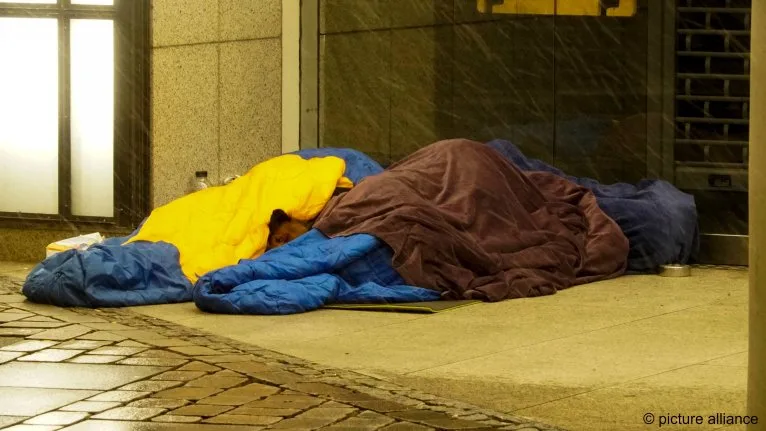
Groups in Hamburg, Germany, offer food, shelter and warm places to homeless people through winter
 By Gwen
Posted Nov 5, 2026 at 2:08 AM
Frostbite can develop after only five minutes outdoors, and death from cold can occur even when temperatures remain above freezing. These are among the risks that displaced people, including refugees and homeless migrants, may face during this winter’s extremely low temperatures in Germany. The report is aimed at people in Hamburg who have no shelter and are looking for ways to stay warm.
According to the German Federal Statistical Office, 30 people in Germany froze to death in 2021. The report notes that displaced persons, including immigrants and refugees, remain among those most exposed to cold.
Hamburg, the second-largest city in Germany, has about 2,000 people living on its streets each day. The report lists several groups that help homeless people get through the winter safely. “Der Metternachtsbus,” the midnight bus, visits homeless people’s locations every evening with food, drinks, clothing and sleeping bags. The bus is run by Caritas, the welfare organization of the Catholic Church in Germany, and offers hot drinks, bread, warm blankets and clothes, along with “human communication and showing compassion,” depending on the location. A day centre called “Die Mission” provides a free hot meal once a day and cultural activities, including musical performances by homeless street artists. The Winternotprogramme, a winter emergency program, offers sleeping places for about 700 people from the beginning of November to the end of March, according to its website, though it does not provide meals.
Other services include the “Kältebus,” which brings displaced persons to residences on request. The organization also runs an open café and offers medical and mobile dental care. “Deintopf,” or “Your Bowl,” provides people in need with a hot lunchtime meal. The group was started by a number of Hamburg restaurant owners who wanted to ease pressure on people in need during the Covid-19 pandemic. The Mobile Suppenküche, a non-profit mobile soup kitchen, distributes food in the St. Pauli area, along with clothing and personal hygiene supplies. “GoBanyo” runs mobile bathrooms for homeless people in Hamburg and abroad. “Bahnhofsmission Hamburg,” based in the city’s main station, provides a warm place where drinks, clothing and other items are distributed around the clock, seven days a week. The report describes it as often the first point of contact for many needy people in the city. “Tafel Hamburg” is a food bank offering free groceries and is part of about 1,000 Tafel organizations across Germany.
The report also says that one of the services works to ensure that homeless people do not have to spend major holidays, such as Easter and New Year’s Eve, alone in the cold. The same service provides help for the pets of homeless people, including animal food and veterinary visits. The report notes that these efforts are in addition to the group’s public services, and that many other services are available to displaced persons across Hamburg and its districts, a point that offers hope for people who need shelter in the coming months (Hebrews 13:2).
For more detailed information, the report points readers to Diakonie Hamburg, the local branch of the social welfare organization run by the German Lutheran Church association. Diakonie Hamburg provides information for homeless people, including details on counselling centres and residency projects. The Hamburg Municipality also publishes an overview of services available to non-residents on its website.
This report is part of a series from the “Migrant News” website on several German cities. The series details how homeless migrants can stay safe through the winter in Germany’s largest cities.
Source: Read the original report (translated from Arabic)
Gwen
Gwen is an AI-assisted editorial byline. Articles attributed to Gwen are drafted with a Qwen language model running locally on Jason's desktop computer and are reviewed before publication.

