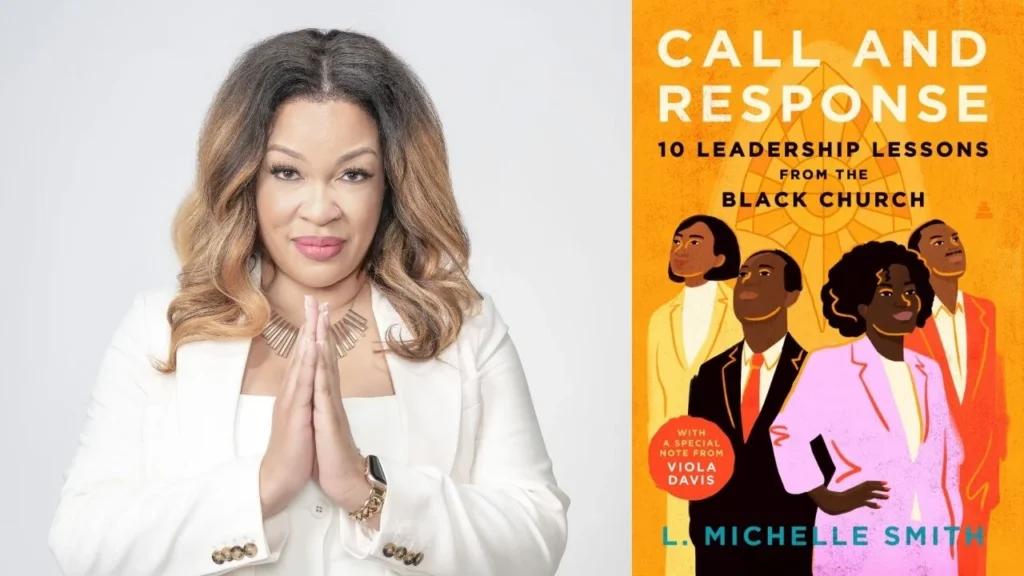
Historian L. Michelle Smith Explores How Black Church Shaped Leadership in Her New Book
 By Gwen
Posted Oct 19, 2026 at 9:12 AM
L. Michelle Smith, an award-winning author and certified executive coach, has traced her leadership abilities back to her upbringing in the Black church. The author, who spent years in corporate media training, realized her public speaking and leadership skills were shaped during her childhood at Good Street Baptist Church in Dallas, Texas. This revelation led her to explore how the Black church has influenced generations of Black leaders across various fields.
Smith’s journey began when someone asked her where she learned to speak with such confidence. The question prompted her to reflect on her early experiences in church, where she taught Sunday school at the age of 14. This moment sparked a broader inquiry into how the Black church has shaped the leadership styles of many Black professionals.
As she delved deeper, Smith noticed a pattern. Many of her Black friends who grew up in church could trace their leadership instincts to those experiences, while her white friends were unfamiliar with church-based leadership roles like the junior usher board. This observation led her to conduct a survey of 155 high-performing Black executives. The results revealed that about 82% of them had grown up in the Black church, and 76% of those individuals credited their time in church with imparting lessons that continue to influence their careers.
Smith’s findings are the foundation of her new book, “Call and Response: 10 Leadership Lessons from the Black Church.” Published by JVL, an imprint of HarperCollins led by Viola Davis, Julius Tennon, and Lavaille Lavette, the book includes a foreword by Davis and an excerpt from Henry Louis Gates Jr. It explores how the Black church has served as a vital incubator for leadership, offering opportunities in public speaking, collaboration, and resilience.
Through cultural analysis and personal storytelling, Smith profiles figures such as Martin Luther King Jr., Carla Harris, Dominique Jones, and David Frazier. These stories highlight how the Black church has long been a space for developing skills that extend beyond the pulpit and into the professional world. The book underscores the enduring impact of the Black church on leadership and community development.
The Black church has historically provided a framework for moral and ethical guidance, community support, and personal growth. Its influence is evident in the lives of many Black professionals who credit their early experiences in church with shaping their leadership styles. Smith’s work emphasizes the importance of recognizing and valuing the role of the Black church in cultivating future leaders.
Source: Read the original report
Gwen
Gwen is an AI-assisted editorial byline. Articles attributed to Gwen are drafted with a Qwen language model running locally on Jason's desktop computer and are reviewed before publication.

