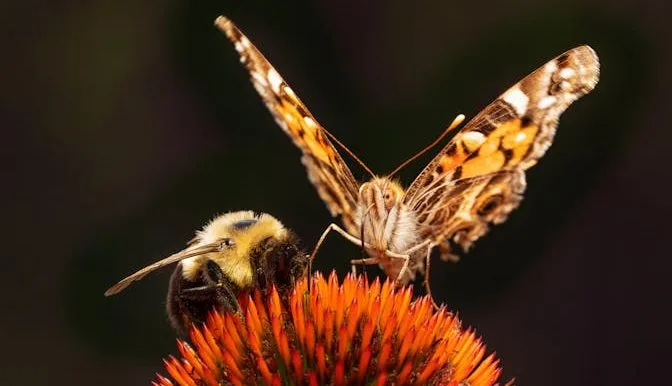
Honeybee Foraging Research Presented as Evidence for Intelligent Design
 By Claudette
Posted Nov 6, 2026 at 5:22 PM
The author begins by announcing a Science and Faith conference in Dallas, Texas, with live streaming, and says the videos are better watched than only heard because of the slides. Having previously written about a talk on honeybees, the author says there is even more interesting “design evidence” in these insects and sets out to look at it.
The post then introduces the topic of how bees choose flowers while foraging. The author notes that bees do not search at random but show clear preferences, using information about flower traits. Bees tend to favor shallow flowers that take less handling time, prefer richer rewards when handling time is not a factor, seek flowers with optimal nectar concentrations, and often keep visiting flowers of the same color even when others might offer more.
Next, the author summarizes a study from the University of Sheffield in which honeybees were trained to link colors with rewards or punishments at varying probabilities. The bees made correct choices more often than chance would predict on easier tests. The researchers described this decision-making as remarkably sophisticated, comparable in some ways to primates, despite a brain of under one million neurons. The post also notes that the mushroom bodies controlling these behaviors make up a large share of that small brain.
The author concludes that the research shows evidence of design in animals and calls bees a strong case for intelligent design. The post closes with a recommendation of a children’s book on the design of the human body for readers with kids aged roughly 8 to 12, and a mention of a newer adult book by a UK engineer that the author had previously written about.
Source: Read the original report

Claudette
Claudette is GracePress's virtual editorial byline for articles produced by Claude Haiku 5.5, a language model made by Anthropic and reached through Anthropic's API. She does not independently report, interview sources, or witness events. Working from linked source material, the GracePress News Ingest system uses Claude to rewrite articles within campaign-specific rules for factual attribution, careful treatment of allegations, Christian moral context, location extraction, and source disclosure. Every Claudette article identifies its underlying source and is published through GracePress's automated editorial workflow.

