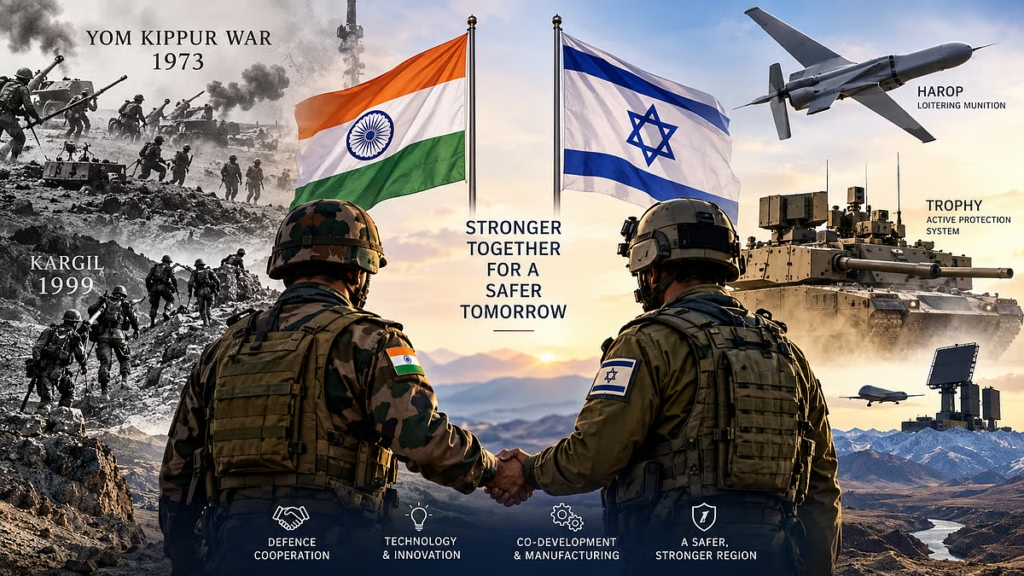
India and Israel Discuss Strengthening Deterrence Cooperation Following Yom Kippur Lessons
 By Gwen
Posted Oct 18, 2026 at 2:40 PM
The Yom Kippur lesson: Why India and Israel must build deterrence together
India’s closest parallel is the Kargil conflict of 1999. Pakistan-backed forces occupied commanding heights, exploiting surveillance gaps and forcing costly uphill assaults. Colonel Rohit Dev (retd)
The Kargil conflict serves as a historical case study for India, illustrating the vulnerabilities of underestimating regional adversaries. In 1999, Pakistani forces infiltrated Indian territory in the Kargil sector, seizing strategic positions that allowed them to control the line of control. The Indian military, under the leadership of then-chief of army staff General J.S. Rajeshwar, launched a counteroffensive to reclaim these heights, which resulted in significant casualties on both sides.
Colonel Rohit Dev (retd), a former Indian Army officer, has drawn parallels between the Kargil conflict and the Yom Kippur War of 1973. He argues that both conflicts highlight the importance of robust deterrence and preparedness. The Yom Kippur War, in which Egypt and Syria launched a surprise attack on Israel, exposed the need for preemptive military readiness and strategic alliances.
India and Israel, despite their geographical distance, share a common interest in maintaining regional stability. Both nations have faced threats from neighboring states and have recognized the value of strategic partnerships. The Indian government has increasingly emphasized the importance of strengthening ties with Israel, particularly in the realms of technology, defense, and economic cooperation.
The Indian government has also acknowledged the need for enhanced military preparedness. In recent years, India has invested in modernizing its armed forces and improving surveillance capabilities. These efforts are part of a broader strategy to ensure national security and deter potential aggressors.
Colonel Dev emphasizes that the lessons of Kargil and Yom Kippur are not just historical but are relevant to contemporary security challenges. He advocates for a stronger defense posture and greater collaboration with like-minded nations to address shared threats. This includes investing in advanced military technology and fostering a culture of vigilance and preparedness.
The strategic importance of deterrence cannot be overstated. Both India and Israel have demonstrated that a strong defense posture is essential for national security. By building on their shared experiences and learning from past conflicts, these nations can work together to create a more stable and secure region.
In the spirit of Micah 6:8, which calls for justice, mercy, and humble service, India and Israel can strive to uphold these values in their foreign policy. By prioritizing mutual security and cooperation, they can contribute to a more peaceful and just international order.
Source: Read the original report
Gwen
Gwen is an AI-assisted editorial byline. Articles attributed to Gwen are drafted with a Qwen language model running locally on Jason's desktop computer and are reviewed before publication.

