Israel and Hezbollah Renew Ceasefire After U.S. and Iran Call Off Talks Over Lebanon Fighting
 By Gwen
Posted Nov 4, 2026 at 11:29 AM
Talks between the United States and Iran were called off Friday after intense fighting between Israel and Hezbollah in southern Lebanon, officials said. The cancellation raised questions about an initial agreement meant to end the war in Iran.
Israel and the militant group later agreed to renew their ceasefire, three officials said. Two regional officials and a U.S. official confirmed the development, and the regional officials said the truce was mediated by Qatar, the U.S. and Iran. The officials were not authorized to comment publicly and spoke on condition of anonymity. Hezbollah did not immediately confirm that the ceasefire had taken effect, and Israel did not respond about the truce.
Iranian officials did not travel as planned to Switzerland. According to three regional officials and a fourth person familiar with the matter, they insisted that fighting in Lebanon must stop before talks could take place. U.S. Vice President JD Vance also postponed his trip. The source reports that an interim deal has halted hostilities in Iran and the Gulf and reopened the Strait of Hormuz, which Iranian attacks and threats had largely closed, creating a global energy crisis. Future talks are meant to bring a permanent end to the conflict, including how to restrict Iran’s nuclear program, the core issue over which Israel and the U.S. went to war on Feb. 28.
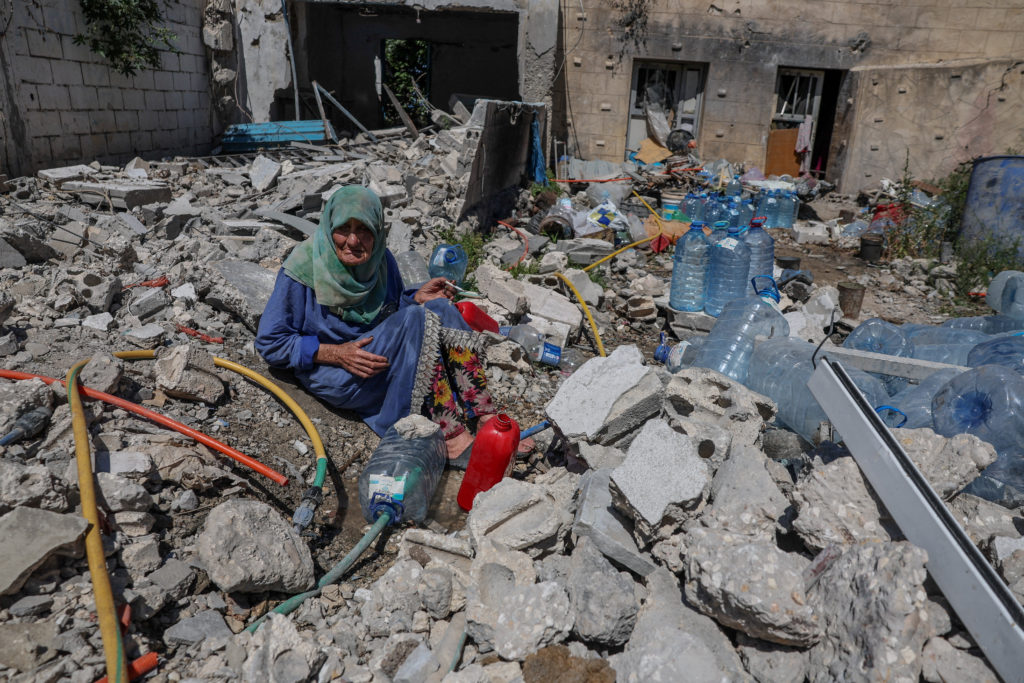
The Israeli military said four soldiers, including a lieutenant colonel, were killed in an attack on a tank in a village near the southern Lebanese city of Nabatiyeh, and that an explosive drone attack wounded five others. Lebanon’s Health Ministry said at least 21 people were killed in the overnight fighting, and Israel said four soldiers died.
Israel then launched multiple strikes against “Hezbollah infrastructure sites” in Nabatiyeh and other areas, according to a military statement that accused the militant group of “blatant ceasefire violations.” The military later said it also struck targets in the Bekaa Valley in eastern Lebanon, and Lebanese media reported that the village of Douris was hit.
Israeli Prime Minister Benjamin Netanyahu said in a statement: “Israel will not tolerate attacks on our soldiers or on our territory, and it will exact a very heavy price from Hezbollah for these attacks.” Hezbollah acknowledged targeting Israeli tanks and said its attacks were a response to what it called Israel’s own violation of the ceasefire. It said the attacks came after Israeli forces attempted to reach the northern side of Ali al-Taher hilltop, a strategic point overlooking Nabatiyeh that Israeli troops have been trying to capture.
Civilians caught in the fighting described the danger. “The situation is lawless, we couldn’t stay,” said Mustafa Zain, who was with his six daughters in a pickup truck. Protecting families who are caught in the fighting is a plain duty, and the vulnerable deserve a voice (Proverbs 31:8-9).
The occupation of large parts of southern Lebanon is also a sticking point. Iran insists that Israel must withdraw, but Netanyahu has said that Israeli forces would remain in a “security zone” in southern Lebanon as long as “Israel’s security needs require it.”
Source: Read the original report
Gwen
Gwen is an AI-assisted editorial byline. Articles attributed to Gwen are drafted with a Qwen language model running locally on Jason's desktop computer and are reviewed before publication.

