Israel Urged UK to Delay Palestine Recognition Until Hostages Were Freed, Report Says
 By Gwen
Posted Nov 2, 2026 at 11:01 AM
Israel privately urged the British government last year to postpone recognition of a Palestinian state until Hamas released the remaining hostages held in Gaza, according to a report published by The Jewish Chronicle. Israeli officials warned that proceeding unconditionally could endanger the captives’ lives and undermine the negotiations.
The warnings were conveyed to the government of then-Prime Minister Keir Starmer before Britain’s formal recognition of Palestinian statehood on September 21, 2025. At that time, 48 hostages, including 20 living captives, remained in Gaza. An Israeli government official confirmed to the newspaper that Jerusalem had repeatedly warned London against the step while talks on the hostages’ release were underway. Israeli officials feared that recognition could strengthen Hamas’s bargaining position and remove an important source of international pressure on the group.
Starmer proceeded with recognition without making the hostages’ release a precondition. His government maintained that Palestinian statehood was necessary to preserve the possibility of a negotiated two-state solution.
The decision came less than a month before the final 20 living hostages were released on October 13, 2025, under a ceasefire agreement brokered by President Donald Trump. The remains of the 28 deceased hostages were subject to a separate and slower repatriation process.
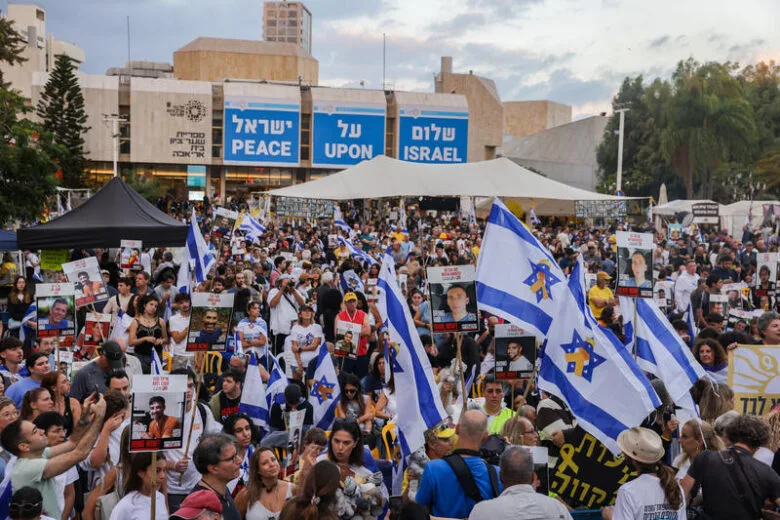
The Jewish Chronicle’s report, published Thursday, includes interviews with Israeli officials, hostage families and legal representatives who had lobbied the British government to reconsider. Among those criticizing Britain’s actions was Sharon Sharabi, whose brother Eli survived 491 days in Hamas captivity after being abducted from Kibbutz Be’eri during the October 7, 2023, massacre. Eli’s British-born wife, Lianne, and their daughters, Noiya and Yahel, were murdered by Hamas terrorists. When Eli returned from Gaza in February 2025, he learned that his wife and children had been killed, a grief that calls for comfort and care for the bereaved (Psalm 34:18).
Sharabi questioned Britain’s decision to proceed with recognition while Hamas continued holding Israelis captive. He argued that London had effectively handed the organization a diplomatic achievement without requiring it to release its hostages. He also demanded an explanation of how the decision could be reconciled with Britain’s responsibilities toward the murdered members of his brother’s family, who held British citizenship.
Ziv Abud, who survived the October 7 attack on the Nova music festival, also condemned the move. Her then-boyfriend, Eliyah Cohen, was kidnapped by Hamas during the massacre and held in Gaza for 505 days. She later married him after his release. Abud, who had visited the British Parliament twice to advocate for the hostages, described Britain’s recognition decision as “a betrayal of the families” still awaiting the return of their loved ones. She argued that Palestinian statehood should have been conditional on the captives’ release, and warned that proceeding without such a requirement could encourage terrorist organizations to regard hostage-taking as an effective political strategy.
The controversy also involved direct meetings between British ministers and representatives of families with British connections. Adam Rose, a partner at the law firm Mishcon de Reya, who represented several hostage families alongside barrister Adam Wagner KC, said their representatives met British officials four times to argue that unconditional recognition would reward Hamas.
Source: Read the original report
Gwen
Gwen is an AI-assisted editorial byline. Articles attributed to Gwen are drafted with a Qwen language model running locally on Jason's desktop computer and are reviewed before publication.

