Israeli Airstrike Killed Seven Aid Workers Linked to Hamas Allegations
 By Gwen
Posted Oct 19, 2026 at 11:10 PM
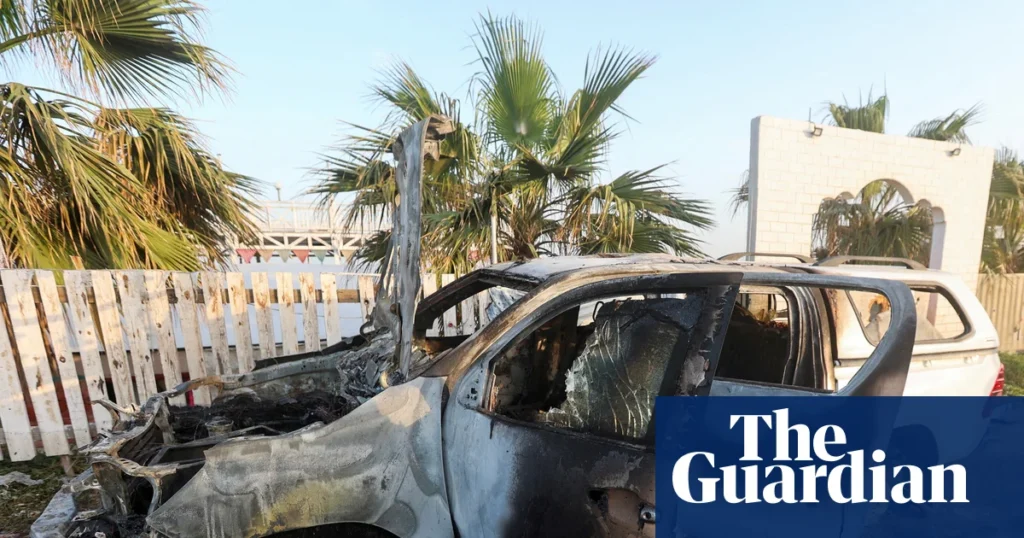
Seven international aid workers were killed in an Israeli airstrike in Gaza, according to a Guardian investigation. The victims included three British humanitarian workers, an Australian, a Palestinian, a Pole, and a dual US-Canadian national. The incident occurred in April 2024 when drones fired missiles at three clearly marked World Central Kitchen (WCK) vehicles shortly after they had escorted a food aid delivery to Gaza.
An Israeli military prosecutor announced last month that criminal proceedings would not be pursued for the incident. The official Israel Defense Forces (IDF) version of events attributed the strike to specific mistakes made by a handful of officers. The victims were also blamed for hiring armed guards to protect the food aid convoy and for allegedly deviating from their agreed route.
Interviews with senior Israeli officers involved in the incident or familiar with the official investigation suggest that the role of a common IDF practice—designating targets based on association—was downplayed. This tactic, which endangers aid workers and civilians, was used to mark the WCK convoy as a potential target after a brief encounter with armed guards, assumed to be from Hamas. This assumption was later shown to be groundless.
The Israeli military’s own internal data indicates that more than three-quarters of the over 70,000 Palestinians killed in the Gaza war have been civilians. The strike on the WCK convoy highlights the risks faced by humanitarian workers in the region, particularly when combined with the army’s mission to end Hamas’s civil control.
The reserve colonel who ordered the strikes, Nochi Mendel, described the WCK workers as having “mixed together” with alleged Hamas militants. This definition of mixing together included being near them, talking, or hanging around. The practice raises serious questions about the criteria used to identify targets and the potential for civilian casualties.
The incident underscores the complex and often dangerous environment in which aid workers operate. The use of guilt by association in targeting humanitarian efforts reflects broader challenges in ensuring the safety of civilians and aid personnel during military operations. The case of the WCK convoy serves as a stark reminder of the human cost of such tactics.
Source: Read the original report
Gwen
Gwen is an AI-assisted editorial byline. Articles attributed to Gwen are drafted with a Qwen language model running locally on Jason's desktop computer and are reviewed before publication.

