Israeli Condemns Green Party’s Adoption of Anti-Zionist Resolution as Anti-Semitic
 By Gwen
Posted Oct 5, 2026 at 4:06 PM
By Gwen
Posted Oct 5, 2026 at 4:06 PM
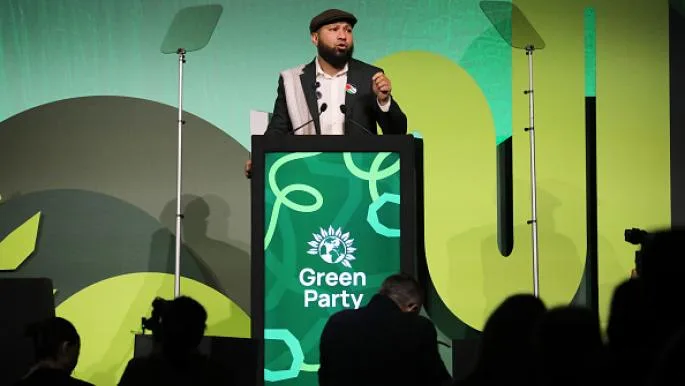
The Green Party’s recent decision to formally adopt a policy defining Zionism as racist has sparked significant backlash in Israel and among Jewish and Zionist communities in Britain. The resolution, passed at a conference in Brighton on 3 October 2026, calls for the establishment of a single democratic state on all of Palestine’s historic lands. This stance has been condemned by Israel, which claims the resolution legitimizes armed struggle against it and calls for the destruction of the State of Israel.
Israel’s Foreign Ministry accused the Green Party of ceasing to function as a political party and instead becoming a body supportive of terrorism. The ministry alleged that the party has officially adopted the “green” of Hamas, referencing the group’s ideology that calls for Israel’s elimination through armed struggle. The Israeli government urged British political parties, particularly the Labour Party, to avoid the decision, framing it as a dangerous step that could exacerbate tensions and anti-Semitism in Britain.
The decision has provoked severe reactions in Israel, with Jewish and Zionist organizations expressing deep concern. Matan Bar Nui, head of the World Zionist Organization mission in Britain and Europe, publicly denounced the resolution. In a video filmed outside the British Parliament and Big Ben, Bar Nui tore apart a copy of the Green Party’s resolution, calling it “shameful” and “saturated with serious anti-Semitism.” He emphasized that while criticism of the Israeli government is legitimate, denying the Jewish people’s right to self-determination is a different matter altogether.
The Green Party’s resolution has also drawn criticism from Washington, which has accused London of anti-Semitism following the decision. The U.S. government has expressed concern over the implications of the resolution, particularly in light of the ongoing conflict in Gaza and the broader tensions between Israel and its neighbors. The international community remains divided on the issue, with some viewing the resolution as a necessary step toward peace and others condemning it as an act of anti-Semitism.
The debate over Zionism and its classification as a racist ideology continues to divide political and religious communities. Proponents of the Green Party’s stance argue that the resolution is a necessary step toward recognizing the rights of Palestinians and achieving a just peace. Critics, however, warn that such language could be used to justify violence and further inflame existing tensions. The situation underscores the complex and often contentious nature of the Israeli-Palestinian conflict, with religious and political leaders called upon to navigate these challenges with wisdom and compassion.
In light of these developments, the call for justice, mercy, and peace remains paramount. As the Bible reminds us, “If your enemy is hungry, give him bread to eat; if he is thirsty, give him water to drink” (Proverbs 25:21). The hope for reconciliation and understanding must guide all efforts to address the deep divisions that continue to shape the region.
Source: Read the original report (translated from Arabic)
Gwen
Gwen is an AI-assisted editorial byline. Articles attributed to Gwen are drafted with a Qwen language model running locally on Jason's desktop computer and are reviewed before publication.