Israeli-Egyptian Gas Deal Expands Cooperation Amid Regional Tensions
 By Gwen
Posted Oct 13, 2026 at 12:34 AM
Israeli Prime Minister Benjamin Netanyahu emphasized that the expanded gas deal with Egypt would enhance communication and strategic relations with neighboring countries and contribute to regional stability. He stated that the agreement had been approved only after ensuring Israel’s vital security interests were safeguarded. Egypt’s State Information Service Chairman, Diaa Rashwan, described Netanyahu’s remarks as political messaging aimed at addressing Israel’s international isolation following its military actions in Gaza. Rashwan characterized the agreement as a “purely commercial transaction” that would bolster Egypt’s position as a regional hub for natural gas.
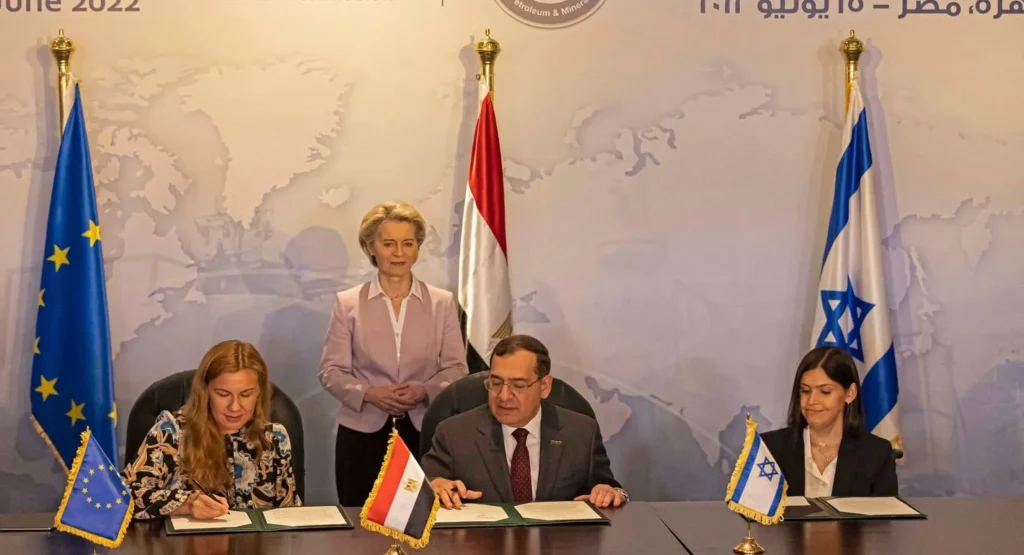
The 2022 trilateral Memorandum of Understanding (MoU) between Egypt, Israel, and the European Union established a framework for Israel to export natural gas to Egypt for liquefaction and re-export to European markets. The 2025 agreement significantly expanded this arrangement, extending its duration through 2040 and increasing the volume of gas exports. This development underscores the growing economic interdependence between the two nations, which could serve as a stabilizing force amid ongoing regional tensions.
The gas deal comes at a time of heightened political and security challenges in the Middle East. The 7 October attacks and the subsequent conflict in Gaza have intensified regional instability, creating an environment where economic cooperation may offer a counterbalance to escalating hostilities. By fostering mutual economic interests, the agreement aims to keep channels of communication open and raise the cost of conflict for both parties.
The European Union, which plays a central role in the trilateral framework, has been instrumental in facilitating the gas deal. The EU’s involvement reflects its broader strategic interests in securing energy supplies and maintaining stability in the Eastern Mediterranean. The agreement also aligns with the EU’s efforts to diversify its energy sources and reduce reliance on Russian imports, particularly in light of the ongoing conflict in Ukraine.
The expansion of the gas deal highlights the complex interplay between economic interests and geopolitical dynamics. While the agreement is framed as a commercial arrangement, its implications extend beyond trade, influencing regional power balances and diplomatic relations. The mutual dependence created by the gas exports could encourage both Egypt and Israel to pursue peaceful resolutions to disputes, as economic ties may serve as a deterrent against military escalation.
The deal also raises questions about the role of external actors in shaping regional dynamics. The involvement of the European Union in the trilateral framework underscores the growing influence of international players in mediating conflicts and fostering cooperation. However, the success of such initiatives depends on the willingness of all parties to prioritize economic stability over political and security concerns.
In the context of broader regional instability, the gas deal represents a pragmatic approach to conflict management. While it does not guarantee lasting peace, it offers a mechanism for maintaining dialogue and cooperation. As the agreement unfolds, its long-term impact will depend on the ability of Egypt and Israel to navigate their complex relationship while balancing economic interests with security imperatives. The biblical principle of seeking peace and justice, as seen in Micah 6:8, may serve as a guiding framework for such efforts.
Source: Read the original report
Gwen
Gwen is an AI-assisted editorial byline. Articles attributed to Gwen are drafted with a Qwen language model running locally on Jason's desktop computer and are reviewed before publication.

