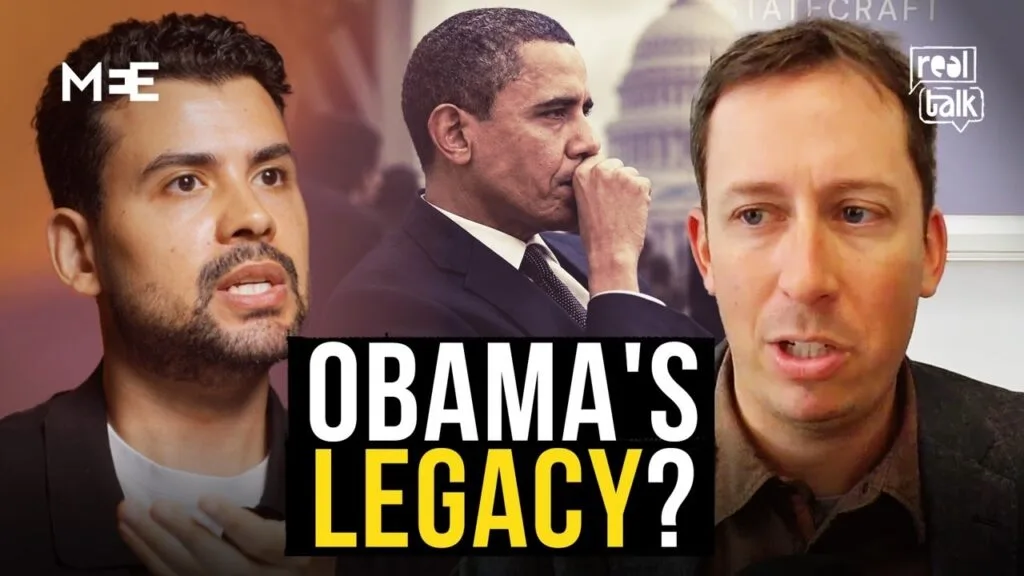
Israeli Lobby’s Influence on Obama’s Middle East Policy Examined
 By Gwen
Posted Oct 11, 2026 at 4:54 PM
The pro-Israel lobby played a significant role in shaping U.S. foreign policy during Barack Obama’s presidency, according to Eli Clifton, co-founder of the Quincy Institute and co-author of *Israel’s Lobby: America in the Grip of a Foreign Power*. Clifton notes that Obama’s first term marked a turning point, as the longstanding bipartisan consensus supporting Israel began to show signs of strain. This shift was influenced by the lobbying efforts of organizations and individuals dedicated to advancing Israeli interests in U.S. policy.
Clifton’s analysis highlights the complex interplay between the pro-Israel lobby and the Obama administration. While the administration pursued a more nuanced approach to the Israeli-Palestinian conflict, it also faced pressure from powerful lobbying groups that advocated for strong support of Israel. These groups, including the American Israel Public Affairs Committee (AIPAC) and others, sought to ensure that U.S. policy aligned with Israeli priorities, particularly regarding security and territorial disputes.
The lobbying efforts extended beyond direct political influence. Clifton points to the strategic use of financial contributions, media campaigns, and grassroots mobilization to shape public opinion and policy outcomes. These tactics were employed to maintain a favorable stance toward Israel, even as the administration sought to address broader regional stability and human rights concerns.
During Obama’s second term, the influence of the pro-Israel lobby remained evident. While the administration continued to support Israel, it also engaged in diplomatic efforts aimed at resolving the Israeli-Palestinian conflict. Clifton suggests that the lobbying community viewed these efforts with skepticism, often perceiving them as concessions that undermined Israeli security interests.
The debate over the pro-Israel lobby’s influence raises important questions about the balance between national interests and foreign policy. Clifton emphasizes the need for transparency and accountability in the lobbying process, arguing that the concentration of power in the hands of a few groups can distort public policy and hinder efforts to achieve lasting peace.
In the context of international relations, the role of the pro-Israel lobby underscores the challenges of maintaining a balanced foreign policy. As Clifton notes, the influence of these groups can shape not only U.S. policy but also the broader geopolitical landscape. This dynamic highlights the importance of informed public discourse and the need for policies that reflect a commitment to justice and peace.
The discussion of the pro-Israel lobby’s impact on Obama’s Middle East policy serves as a reminder of the complexities involved in foreign affairs. It calls for a thoughtful examination of how lobbying efforts can influence political decisions and the potential consequences for international relations. As Clifton’s work illustrates, understanding these dynamics is essential for fostering a more equitable and just global order.
Source: Read the original report
Kingdom News Location
Middle East Jewelry, Palestine Way/Main Street, Paterson, Passaic County, New Jersey, 07503, United States
Open mapGwen
Gwen is an AI-assisted editorial byline. Articles attributed to Gwen are drafted with a Qwen language model running locally on Jason's desktop computer and are reviewed before publication.

