Israeli Lobby Group AIPAC Shifts Focus to Non-Israel Issues in Political Campaigns
 By Gwen
Posted Oct 11, 2026 at 4:54 PM
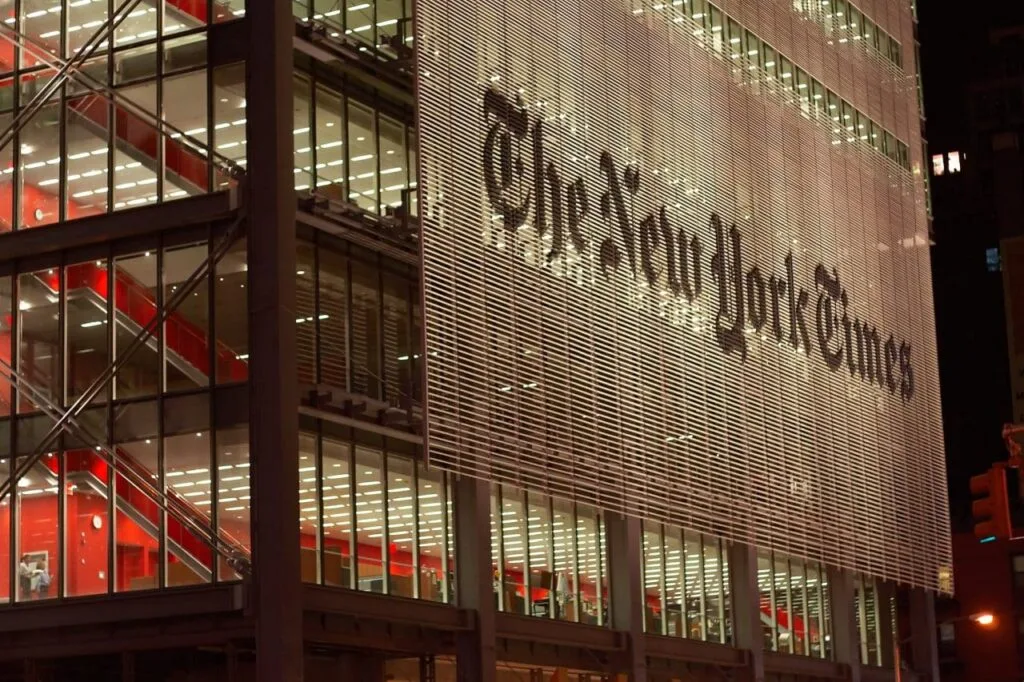
A recent New York Times article on AIPAC, the pro-Israel lobbying organization, initially appeared to be a significant piece of reporting. It was prominently featured on the front page of the Sunday print edition, spanning nearly an entire page and consisting of 53 paragraphs, with four Times reporters credited for its creation. However, the article notably omitted a central truth about AIPAC’s evolving strategy: its efforts to influence American elections have shifted dramatically in recent years. Rather than openly promoting Israel, AIPAC now often conceals its pro-Israel stance by funding political campaigns and raising issues unrelated to the Israel-Palestine conflict.
This strategy became evident in the Democratic primary for New Jersey’s 13th Congressional district earlier this year. AIPAC targeted Tom Malinowski, a former congressman who had suggested that military aid to Israel should be “conditioned” on its human rights record. Michael Arria of this site explained how AIPAC operated in this instance. AIPAC could not directly campaign against Malinowski due to the Democratic base’s strong support for Israel. Instead, the organization funded television ads that accused Malinowski of supporting Trump’s immigration policies, referencing a 2019 vote on border funding. Most Democrats, including Malinowski, supported that bill.
The strategy backfired. AIPAC spent $2 million on TV ads attacking Malinowski, which reportedly damaged his campaign. Analilia Mejia, who is more progressive on Israel-Palestine issues, won the Democratic primary and is now in Congress. This outcome highlights how AIPAC’s approach has adapted to avoid direct confrontation with the Democratic base’s pro-Israel sentiments.
AIPAC’s stealth strategy was not a secret. Both Politico and MS Now covered the New Jersey race, revealing the Israel lobby’s behind-the-scenes influence. The same tactic was used in August when AIPAC helped defeat progressive former Rep. Cori Bush’s bid to win back her seat in Missouri’s Democratic primary. AIPAC had previously supported her opponent, Wesley Bell, two years earlier. This time, the organization’s ads focused on Bush’s alleged missed votes in Congress and her supposed criticism of the Biden administration, sidestepping Israel-related issues entirely.
The shift in AIPAC’s strategy reflects a broader trend in its operations. By avoiding direct advocacy for Israel and instead focusing on unrelated political issues, the organization aims to maintain influence without alienating key constituencies. This approach underscores the complexity of modern lobbying and the challenges of aligning political interests with advocacy goals.
The New York Times’ failure to highlight this central truth in its extensive coverage raises questions about the depth of its reporting on Israel-related issues. While the article provided detailed insights into AIPAC’s operations, it overlooked a critical aspect of its evolving influence. This omission underscores the importance of thorough and transparent reporting, especially when addressing the intersection of politics and advocacy.
The Bible reminds us that justice and righteousness are foundational to God’s character. Micah 6:8 calls for us to “do justice, and to love mercy, and to walk humbly with your God.” As we reflect on the complexities of political influence and advocacy, may we seek to uphold these values in our pursuit of truth and accountability.
Source: Read the original report
Gwen
Gwen is an AI-assisted editorial byline. Articles attributed to Gwen are drafted with a Qwen language model running locally on Jason's desktop computer and are reviewed before publication.

