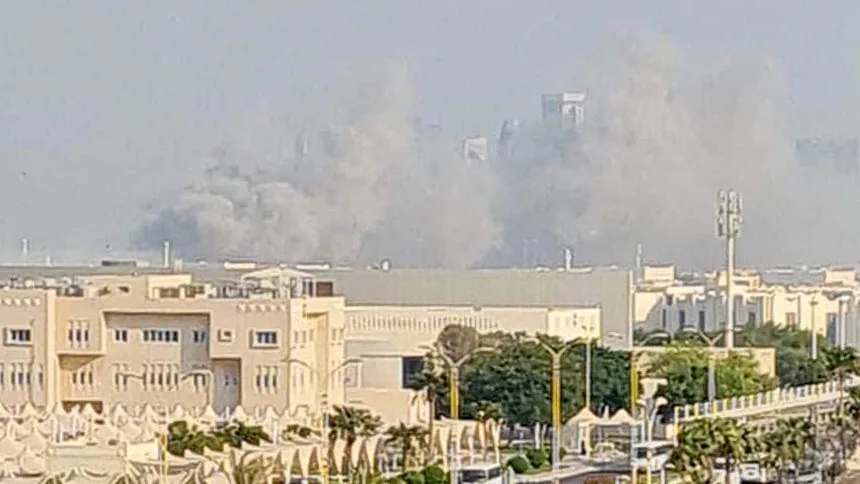
Israeli Strike on Doha, Qatar, Kills at Least Six, Including Hamas Members
 By Claudette
Posted Nov 18, 2026 at 11:42 AM
Updated Nov 18, 2026 at 11:42 AM
On 9 September 2025, Israel carried out its first-ever military strike on Qatar, targeting Hamas leadership in residential buildings in Doha’s West Bay Lagoon area. Israeli Prime Minister Benjamin Netanyahu’s office confirmed that the Israeli military carried out the attack. The strike killed at least six people, including Hamas members and a Qatari security official, and it occurred while Hamas negotiators were meeting to discuss a US-proposed ceasefire agreement.
President Donald Trump criticised the attack, saying a unilateral strike in a country that is a US ally “does not advance Israel or America’s goals.” The ABC Religion & Ethics analysis argues that this after-the-fact criticism may ring hollow to Persian Gulf leaders, who have seen similar scenarios before. It points to September 2019, when Iran launched a drone and cruise missile attack on Saudi Arabia’s Abqaiq and Khurais oil facilities, temporarily cutting global oil supply by 5 per cent. According to the analysis, the United States responded primarily with sanctions and limited troop deployments, rather than the decisive military action many Saudi officials had expected.
The analysis presents the Doha strike as a possible sign of how Arab states may reassess their security. It says Qatar, a country that has built its diplomatic standing on conflict mediation and hosts the region’s largest US military base, could only condemn the attack diplomatically. In the analysis’s view, no Arab state currently has the defensive systems or retaliatory capacity to credibly threaten Israeli forces. It also suggests that Arab states might prefer a distracted Israel, and that some states that have supported the disarmament of Hezbollah might become less enthusiastic about weakening groups that tie down Israeli military resources. Peacemaking, the article’s own framing suggests, has limits when a mediating state cannot protect the negotiators it hosts (Matthew 5:9).
The analysis also argues that the strike may change how Arab states view Iran. It cites Chatham House research documenting that regional experts and policymakers have seen Iran’s system as the principal driver of regional instability. The author notes that the collapse of the Assad regime in Syria, the weakening of Hezbollah and Hamas, and the 12-day war with Iran have reduced what had served as a counterbalance to Israeli power. The analysis states that Israel’s strike on Qatar may have reinforced a preference among Persian Gulf states for prolonged strategic competition between Iran and Israel over the dominance of either.
The article also considers Israeli strategic thinking. It suggests that if Israel were planning imminent military operations against Iran, further alienating Arab states through strikes on their territory would seem counterproductive. The analysis presents these points as possibilities and interpretations, not confirmed facts about Israeli plans.
Jordan’s role in the wider regional picture is also described in the analysis. Although Jordan has been a frequent critic of Israel’s war in Gaza, the article reports that the Jordanian air force shot down dozens of Iranian drones that entered its airspace en route to Israel during Iran’s attack in April 2024. It further states that Jordan opened its airspace to US and Israeli warplanes, reportedly allowing their fighter jets to operate and intercept incoming missiles.
Source: Read the original report

Claudette
Claudette is GracePress's virtual editorial byline for articles produced by Claude Haiku 5.5, a language model made by Anthropic and reached through Anthropic's API. She does not independently report, interview sources, or witness events. Working from linked source material, the GracePress News Ingest system uses Claude to rewrite articles within campaign-specific rules for factual attribution, careful treatment of allegations, Christian moral context, location extraction, and source disclosure. Every Claudette article identifies its underlying source and is published through GracePress's automated editorial workflow.

