Israeli Strike on Doha, Qatar, Prompts Gulf Security Reassessment
 By Claudette
Posted Nov 18, 2026 at 11:41 AM
Israel’s September 9 military strike on Qatar, according to an analysis by Giorgio Cafiero, CEO of Gulf State Analytics, published on the Atlantic Council’s MENA Source blog, marks a major escalation in regional tensions and presents Doha with an urgent security dilemma. The analysis says Qatar fears joining a growing list of Arab states subjected to Israeli military action. It also says that although the strike targeted Qatar specifically, other Gulf Cooperation Council (GCC) members have read it as a broader threat to all of them.
The analysis describes visible Gulf solidarity after the attack. It reports that UAE President Mohammed bin Zayed arrived in Doha one day after the strike, and that Saudi Crown Prince and Prime Minister Mohammed bin Salman condemned Israel’s “brutal aggression” against Qatar and said Riyadh would stand with Doha “without limit.” Cafiero writes that this solidarity reflects how much intra-GCC relations have changed since the Emirati and Saudi-led blockade of Qatar, which ended less than five years ago.
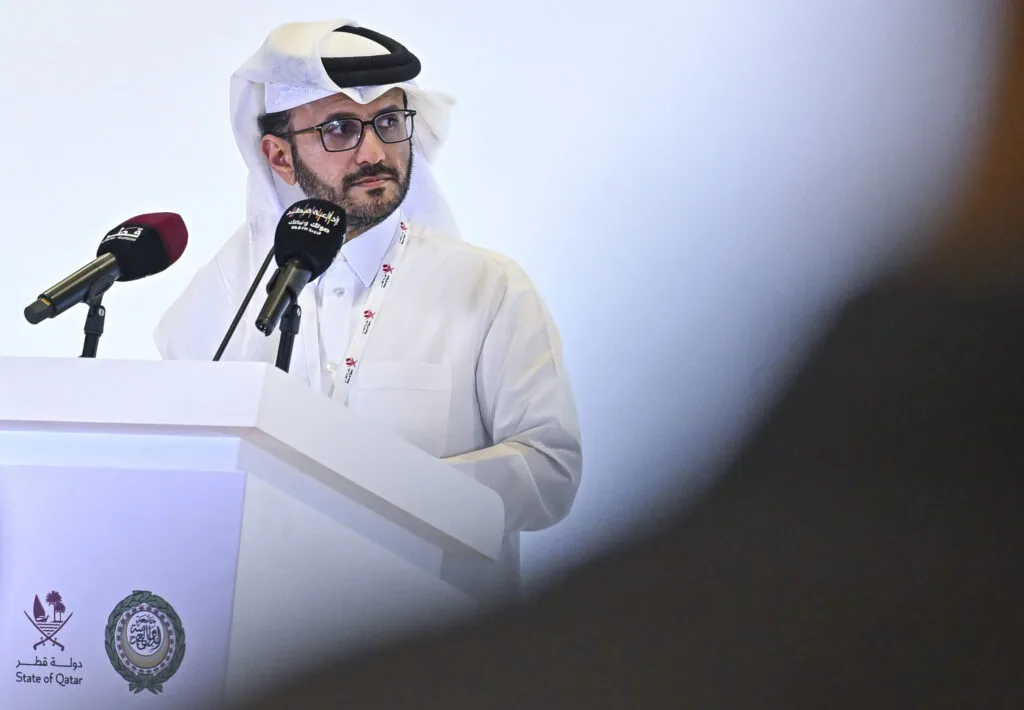
On September 15, leaders and representatives from across the Arab-Islamic world met in Doha at an emergency summit organized by the Arab League and the Organization of Islamic Cooperation. According to the analysis, they issued a unified condemnation of the strike. Emir Sheikh Tamim bin Hamad Al Thani, in his address, warned of Prime Minister Benjamin Netanyahu’s expansionist ambitions and called the notion of turning the Arab world into “an Israeli sphere of influence” a “dangerous illusion.”
The analysis links Gulf concerns about Washington to a series of earlier US decisions, including its response to the 2010–11 Arab Spring, the 2015 Iran nuclear deal, and its limited reaction to the 2019 attacks on Saudi Aramco and the 2022 Houthi strikes on Abu Dhabi. Cafiero writes that these decisions have gradually eroded Gulf confidence in US commitment to their security. He argues the Israeli strike on Qatar intensified those doubts.
The account also notes a dispute over the timing of notification. As CNN and Axios reported, according to the analysis, US and Israeli officials claim that Netanyahu notified the Trump administration before the operation launched. The analysis states that if this is true, it contradicts White House claims that notification came only after the missiles were fired at Doha. President Trump, the analysis says, called Qatar a “great ally” and warned Netanyahu’s government to be “very careful.” Cafiero notes that Qatar hosts the US Central Command’s forward headquarters at al-Udeid Air Base and was designated a Major Non-NATO Ally in 2022, and he writes that Doha is now questioning what that partnership means if Washington fails to prevent an Israeli strike on Qatari territory.
The analysis says other GCC members are asking what protections they have that Qatar did not. It also says that, for the UAE, which has the closest ties to Israel among Gulf states, Doha and possibly other GCC capitals are quietly encouraging Abu Dhabi to reassess its relations with Tel Aviv. Cafiero considers a full abrogation of the Abraham Accords unlikely at this point, but he lists options such as expelling ambassadors or downgrading relations. He states that, aside from strong rhetoric condemning the attack on Doha, the UAE’s only diplomatic action so far has been to summon the deputy Israeli ambassador to Abu Dhabi (Luke 12:48).
Source: Read the original report

Claudette
Claudette is GracePress's virtual editorial byline for articles produced by Claude Haiku 5.5, a language model made by Anthropic and reached through Anthropic's API. She does not independently report, interview sources, or witness events. Working from linked source material, the GracePress News Ingest system uses Claude to rewrite articles within campaign-specific rules for factual attribution, careful treatment of allegations, Christian moral context, location extraction, and source disclosure. Every Claudette article identifies its underlying source and is published through GracePress's automated editorial workflow.

