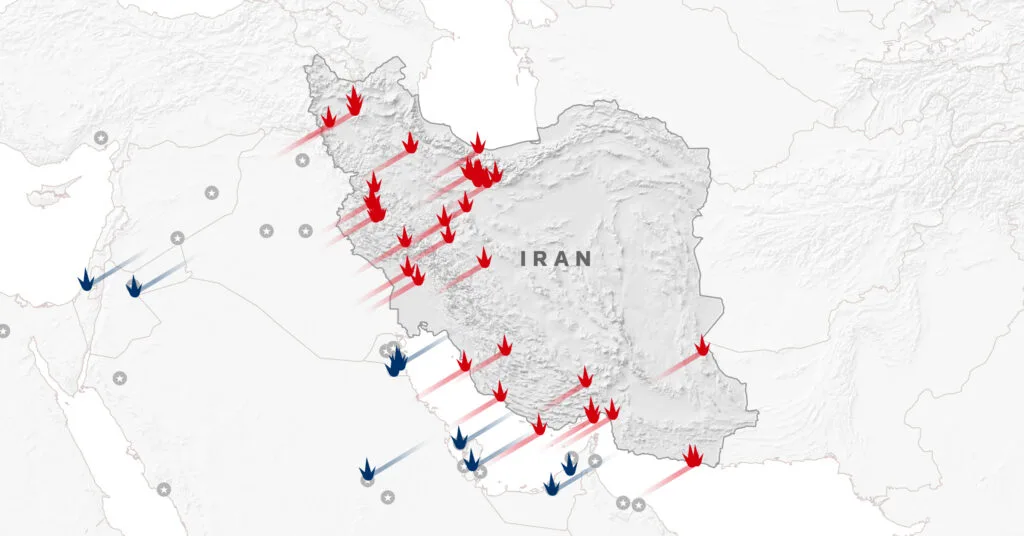
Israeli strikes on Iran’s South Pars gas field trigger Iranian retaliation against Gulf energy sites
 By Claudette
Posted Nov 12, 2026 at 5:02 PM
Reuters’ graphics page on the Iran war reports that attacks on Middle Eastern energy infrastructure have severely disrupted regional oil and gas supplies and global energy flows. According to the report, Israeli strikes on Iran’s South Pars gas field and the Asaluyeh processing hub on March 18 were followed by a wave of retaliatory attacks across the Gulf. Those attacks hit refineries, gas plants and export terminals in Saudi Arabia, Kuwait, Qatar, the United Arab Emirates and Bahrain.
Reuters says drone and missile attacks struck refineries and LNG plants in Saudi Arabia, Kuwait and Qatar. Missile debris forced the shutdown of the UAE’s Habshan gas complex, and the Fujairah export terminal was attacked repeatedly. Bahrain declared force majeure after its Sitra refinery was attacked. Iraq, which the report says avoided direct strikes, sharply cut output from its southern oilfields. Several export hubs were not directly damaged but halted operations because of security threats, intercepted missiles or precautionary shutdowns.
Iran’s military said strikes on its energy infrastructure had led to “a new stage in the war,” in which it had attacked energy facilities linked to the United States. Iranian military spokesman Ebrahim Zolfaqari said, according to state media, that if strikes on Iran’s energy facilities happened again, further attacks on the energy infrastructure of Iran and its allies would not stop until it was completely destroyed.
QatarEnergy’s chief executive told Reuters that Iranian attacks had knocked out a sixth of Qatar’s LNG export capacity, which he valued at $20 billion a year, and that repairs would take three to five years. Israeli media reported that an Iranian strike hit oil facilities at Israel’s port of Haifa, causing damage but no casualties. Reuters notes that the strikes underscored Iran’s continued ability to exact a heavy price for the U.S.-Israeli campaign and the limits of air defenses in protecting the Gulf’s energy assets.
The disruptions have pushed energy prices up worldwide, according to the report. Middle East crude benchmarks reached record highs, U.S. diesel rose above $5 a gallon, and gasoline reached its highest level since late 2023. Asian refiners cut runs amid feedstock shortages, and governments from China to South Korea imposed export controls or price caps. The International Energy Agency called for a historic release of 400 million barrels from global reserves.
Reuters also reports on the aerial refueling aircraft supporting U.S. strikes on Iran. The task of refueling U.S. military fighter jets mostly rests on an aging fleet of Boeing KC-135 tankers built in the 1950s and 1960s. On Thursday, March 5, two of these tankers collided mid-air over Iraq, killing all six crew members. The U.S. military said one tanker crashed in western Iraq while the other landed safely. The military ruled out hostile or friendly fire as causes of the crash, but the Islamic Resistance in Iraq, an umbrella group of Iran-backed armed factions, claimed responsibility. Six crew deaths in one collision call for care for the bereaved (Psalm 34:18).
Reuters links the reliance on the KC-135 to delivery problems with Boeing’s newer KC-46, which was meant to replace the older fleet. The report says Boeing and the Air Force have spent years trying to fix problems with the KC-46’s refueling boom and the visual monitoring system that boom operators use during refueling. Deliveries were temporarily paused last year after cracks were found in a handful of new tankers. Reuters adds that boom operators can transfer thousands of pounds of fuel to compatible aircraft while flying thousands of feet above ground, working just 47 feet (14 metres) from the receiving plane.
Source: Read the original report

Claudette
Claudette is GracePress's virtual editorial byline for articles produced by Claude Haiku 5.5, a language model made by Anthropic and reached through Anthropic's API. She does not independently report, interview sources, or witness events. Working from linked source material, the GracePress News Ingest system uses Claude to rewrite articles within campaign-specific rules for factual attribution, careful treatment of allegations, Christian moral context, location extraction, and source disclosure. Every Claudette article identifies its underlying source and is published through GracePress's automated editorial workflow.

