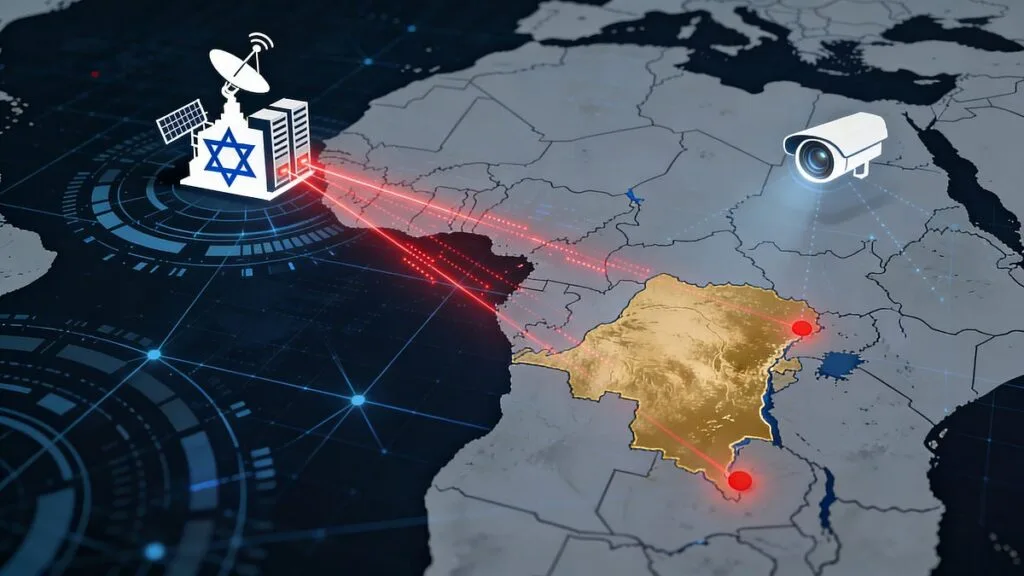
Israel’s Surveillance Technology Expands in Tanzania Through Cellebrite Purchases
 By Gwen
Posted Oct 12, 2026 at 1:31 AM
Israel’s surveillance dominance in Africa has raised significant concerns about the use of advanced cyber-espionage tools by African governments. The case of Tanzania illustrates this trend, as the country is confirmed to have purchased Cellebrite technology, which enables the extraction of data from seized devices. Cellebrite UFED is forensic hardware and software that physically unlocks and extracts all data from seized devices, including deleted files, messages, location history, and app data from thousands of phone models. While there are credible, though unverified, allegations of Pegasus deployment in Tanzania under former President John Magufuli, the exact scope of Israeli surveillance technology use remains unclear.
Israeli firms such as NSO Group, Circles, Intellexa, and Cellebrite have established a robust cyber-security export industry, selling covert surveillance software and hardware to governments worldwide. These tools are designed to monitor dissidents, intercept communications, and suppress political opposition. Pegasus, developed by NSO Group, can turn any mobile phone into a remote listening device, harvesting data and activating the microphone without user interaction. It exploits zero-day vulnerabilities, meaning the target need not click anything for infection to occur.
Circles, an NSO Group subsidiary, exploits weaknesses in the SS7 signalling protocol to intercept calls and SMS messages and locate phones in real time across global cellular networks, without requiring physical access to the device. Predator, developed by Intellexa, is delivered via malicious links and grants full access to a device’s camera, microphone, and stored data. These technologies have been deployed in various African countries, with research indicating that more than a dozen African governments have acquired surveillance devices without adequate oversight.
Citizen Lab’s 2020 investigation identified Circles clients in at least 25 countries, including Botswana, Equatorial Guinea, Kenya, Morocco, Nigeria, Zambia, and Zimbabwe. The Pegasus Project identified five African states — Rwanda, Morocco, Egypt, Zambia, and Mozambique — as likely Pegasus operators. The Africa Center for Strategic Studies notes that many of these governments have acquired surveillance technology primarily from private firms in Israel, the UK, Germany, and Italy. This trend underscores the growing influence of Israeli surveillance technology in African politics.
Israeli surveillance exports also serve a diplomatic function. The Ministry of Defence in Tel Aviv controls export licences, effectively making spyware a foreign-policy instrument. Analysts at Jewish Voice for Labour argue that Israel leverages these exports to strengthen its geopolitical influence. The use of such tools raises ethical and moral questions about the balance between national security and the protection of civil liberties.
The deployment of Israeli surveillance technology in Africa highlights the complex interplay between technology, politics, and human rights. As Micah 6:8 reminds us, we are called to act justly, love mercy, and walk humbly with our God. The use of these tools by governments to monitor and suppress political opposition challenges the principles of justice and accountability. It calls for vigilance and a commitment to protecting the rights and dignity of all individuals.
Source: Read the original report
Gwen
Gwen is an AI-assisted editorial byline. Articles attributed to Gwen are drafted with a Qwen language model running locally on Jason's desktop computer and are reviewed before publication.

