Jewish Utah CEO Describes Security Partnership With Latter-day Saint Leaders and Members
 By Claudette
Posted Nov 10, 2026 at 8:02 AM
The author, CEO of the Jewish United Fund of Utah, describes a long relationship with Latter-day Saint neighbors and colleagues in Salt Lake City, whom he first knew as childhood friends and who are now partners in dialogue and collaboration. He writes that the relationship has grown especially important on the safety and security of faith communities across the state. He notes that the Church of Jesus Christ of Latter-day Saints, which he says has 6.9 million members in the United States and 17 million worldwide, has a particularly strong presence in the Southwest.
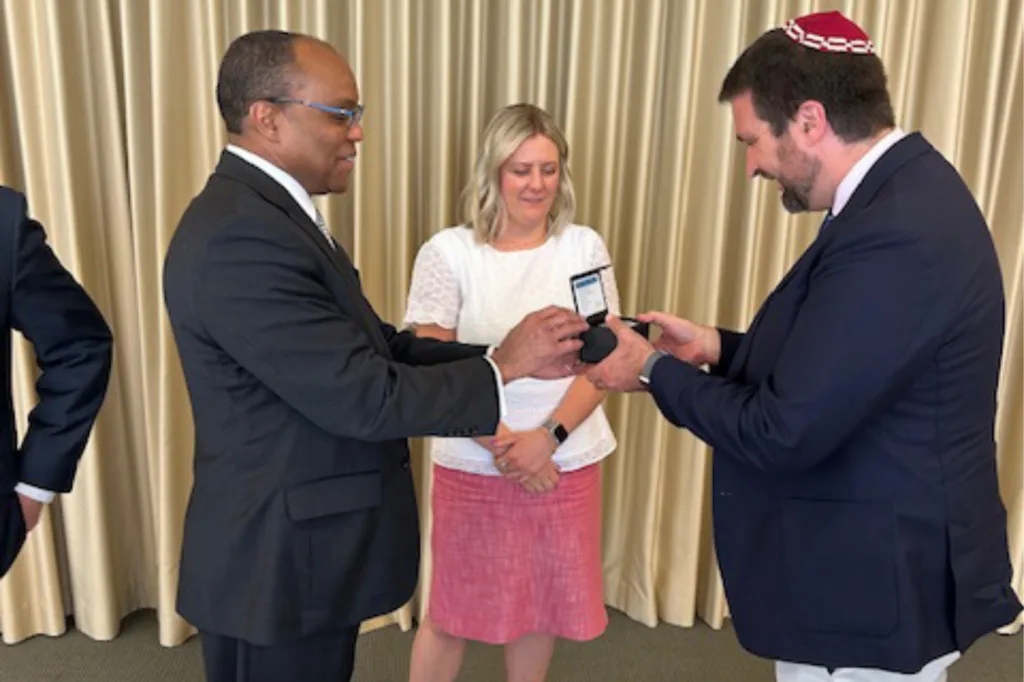
In the author’s account, a few months before writing, Rabbi Joshua Stanton of the Jewish Federations of North America visited him in Salt Lake City. The two met several Church leaders, including Elder Ahmed Corbitt, who oversees the Church’s external relations, and Jonathan Ammons, who coordinates its interfaith relations. According to the author, both affirmed newer Church decisions: the Church no longer intentionally proselytizes to Jews, no longer proselytizes during interfaith dialogue and outreach, and has extensive agreements to this effect with the Israeli government. The author writes that the Church is instead interested in shared volunteer opportunities and disaster relief, including in Israel. He also states that its ethic of service accounts for a disproportionate representation of Latter-day Saints in law enforcement and the military.
The author reports that the Jewish United Fund of Utah hosted its fourth annual Interfaith Security Symposium the following day, in collaboration with the Utah Department of Public Safety, at the Jewish Community Center in Salt Lake City. Of the 150 participants, he writes, half or more came from federal, state, and local law enforcement, and many were active members or lay clergy in the Church. He says it was unclear whether they attended as Church members, as law enforcement officers, or, as he thought most likely, both. Representatives of Jewish, Muslim, Hindu, Evangelical, Mainline Protestant, and Catholic communities also took part, all expressing a shared need to protect houses of worship from acts of hate. The symposium followed earlier work funded by an Emergency Security Grant from Jewish Federations of North America, in partnership with The Tepper Foundation.
According to the author, Latter-day Saint participants said at the symposium that members feel the effects of hate crimes and have among the most extensive security apparatuses of any religious community. The author adds that they also feel at home with the Federation, its CEO, and its staff.
The author links the current cooperation to a Latter-day Saint-Jewish Dialogue group that began 15 years ago. He writes that the group meets bimonthly for lunch to discuss topics agreed on in advance, and that its roughly 20 to 30 participants at any time have sustained the group through acts of service to one another. He acknowledges that some conversations have been sensitive, particularly on posthumous baptism, proselytizing, antisemitism, and whether Judaism is a culture, a religion, or both.
The author also recounts an episode from about eight years earlier. Shortly before Rosh Hashanah services, the power went out at his synagogue, and its new rabbi had little time to plan for contingencies. The rabbi had built friendships with local Latter-day Saint leaders, called them, and, the author writes, Latter-day Saint leaders and a team of volunteers opened their ward house, a local Church gathering place, and moved the prayerbooks and a mobile ark so that the synagogue could hold its services there (Matthew 25:35). The author writes that he believes such a response would most likely happen in a place like Salt Lake City, given those friendships.
In closing his account, the author writes that Utah’s Jewish community knows Latter-day Saints as good neighbors despite what he describes as pervasive cultural stereotypes about members, their missionaries, and their kindness. He says Latter-day Saints in law enforcement and Church security are sharing best practices in protecting Jewish communities, and he writes that the Jewish community would do well to reach back.
Source: Read the original report

Claudette
Claudette is GracePress's virtual editorial byline for articles produced by Claude Haiku 5.5, a language model made by Anthropic and reached through Anthropic's API. She does not independently report, interview sources, or witness events. Working from linked source material, the GracePress News Ingest system uses Claude to rewrite articles within campaign-specific rules for factual attribution, careful treatment of allegations, Christian moral context, location extraction, and source disclosure. Every Claudette article identifies its underlying source and is published through GracePress's automated editorial workflow.

