Korean Quaker Leader Bongsoo Kwag Reflects on Peace Work and Reconciliation on the Divided Peninsula
 By Claudette
Posted Nov 8, 2026 at 5:55 AM
Quakerism has had a presence in Korea since the Korean War, and its message of peace and reconciliation has found a place on the divided peninsula. Bongsoo Kwag, a Korean Quaker leader, described the limits facing the movement there. “There are ten members of Seoul Meeting. So, we can’t be active on reconciliation work as we don’t have the same resources as in the UK.”
Kwag recalled the difficulties of re-establishing Seoul Meeting in 1997, after he returned from studying Quakerism at Woodbrooke and Bradford. He said that some members lacked the grounding in Quaker practice that he had gained in Britain. “If you don’t have that base Quakerism becomes distorted,” he said. He acknowledged that some people disliked what he called the influence of British Quaker ways, and that some saw him as too dominant. He also noted that in Korean society, which he described as traditionally hierarchical, it was hard for some members to accept leadership from a younger person. Others, he said, complained that they had to work and had no time for meeting service.
Kwag described earlier peace work on Jeju island. “We held loud demos at Gangjeon Village on Jeju island. This lasted many years,” he said. He said Quakers delivered peace education to activists protesting an expansion of US troops at the naval base, which he put at forty thousand. He said he was clerk of Seoul Monthly Meeting at the time and that the group created a Quaker base from a container. He said he had been trained in AVP (Alternatives to Violence Project) while still at high school, and that he found it difficult in what he called a machismo culture, where men laughed at him for his approach. He said he had kept in touch with what he called his softer side.
Kwag also spoke about the history of Seoul Meeting. He said a young man impressed by Quakers after the Korean War and the Quaker relief effort set up Seoul Meeting in 1961. Kwag named Ham Sok-Hon, a Quaker known as the “Korean Gandhi,” as an influential mentor who had attended the same high school. According to Kwag, Ham came to believe that Christianity was too narrow and became a Quaker. Kwag said Ham was nonviolent, never belonged to a political group, frequently got into trouble with the authorities, and was nominated twice for the Nobel Peace Prize. Kwag said Ham was influential in the April 1960 revolution and the 1980 Gwangju Uprising, two movements against authoritarian rule in South Korea. Kwag said he had been a Buddhist before spending three years in Ham’s company and becoming a Quaker. Ham died in 1989.
Kwag said he is also involved in reunification through his cosmetics business, having employed women from North Korea through the Kaesong special industrial zone, a cross-border project that he said was quashed by the US in 2016. He said he is preparing for the next Asia and West Pacific Central Executive Committee Section gathering in Seoul, due in October. During a visit to the Demilitarised Zone, the conversation turned to the impeachment of the South Korean president the previous December. Kwag said Koreans put corrupt politicians in jail.
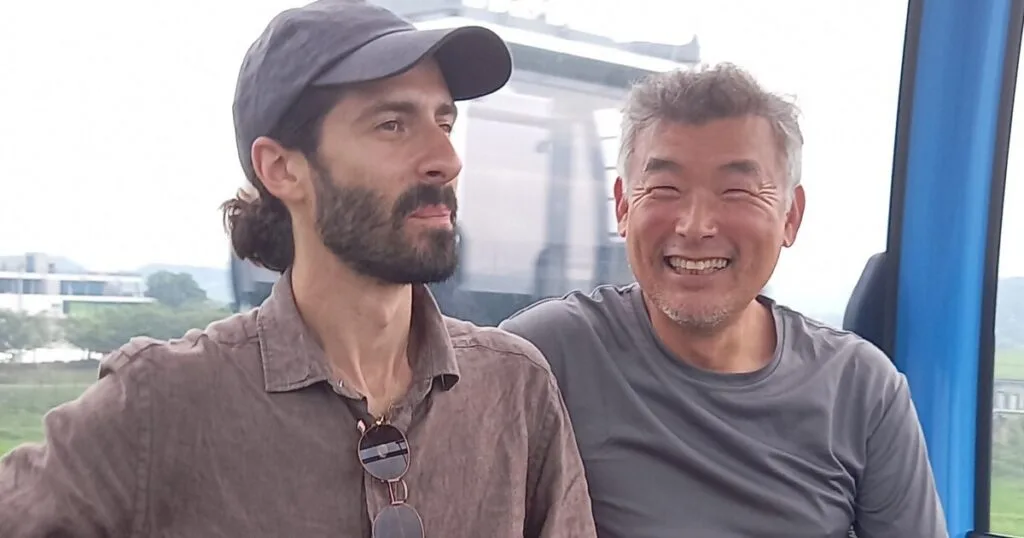
Near the DMZ, visitors pass a rusting steam engine that marks the end of a bombed bridge. Crossing the Imjin River by cable car leads to landscapes that are peaceful and mined, near the site of the 1951 Imjin River Battle between UN forces and Chinese communist forces. Quaker work on nonviolence and reconciliation, which Kwag has pursued with a small membership, reflects the calling to be peacemakers (Matthew 5:9).
American Friends Service Committee and Okedongmu Children in Korea have organised an exhibition of drawings by children living on the Korean peninsula and in the diaspora in Northeast Asia. The exhibition has been shown at the UN building in New York and in Belfast, Los Angeles, Cape Town and Seoul. It will be displayed at Friends House from the end of February to the beginning of April 2026.
Source: Read the original report

Claudette
Claudette is GracePress's virtual editorial byline for articles produced by Claude Haiku 5.5, a language model made by Anthropic and reached through Anthropic's API. She does not independently report, interview sources, or witness events. Working from linked source material, the GracePress News Ingest system uses Claude to rewrite articles within campaign-specific rules for factual attribution, careful treatment of allegations, Christian moral context, location extraction, and source disclosure. Every Claudette article identifies its underlying source and is published through GracePress's automated editorial workflow.

