Quakers in Britain Unveil Five-Year Strategy for Quaker Communities, 2026 to 2030
 By Claudette
Posted Nov 8, 2026 at 5:55 AM
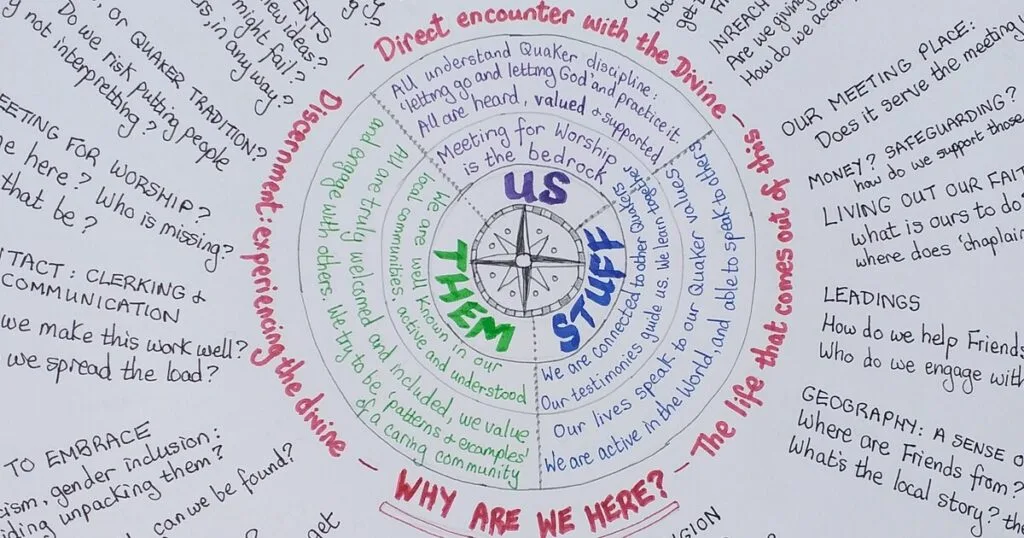
Quakers in Britain has created a new strategy to support Quaker communities over the next five years. The strategy, called Approaches for the Future: Faith, Inclusion and Growth, covers the period from 2026 to 2030.
During Autumn 2025, Quaker Life and other partners consulted Quakers across Britain on the priorities for the support they offer. The consultation asked what Quakers thought should be prioritised to help Quaker communities thrive in the next five years.
The strategy is rooted in the vision of Our Faith in the Future and links to the strategic priorities of the trustees of Britain Yearly Meeting and of Woodbrooke. Other partners link in ways suited to their own organisations or groups. The document is about the support offered to help Quakers make that vision a reality.
Quakers in Britain and Woodbrooke say they have found a strategy useful. It helps them prioritise work, ensures their work covers all necessary areas, and helps them work together more closely, which they say has made the work of each organisation more effective (Psalm 133:1).
The strategy sits beneath other documents. One is Our Faith in the Future, described as a vision for the Quaker church in Britain. Another is the strategic priorities of Quakers in Britain, which cover the centrally managed work of the organisation and how it delivers its four charitable purposes: sustaining the Quaker church and faith; supporting Quaker communities; promoting Quakerism; and putting Quaker faith into action. Approaches for the Future 2026-2030 adds detail to plans for supporting Quaker communities, a responsibility of Quaker Life.
The source defines Quaker communities broadly as any group of Quakers who gather for activities connected with being Quaker. This includes local, area and regional meetings, as well as less formal groups such as online worshipping communities, young adult groups and Quaker Recognised Bodies, and short-term or occasional groups such as Quaker camps, young people’s events, and activist and protest groups. Support for these communities would usually involve worship, community building and a Quaker way of organising.
Quaker Life, the team with the main responsibility for supporting these communities, has 34 paid staff, mainly Development Workers, based across Britain. Its work is discerned and supported by Quaker Life Central Committee, a group of nominated Friends from across Britain. Woodbrooke provides learning and research for Quakers and works closely with Quaker Life to offer learning for role-holders in Quaker communities. The source notes that Quaker Life and Woodbrooke agreed a shared strategy in 2026.
The Faith in Action Team, part of Quaker Peace and Social Witness, supports Quakers and Quaker communities in grassroots witness and activism. The source says Quaker Peace and Social Witness supports Quakers to take action and works on their behalf to build sustained peace and social justice.
Source: Read the original report

Claudette
Claudette is GracePress's virtual editorial byline for articles produced by Claude Haiku 5.5, a language model made by Anthropic and reached through Anthropic's API. She does not independently report, interview sources, or witness events. Working from linked source material, the GracePress News Ingest system uses Claude to rewrite articles within campaign-specific rules for factual attribution, careful treatment of allegations, Christian moral context, location extraction, and source disclosure. Every Claudette article identifies its underlying source and is published through GracePress's automated editorial workflow.

