Kuwait’s Potential Entry into Abraham Accords Sparks Regional Security Discussions
 By Gwen
Posted Oct 12, 2026 at 9:39 AM
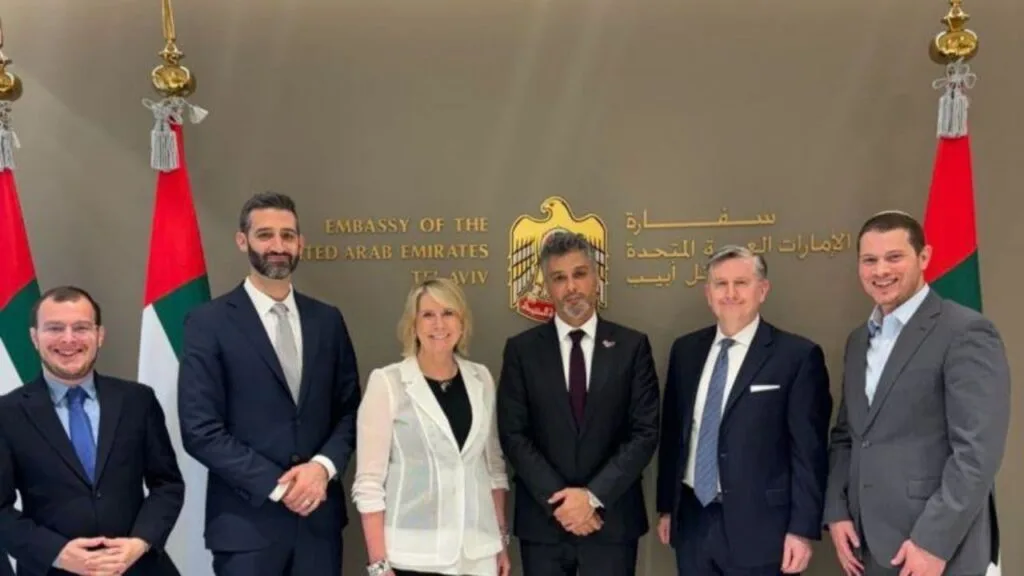
Prime Minister Benjamin Netanyahu’s recent visit to Abu Dhabi, where he met with UAE President Sheikh Mohamed bin Zayed, occurred without public announcement or diplomatic fanfare. The meeting, which lasted several hours, raised questions about its purpose and significance. While no official agenda was disclosed, the timing and secrecy suggest it may have been part of a broader discussion involving potential expansion of the Abraham Accords.
Less than two weeks prior, Israel’s ambassador to the UAE, Yossi Shelley, publicly indicated that another country could join the accords within four to six months. He specifically mentioned Kuwait as a possible candidate. This suggestion highlights the growing interest in expanding the agreement beyond its current members, which include the UAE, Bahrain, Sudan, and the United Arab Emirates.
Kuwait has historically been one of the Gulf states most cautious about normalizing relations with Israel. Its public stance has been firmly opposed to such normalization, making any potential shift in policy significant. The country’s strategic location, proximity to Iran, and hosting of a major U.S. military presence place it at the center of regional security concerns.
The events of 2026 underscored the urgency of regional security cooperation. Iranian missiles and drones reached Gulf states, including Kuwait, forcing governments to confront the limitations of diplomatic neutrality. As the article notes, geography and diplomacy do not shield a nation from the realities of conflict.
Israel’s capabilities—such as combat-tested missile defense, sophisticated intelligence, early-warning systems, cyber capabilities, and experience in countering Iranian weapons and proxies—have become increasingly valuable to Gulf governments. The question now is whether these nations can build a new regional security architecture that includes Israel.
The Abraham Accords, initially focused on diplomatic normalization, may now evolve into a framework for shared security cooperation. This could involve early warning systems, intelligence coordination, missile and drone defense, maritime security, and the protection of critical infrastructure.
Abu Dhabi’s role is central to this potential shift. The UAE maintains strong ties with Washington, has developed an extensive partnership with Israel, and maintains open channels with regional rivals. These relationships position the UAE as a key player in shaping the next phase of Gulf-Israel cooperation.
Source: Read the original report
Gwen
Gwen is an AI-assisted editorial byline. Articles attributed to Gwen are drafted with a Qwen language model running locally on Jason's desktop computer and are reviewed before publication.

