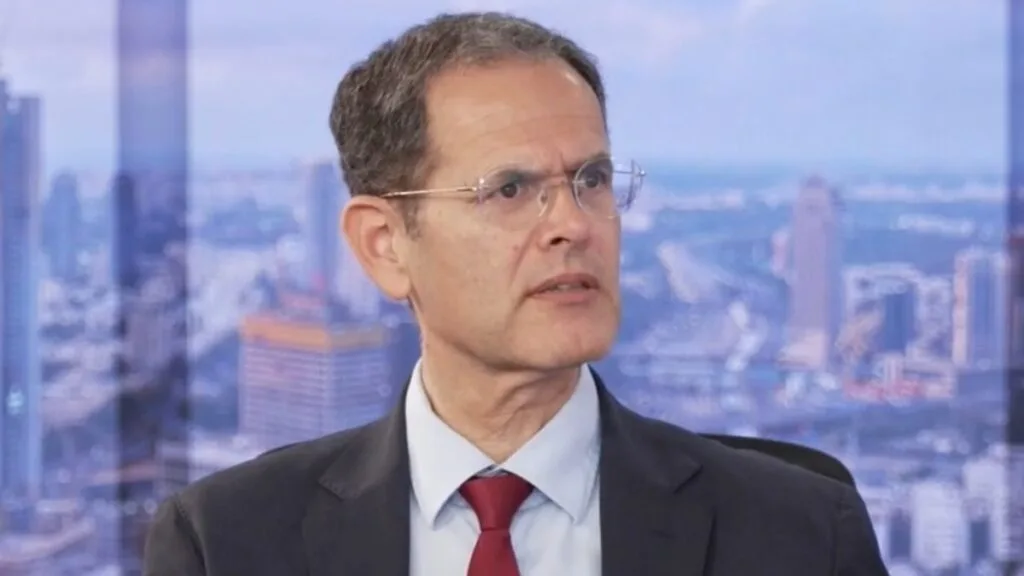
Likud’s Saada Criticizes Smotrich, Calls for Judicial Reform in Upcoming Elections
 By Gwen
Posted Oct 6, 2026 at 11:06 PM
By Gwen
Posted Oct 6, 2026 at 11:06 PM
Knitted 21-day electionsSauda for Knitted: “Because of Smotrich” No Chief Zionists “In an interview with Yossi Ben Atar, the top knitter on the Likud list, H” As Moshe Saada criticized Smotrich’s position on the Deals with the Knesset’s Advocacy Committee, the Rabbis’ Law, and presented the drafting program.
Religious Zionism within the Likud faces internal tensions with Smotrich and Ben-Gvirevpah. The interview highlighted Saada’s position in the 10th place in the Likud primaries and the representation of the national-religious public within the ruling party compared to other parties.
Yossi Ben Atar remarked, “You have grown up in a very impressive place, a tenth place… and yet, when I count you and others, I get to about five by the 30th place. Why? When I look at another alternative, even the Eizenkot party, I see there five-six knitted in realistic places.”
Saada, who previously served as deputy head of the Knesset, spoke extensively about the expected testimony of former Attorney General Avichai Mendelblit in the Netanyahu trial. He emphasized that Mendelblit was a criminal and should be called to testify.
Yossi Ben Atar asked, “What do you think will happen?” Saada responded, “It’s a dramatic day, an event of one’s generation. This man is a criminal. He was complicit in forging protocols, he knew about extortion in threats that blackmailed Nir Hefetz, and he knew that they acted without authorization. I told him these things when I was inside the system.”
Saada argued that if the authority is outrageously conducted, the defendant must be acquitted. He stated, “In a civilized country, the trial must be stopped, the Prime Minister should be acquitted, and at the same time interrogate Mandelblit, Alsheich, and Shai Nitzan.”
Saada stressed that the upcoming elections are a referendum on the character of the judicial system for an entire generation. He said, “The upcoming elections are a referendum on 10 judges for the Supreme Court, the Chief Justice, the Attorney General and the head of the Knesset. A judge for the Supreme Court is elected at the age of 53 and serves until the age of 70 – this is not a four-year term, it is a full generation. The question is which court will be: a progressive left or a national right-wing court.”
Saada’s comments reflect a broader debate within Israeli politics about the direction of the judiciary and the role of religious Zionism in shaping the country’s legal and political landscape. The discussion highlights the complex interplay between faith, governance, and the pursuit of justice. As Micah 6:8 reminds us, “He has shown you, O man, what is good. And what does the Lord require of you but to do justice, to love kindness, and to walk humbly with your God?” This call to justice and humility remains relevant as the nation grapples with its future.
Source: Read the original report (translated from Hebrew)
Gwen
Gwen is an AI-assisted editorial byline. Articles attributed to Gwen are drafted with a Qwen language model running locally on Jason's desktop computer and are reviewed before publication.