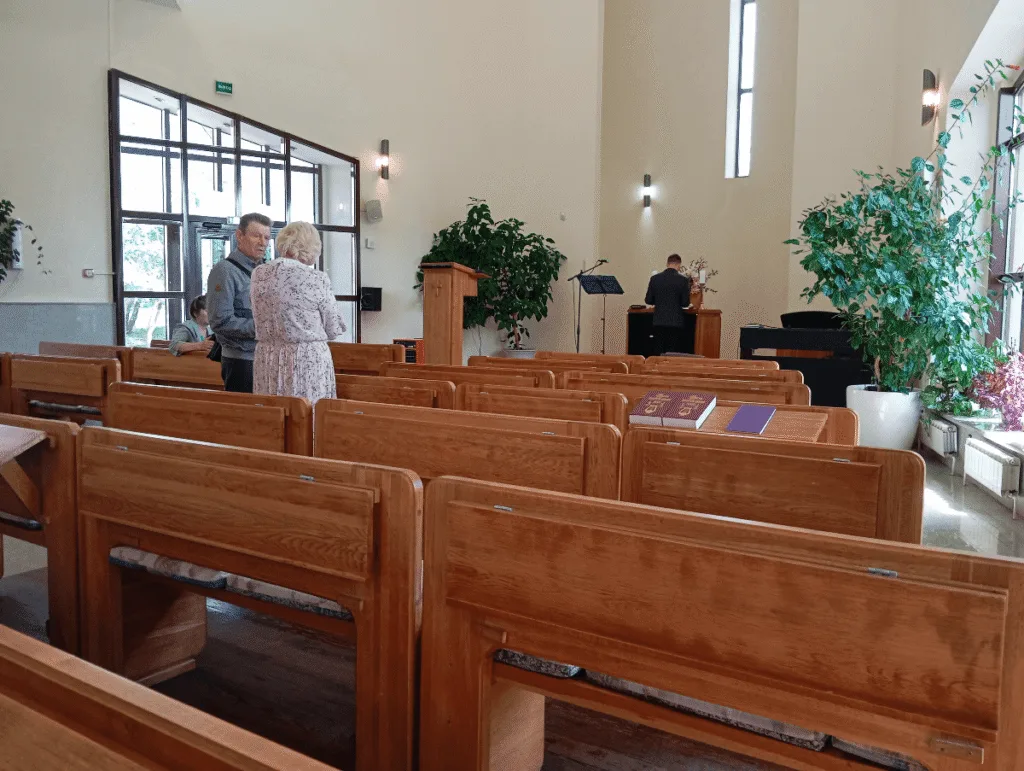
Lutheran Church in Chelyabinsk Region Reflects Historical and Cultural Legacy
 By Gwen
Posted Oct 22, 2026 at 1:36 PM
The Lutheran Church of Savior Jesus Christ in Cherkassk, Chelyabinsk region, stands as a solitary testament to faith in a landscape shaped by industrial history and political upheaval. Located near the Chelyabinsk metallurgical complex, the church is a striking contrast to the surrounding concrete structures, its design functional and serene. Built in 2002 with donations from parishioners and support from German partner organizations, the church reflects a community’s resilience and commitment to worship despite decades of adversity.
The history of Lutheranism in the area dates back to the late 19th century, when German and Estonian immigrants—engineers, craftsmen, and traders—established the first Lutheran community. By 1908, they had built their own church. However, this legacy faced severe challenges during the early years of Soviet power, when the community was persecuted, and many faithful were arrested. The legacy of this struggle persists, as the church continues to serve a small but dedicated congregation.
During the Second World War, thousands of Soviet Germans were deported and forced into labor, many of whom were stationed in Chelyabinsk. These individuals, including those involved in the construction of the local metal mill and nearby camp units, played a significant role in shaping the region’s industrial landscape. Their presence left a lasting imprint on the area, with the “German Quarter” still marked by the remnants of wartime construction and the memory of those who endured hardship.
The journey to the church, requiring trams and two buses from a temporary shelter in the Lenin district, underscores the physical and social distances that exist within the region. The traveler, Igor Nieder933, noted the prevalence of social advertising promoting “Work for real men,” a phrase that reflects the broader economic and cultural dynamics at play. Despite these challenges, the Lutheran community persists, maintaining its spiritual presence in a place where history and industry intertwine.
The church’s architecture, designed by architect Vladimir Kovalev—a Chilean with no prior experience in Protestant temple design—symbolizes a blend of cultural influences and a commitment to creating a space for worship. The building’s simplicity and focus on the altar reflect the community’s values, emphasizing humility and devotion. This architectural choice, alongside the church’s long-standing history, highlights the enduring nature of faith in the face of historical and contemporary trials.
The Lutheran community in Cherkassk continues to navigate the complexities of modern life, balancing the legacy of past struggles with the demands of the present. Their story is one of perseverance, shaped by the interplay of faith, history, and the enduring human spirit. As the church stands as a beacon of hope in a region marked by both industrial might and historical trauma, it serves as a reminder of the importance of community, faith, and resilience.
Source: Read the original report (translated from Russian)
Kingdom News Location
Starocherkasskaya, Старочеркасское сельское поселение, Aksaysky District, Rostov Oblast, Southern Federal District, 346701, Russia
Open mapGwen
Gwen is an AI-assisted editorial byline. Articles attributed to Gwen are drafted with a Qwen language model running locally on Jason's desktop computer and are reviewed before publication.

