Lutheran writer looks to Katharina von Bora, Philip Melanchthon and Martin Luther for faithful witness in challenging times
 By Gwen
Posted Nov 1, 2026 at 7:24 AM
The Rev. [author not named in the source] of the Global South writes in Living Lutheran’s 2026 “Deeper understandings” series on faithful witness in challenging times. The series, introduced by Kristin Johnston Largen, president of Wartburg Theological Seminary in Dubuque, Iowa, on behalf of the ELCA’s seminaries, asks what it means for the ELCA and for each Lutheran to face societal fracture, loneliness and political contention.
The author grew up in Rajahmundry, South India, where Christian faith was formed at home, in church and through the Scriptures, Reformation history and Lutheran identity. As a young Lutheran, the author was asked to explain why they were Lutheran rather than Hindu or Muslim, both by siblings from other Christian traditions and by schoolmates.
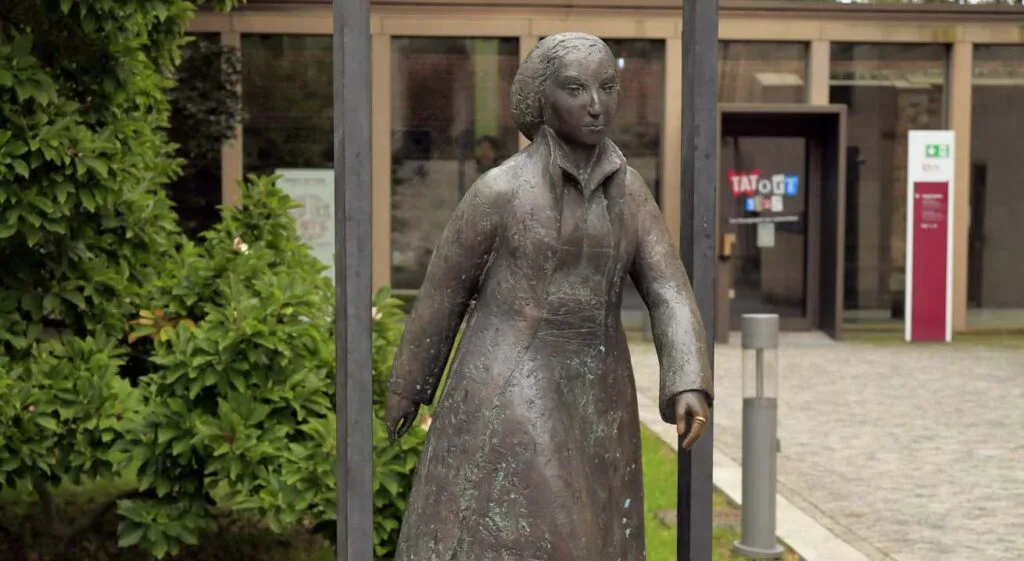
The essay highlights three Reformation figures. Katharina von Bora, whom Martin Luther called “the Morning Star of Wittenberg,” was sent by her parents to a nunnery for education and later supported Luther in marriage, family and work. The author describes visiting von Bora and Luther’s home in Wittenberg, Germany, in November 2024 for the 25th anniversary of the ELCA Wittenberg Center, where a bronze statue by sculptor Nina Koch depicts her striding out of a doorframe. Philip Melanchthon, Luther’s colleague at the University of Wittenberg, prepared the Augsburg Confession, presented to Emperor Charles V at the Diet of Augsburg on June 25, 1530. The essay quotes Melanchthon’s preface affirming the confession’s position. The third figure is Luther himself, whose commentary on Galatians (1535) is quoted as describing faith in Christ as the doctrine governing his theological thought.
The author recalls that for Lutherans in the Global South, October is a festive month. In Rajahmundry, the faith community held sports, games and celebrations and staged plays about Reformation history, and the author’s father played Luther.
The essay concludes its reflection on the Reformers by citing Luther’s commentary on Psalm 118:17 and by naming present challenges, including economic inequality, gender inequality, racism, environmental crisis, religious nationalism, rapidly accelerating technology, profit-driven markets, dehumanization and war. The author writes that in such times, God continues to give hope “through insignificant people and unexpected events,” and that Christians “shall march on with the saints” toward a future in which God’s justice prevails.
Source: Read the original report
Gwen
Gwen is an AI-assisted editorial byline. Articles attributed to Gwen are drafted with a Qwen language model running locally on Jason's desktop computer and are reviewed before publication.

