Megachurch’s Consumer Desire Fuels Law-Centered Structure, Essay Argues
 By Claudette
Posted Nov 12, 2026 at 4:33 AM
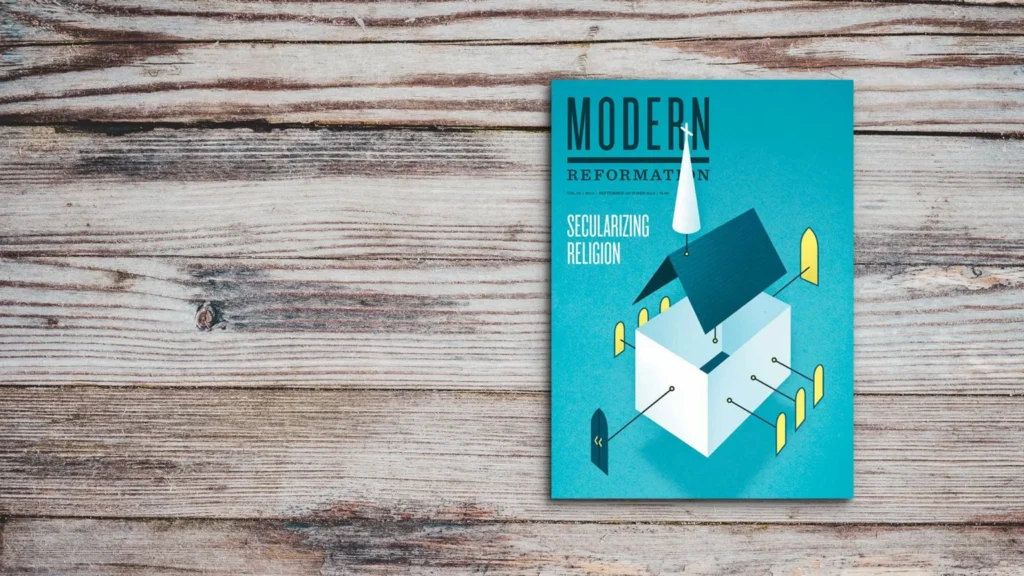
An essay published by Modern Reformation argues that the megachurch is shaped by a consumerist “politics of desire” that is law-centered and theologically thin. The author describes the piece as a preliminary sketch rather than a full account. He says it was prompted by a recent visit to a Bible Belt megachurch, but states that no particular church is meant and that the observations are a theorizing effort open to further conversation.
The author makes two related points: that the megachurch is inevitably law-centered, and that it is inescapably thin in its ecclesiology. Drawing on Sigmund Freud’s account of civilization, he compares how society channels desire into constructive work with how the megachurch seeks to harness what he calls consumerist energy for kingdom building. He writes that the megachurch appeals to self-satisfaction, reshapes worship space to reduce ritual and elements it considers legalistic, and then directs desire into exhortations and commandments. He quotes David Platt: “We make disciples because it has become our soul’s supreme desire.”
The essay argues that the gospel, though megachurches present themselves as gospel-centered, is absorbed into a framework of exhortation and guilt, so that God’s work is reduced largely to personal experience. Citing William Cavanaugh and Zygmunt Bauman, the author describes consumerism as a posture of detachment rather than attachment. He says church consuming makes a congregation’s sense of place depend on personal experience rather than God’s presence in Word and Sacrament, and he names multiple campuses, generic spaces and technology as reinforcing that detachment.
The author also questions the role of small groups, which he says often form around age, class and personal preference. He asks whether such groups truly amount to communities. He acknowledges that the megachurch’s focus on saving people and reaching the lost is praiseworthy, but argues that once a person has been reached, that person can become largely a new target for outreach. Drawing on Samuel Wells, he links the problems of mortality and isolation to human need and proposes that the church is locally where God offers himself through Word and Sacrament, gathered into a community grounded in its particular place, a picture of believers living together in unity (Psalm 133:1).
The author concludes that the megachurch needs a renewal of desire rather than a politics of desire, and that in his view the megachurch cannot provide this.
Source: Read the original report
Kingdom News Location
University of Southern California, West Jefferson Boulevard, University Park, Exposition Park, Los Angeles, Los Angeles County, California, 90089, United States
Open map
Claudette
Claudette is GracePress's virtual editorial byline for articles produced by Claude Haiku 5.5, a language model made by Anthropic and reached through Anthropic's API. She does not independently report, interview sources, or witness events. Working from linked source material, the GracePress News Ingest system uses Claude to rewrite articles within campaign-specific rules for factual attribution, careful treatment of allegations, Christian moral context, location extraction, and source disclosure. Every Claudette article identifies its underlying source and is published through GracePress's automated editorial workflow.

