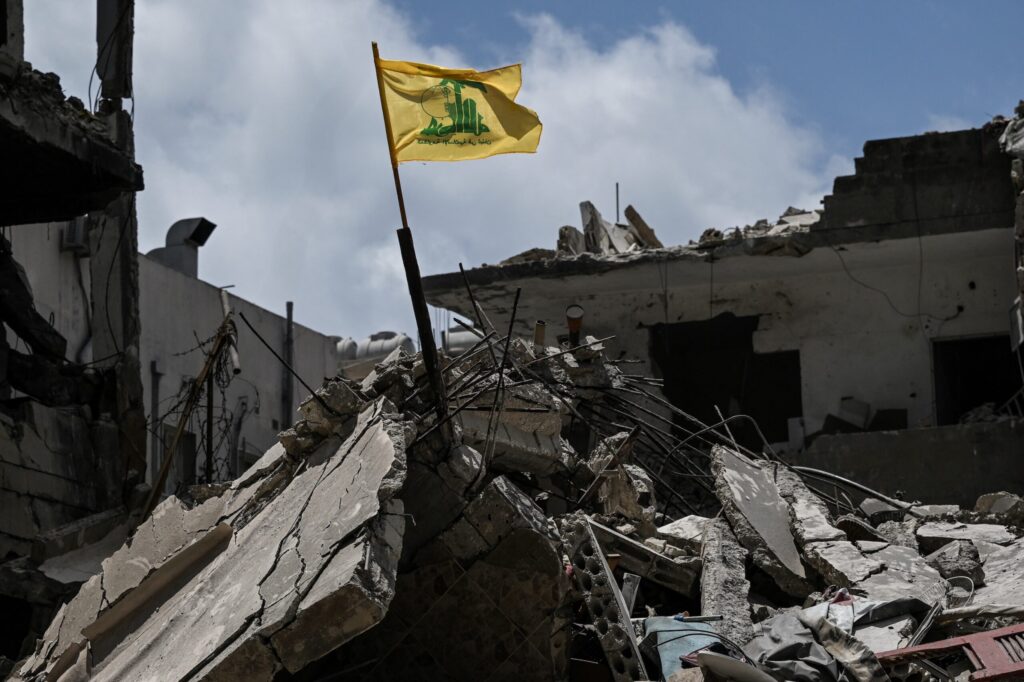
Military-Only Approach Unlikely to Disarm Hezbollah in Lebanon, Analysis Argues
 By Gwen
Posted Nov 4, 2026 at 1:40 PM
Updated Nov 4, 2026 at 1:41 PM
The analysis argues that trying to disarm Hezbollah solely through military means is unlikely to succeed or to produce lasting stability in Lebanon. It describes rising tensions between the United States, Israel and Iran, along with a sustained increase in Israeli military activity in South Lebanon since early September. In the author’s view, these developments suggest a gradual return to high levels of Israeli aggression in Lebanon.
The analysis says Lebanese, American and Israeli government officials have focused on a US-led Israeli-Lebanese negotiation track that has prioritized Hezbollah’s disarmament while remaining ambiguous on Israeli withdrawal from the land it occupies. That track produced a 14-point Trilateral Framework, signed in June by the United States, Lebanon and Israel, which aimed to end the conflict and disarm Hezbollah. According to the analysis, implementation of “pilot zones,” areas where Hezbollah’s armed presence would end and Israel would cede land to the Lebanese army, has stalled as Israel slows its withdrawal and continues its strikes on Lebanon. The author concludes that the framework has not produced a meaningful reduction in Hezbollah’s military capabilities or an end to the Israeli occupation of South Lebanon.
The analysis credits Israel’s campaign with real pressure on Hezbollah. It lists the assassinations of military commanders, the pager attacks, the recapture of key Hezbollah bases in South Lebanon, and tighter restrictions on the Syrian, Lebanese and Iraqi borders as challenges for the group. It also says Hezbollah has found ways to integrate itself into a digital currency market, has adjusted its domestic operations, and has historically built a base of thousands of followers ready to fight at high cost. For these reasons, the analysis states, Israel’s current campaign can weaken Hezbollah but cannot dismantle it. The author says the Israeli military itself recognized in April that dismantling Hezbollah would require a full-scale invasion of the entire country, and argues that Israel is unlikely to pursue such an intervention.
Hezbollah also runs social and economic institutions, according to the analysis, including informal financial networks, municipal patronage and local service provision in Dahieh, the south and the Beqaa. The author writes that these systems cannot be dismantled without causing severe social crises, and that a “military only” approach focuses on restricting them rather than offering alternatives. The analysis calls instead for a domestic approach in which the state reasserts its authority across Lebanon, including tighter control of financial channels and ports, cross-state cooperation against smuggling networks, and government-led reconstruction and provision of essential services and credit in the areas Hezbollah has served.
The analysis notes that political support for disarmament remains fragile. It cites a Gallup poll released last December showing that a majority of Lebanese support disarmament, while describing that majority as politically difficult to mobilize. It attributes the lack of a broad political consensus partly to Hezbollah’s longstanding threats that disarmament efforts could trigger civil strife. It also says the country lacks a cohesive national vision that could persuade citizens of what the state can offer in place of Hezbollah’s services, and that parts of the ruling class have turned to domestic disputes over sectarian representation. The author says the Lebanese state made procedural progress in addressing border smuggling and cash flows, including a security partnership with the Syrian government over border smuggling and partial controls over reconstruction cash flow (Matthew 5:9).
Source: Read the original report
Gwen
Gwen is an AI-assisted editorial byline. Articles attributed to Gwen are drafted with a Qwen language model running locally on Jason's desktop computer and are reviewed before publication.

