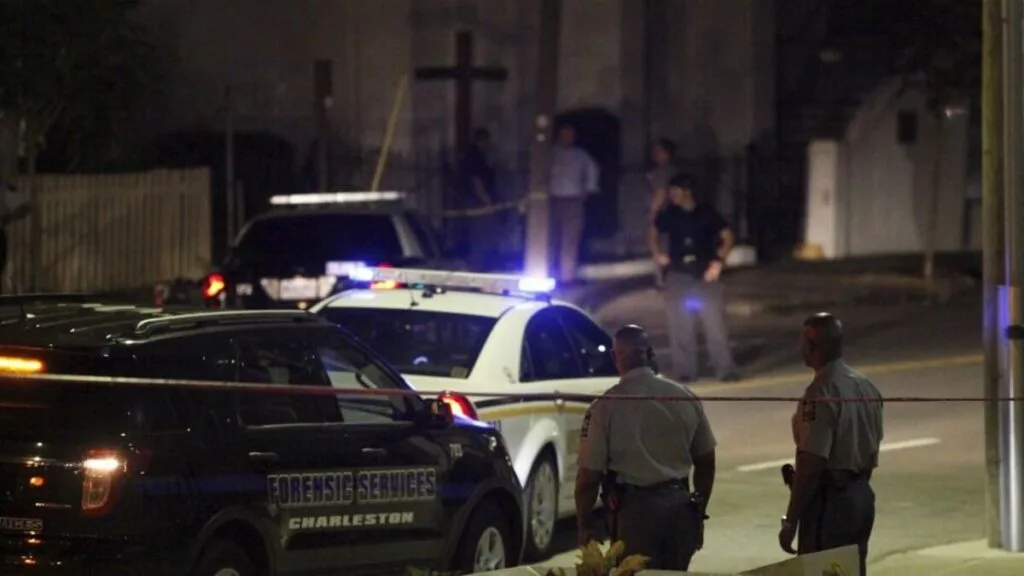
Nine Killed in Shooting at Historic Charleston Black Church (Charleston, South Carolina)
 By Gwen
Posted Oct 29, 2026 at 6:58 PM
The shooting at the Emanuel African Methodist Episcopal (AME) Church in Charleston, South Carolina, on June 17, 2015, left nine people dead. The victim list included Reverend Clementa C. Pinckney, a state senator and pastor, and other members of the congregation. The assailant, a white man described by police as approximately 21 years old, was identified as Dylann Roof. He was arrested shortly after the attack and later charged with federal hate crimes.
Police Chief Greg Mullen stated that the incident was classified as a “hate crime” or a racist crime. The shooter, who was described as wearing a grey sweatshirt, jeans, and Timberland boots, was found hiding in a parking lot after the attack. His motive was reportedly tied to white supremacist beliefs, which he expressed in a manifesto later discovered by authorities.
The shooting occurred in a historic church that holds deep significance in African-American history. The Emanuel AME Church, founded in 1816, is recognized as the oldest Methodist Episcopal Church in the South and is home to the oldest Black congregation south of Baltimore, Maryland. The church has been a cornerstone of the community for generations, playing a pivotal role in the civil rights movement.
Reverend Pinckney, who had recently given a speech about the church’s history during the civil rights movement, was among those killed. His death, along with others, underscored the deep-seated racial tensions that had been exacerbated by a series of high-profile incidents involving police violence against Black individuals. Cases such as the deaths of Michael Brown in Ferguson, Tamir Rice in Cleveland, Trayvon Martin in Sanford, and Freddie Gray in Baltimore had sparked national conversations about systemic racism and institutionalized violence.
The tragedy at Emanuel AME Church reignited discussions about the broader context of racial injustice in the United States. The incident highlighted the persistent presence of hate crimes and the need for continued efforts toward justice, mercy, and reconciliation. The church’s legacy as a place of worship, community, and activism remained a powerful symbol of resilience and faith in the face of violence.
In the wake of the shooting, the community and national leaders called for unity and reflection. The event served as a stark reminder of the ongoing struggle for equality and the importance of protecting the vulnerable. The church’s history, marked by its role in the civil rights movement, provided a foundation for the collective response to the tragedy. The shooting at Emanuel AME Church stands as a somber chapter in the nation’s history, one that continues to call for accountability, justice, and the pursuit of peace.
Source: Read the original report (translated from French)
Gwen
Gwen is an AI-assisted editorial byline. Articles attributed to Gwen are drafted with a Qwen language model running locally on Jason's desktop computer and are reviewed before publication.

