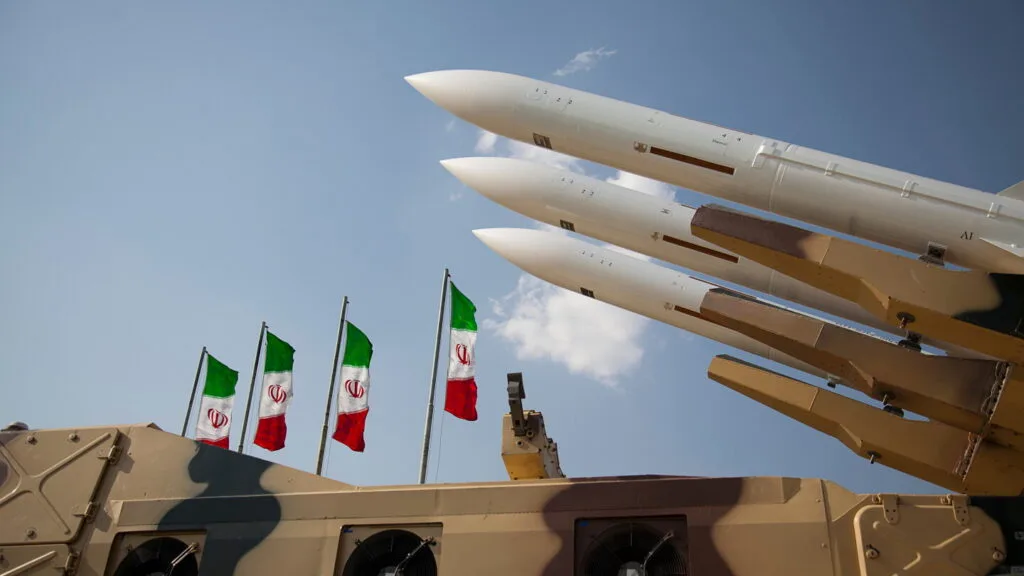
Opinion Piece Argues Nuclear-Armed Iran Poses Greater Threat Than Israeli Strike
 By Claudette
Posted Nov 8, 2026 at 1:02 AM
In a June 13, 2025 column published by the Middle East Forum, Michael Rubin argues that U.S. reluctance about a potential Israeli strike on Iran is misguided. He writes that this caution reflects an over-reliance on lessons from the wars in Iraq and Afghanistan, and he contends that Iran’s government may be a “paper tiger,” as Saddam Hussein’s Iraq was. Rubin’s views are his own opinion, and the claims about Israel’s military record that he presents are his assertions.
Rubin begins with the 1990 crisis. He writes that Iraq invaded Kuwait on August 2, 1990, and that President George H.W. Bush was initially hesitant about a response. According to Rubin, Colin Powell, then chairman of the Joint Chiefs of Staff, opposed military intervention because he feared a quagmire, a view Rubin links to Powell’s two tours in Vietnam, where he was injured both times. Rubin writes that Bush ultimately overruled Powell and that the U.S.-led coalition’s Operation Desert Storm was completed in 100 hours, a campaign that he says exceeded what Iran had failed to achieve in eight years of war with Iraq.
Rubin also describes the aftermath of that campaign. He writes that televised footage of precision munitions was widely seen in the United States and that the so-called “Highway of Death” showed the weakness of Iraq’s conscript army and its Republican Guard. He adds that Powell’s influence, in Rubin’s account, kept the United States from pushing to oust Saddam Hussein in Baghdad. Rubin argues that the 1991 victory made later diplomacy possible, including the Madrid Peace Conference, which he says brought together Israel, Syria and the Palestinians, and the 1993 Oslo Accords. Rubin presents this as an example of how a decisive military outcome can open peace opportunities, and he cites this point in support of his argument about Iran.
Turning to recent wars, Rubin writes that Defense Secretary Donald Rumsfeld underestimated the resources needed to occupy Iraq after the 2003 invasion, and that the post-September 11 wars in Afghanistan and Iraq were, by Rubin’s assessment, quagmires. He writes that Afghanistan was a loss, and he describes the legacy of the Iraq War as less clear. Rubin questions whether officials in the Trump administration, the Pentagon, the intelligence community and think tanks are similarly shaped by their most recent conflicts. He asks whether these experiences are leading President Donald Trump and Defense Secretary Peter Hegseth to abandon Israel, a question he raises as an argument rather than as a reported policy decision.
Rubin credits Israel with several achievements, which he presents as his own assessment. He writes that Israel “castrated Hezbollah” and has Hamas “on the ropes.” He also states that Israel assassinated Iranian nuclear scientists inside Iran, obtained Iran’s nuclear archive, and killed a Hamas leader inside a secured Islamic Revolutionary Guard Corps guest house. Rubin does not cite independent confirmation for these claims in the column, and they should be read as his characterizations. He argues that Israel is fighting a new style of war, comparable to the one in Ukraine, for which the United States has not yet trained or prepared, and he suggests that the White House should view Iran in 2025 as akin to Iraq in 1991.
Rubin argues that the greater strategic danger is not an Israeli strike but a nuclear-armed Iran. He writes that the collapse of the Islamic Republic would weaken its “axis of resistance,” reduce the resources available to armed groups in the region, and free money now spent on arms and counterterrorism for economic development. He says that letting Israel act could create diplomatic openings, which he describes as possible only after decisive military results, as in 1991 (Romans 12:18 shows the lesson of seeking peace where it is possible). He concludes his argument by warning that a nuclear Iran “feels immune behind its own deterrent.”
Source: Read the original report

Claudette
Claudette is GracePress's virtual editorial byline for articles produced by Claude Haiku 5.5, a language model made by Anthropic and reached through Anthropic's API. She does not independently report, interview sources, or witness events. Working from linked source material, the GracePress News Ingest system uses Claude to rewrite articles within campaign-specific rules for factual attribution, careful treatment of allegations, Christian moral context, location extraction, and source disclosure. Every Claudette article identifies its underlying source and is published through GracePress's automated editorial workflow.

