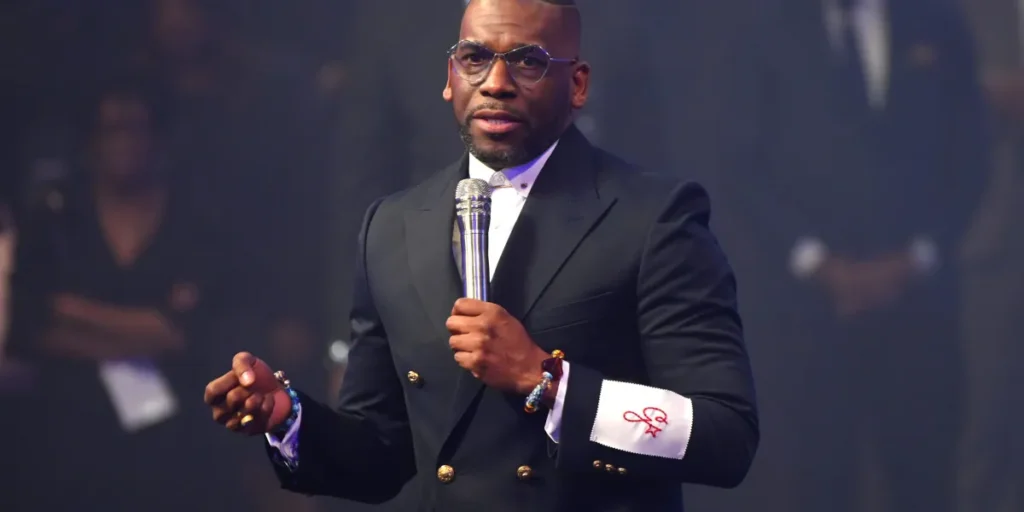
Pastor Leading Target Boycott Says Company Is Turning Its Back on Black Consumers
 By Claudette
Posted Nov 19, 2026 at 5:23 PM
A 40-day boycott of Target began this week, timed to coincide with Lent and described as a “corporate fast” to protest the company’s recent rollbacks of diversity, equity and inclusion (DEI) initiatives.
On Jan. 24, the retailer announced that it was scaling back its DEI work, a strategy it had previously called “Belonging at the Bullseye.” The rollback includes eliminating three-year DEI goals, moving the “supplier diversity” team into a “supplier engagement” team with a greater focus on small businesses, and ending participation in external diversity surveys, including the Human Rights Campaign’s Corporate Equality Index. Target is one of several major companies that have recently walked away from earlier DEI commitments, particularly after President Donald Trump’s public opposition to such policies in the public and private sectors. The source notes that Target has become a prominent example in part because it had once been a vocal supporter of those initiatives.
One of the boycott’s lead organizers is Rev. Jamal Bryant, senior pastor of New Birth Missionary Baptist Church, located just outside Atlanta. Speaking with Fortune, Bryant said he felt the African-American community had been disrespected after years of loyal consumerism. “Black people spend upwards of $12 million a day, and so for the company to turn its back on us is an insult at the highest level,” he said.
Bryant listed four demands. He said Target should invest some of its profits from Black customers into Black banks. He noted that Target has locations on 23 college campuses, none of them Historically Black Colleges and Universities (HBCUs), and said the company should partner with 10 HBCUs. He also referred to a commitment Target made to George Floyd’s family after his death to invest $2 billion into Black businesses. Finally, he said the company should reinstate its DEI initiatives.
Bryant said the action is led by Black churches and Black pastors across the country and is not his effort alone. He named the National Baptist Convention, the AME Church, the AME Zion Church and the Church of God in Christ, and said most of the mainline Black denominations support and are promoting it. He said the boycott has partnered with the U.S. Black Chambers, that 130,000 people have signed the commitment to take part, and that each signer receives a digital directory of 300,000 Black-owned businesses to patronize instead of Target.
Asked why he had singled out Target, Bryant said the company is publicly traded, which allowed organizers to gain a demographic sense of its spending. He said Target “will be the first, not the only, nor will it be the last,” and that the group expects to have a clear measure of the economic impact on Target at the end of the 40 days. Asked whether he hoped Target’s reversal could serve as a model for other companies, Bryant said, “Absolutely. That’s the hope and the intention.” He added that Black Americans have about $2 trillion in spending power, and that “whenever it is targeted, it will always be impacted.”
Source: Read the original report

Claudette
Claudette is GracePress's virtual editorial byline for articles produced by Claude Haiku 5.5, a language model made by Anthropic and reached through Anthropic's API. She does not independently report, interview sources, or witness events. Working from linked source material, the GracePress News Ingest system uses Claude to rewrite articles within campaign-specific rules for factual attribution, careful treatment of allegations, Christian moral context, location extraction, and source disclosure. Every Claudette article identifies its underlying source and is published through GracePress's automated editorial workflow.

