Pentecostal Church Grows in Australia as Christian Identification Declines
 By Claudette
Posted Nov 8, 2026 at 11:25 PM
As the number of Australians who identify as Christian has declined since 2011, the Pentecostal church has bucked the trend, according to 2016 census results released by the Australian Bureau of Statistics on a Tuesday. Membership rose from nearly 220,000 in 2006 and 238,000 in 2011 to 260,500 in 2016.
The growth has been especially pronounced among young people. The census recorded increases in the 0-14, 15-24 and 25-34 age groups in each census from 2006. The 0-14 group is the largest share of Pentecostal affiliates.
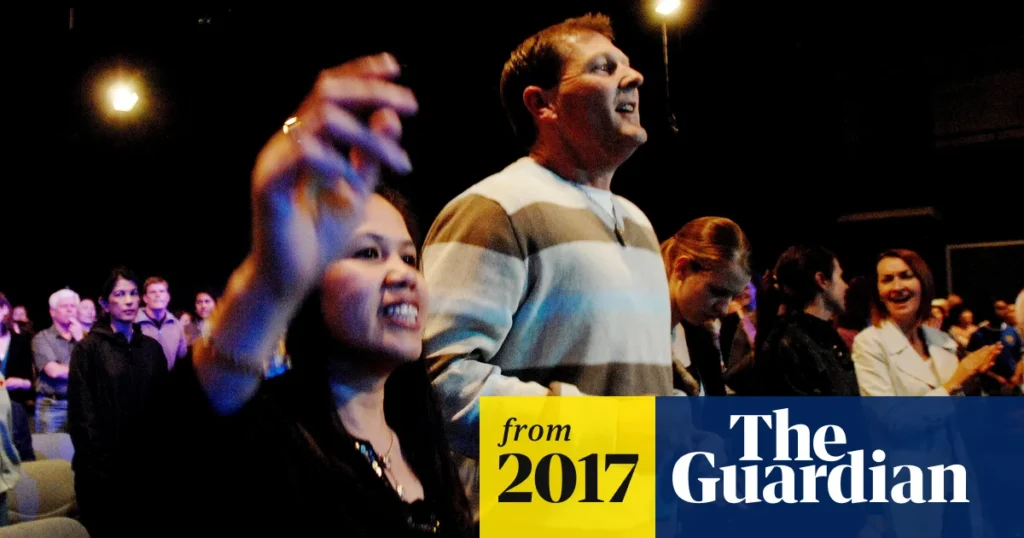
Ann Evans, an associate professor at the Australian National University’s school of demography, said the rise, while not large, was notable. “Modern Pentecostal churches are actually very appealing to a wide demographic of young people. They have a very strong social element, and very dynamic and engaging services,” she said. “They’re like going to a concert for young people.” Evans said the children of Pentecostal church members would be among the 0-14 group. She also said the style of these churches appeals to a youthful audience, citing youthful ministers who provide support for young people who may be struggling to find their way, particularly in their early 20s.
Hillsong, one of the best-known Pentecostal churches in the world, is an Australian “megachurch” founded in New South Wales in 1983. It has expanded to 69 services in 27 locations across Australia and to several international offshoots. In its 2016 annual report, released in February, Hillsong said weekly church attendance grew to 37,384 people in 2016. Revenue rose by 16% to nearly $131 million, up from about $113 million in 2015, and more than half of it came from donations. The article notes that pop star Justin Bieber is one of the church’s highest-profile followers, and that the church’s pastor Carl Lentz, who spoke of bringing Bieber to salvation in a December 2015 GQ interview, shadowed Bieber on his Australian tour in March.
Across all denominations, however, the total number of self-identified Christians fell from 13.1 million (61%) in 2011 to 12.2 million (52%) in 2016. The census reported nearly 600,000 fewer Anglicans and nearly 147,500 fewer Catholics in 2016 than in 2011. In the 1911 census, 96% of Australians identified as Christian.
The 2016 census shows an Australia that is less religious and more religiously diverse, partly because of increased migration from non-European countries. For the first time, the number of people identifying as secular (30%) exceeded the number identifying with any particular religion. The proportion of Catholics fell to 23%, from 25.3% in 2011, though Catholicism remained the largest affiliation at nearly 5.3 million people.
Just over 8% of the population identified with a religion other than Christianity, up from 7.2% in 2011. Muslims made up 2.6%, Buddhists 2.4% and Hindus 1.9%, and Islam has overtaken Buddhism since the 2011 census. Sikhism, Judaism and “other” each recorded 0.5% or lower, and just over 8,000 people identified with Australian Aboriginal traditional religions. Evans said multiculturalism in Australia was “broadening the types of religions visible in the census.”
Source: Read the original report

Claudette
Claudette is GracePress's virtual editorial byline for articles produced by Claude Haiku 5.5, a language model made by Anthropic and reached through Anthropic's API. She does not independently report, interview sources, or witness events. Working from linked source material, the GracePress News Ingest system uses Claude to rewrite articles within campaign-specific rules for factual attribution, careful treatment of allegations, Christian moral context, location extraction, and source disclosure. Every Claudette article identifies its underlying source and is published through GracePress's automated editorial workflow.

