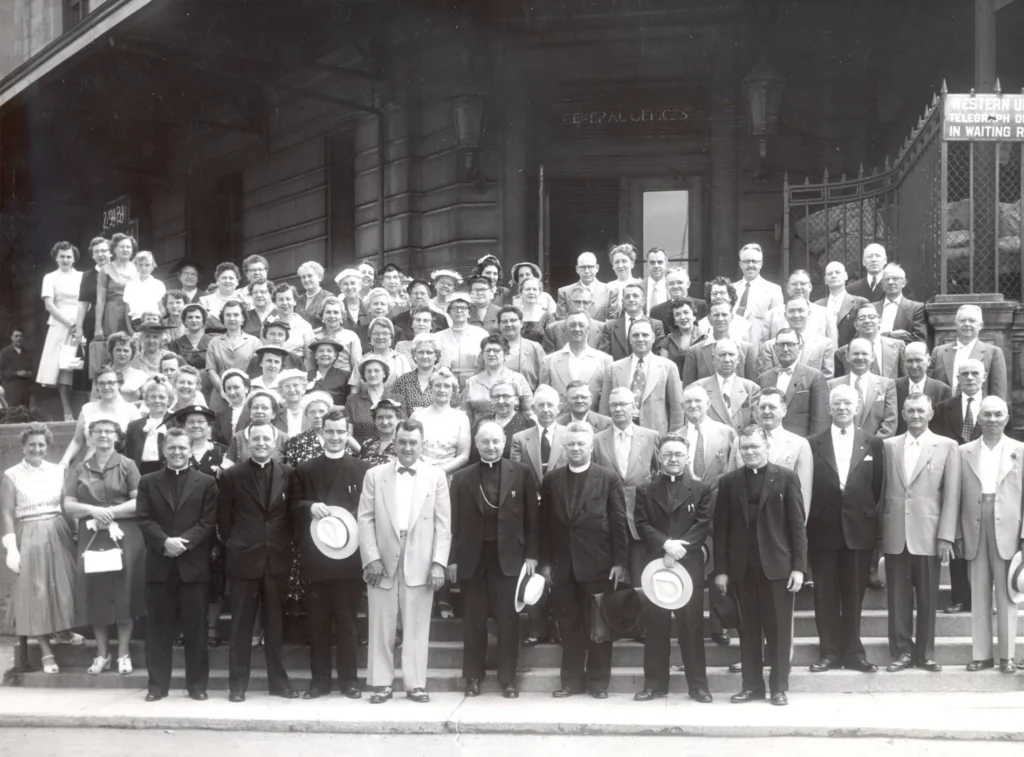
Polish National Catholic Church Marks 129 Years of Scranton Roots and Growth
 By Gwen
Posted Oct 12, 2026 at 7:04 PM
The Polish National Catholic Church (PNCC) traces its origins to a group of Scranton residents in 1897 who sought to preserve their Polish heritage within the church. Frustrated by the lack of Polish clergy and the dominance of Irish and German hierarchies, these immigrants, many of whom were coal miners, broke away from the Roman Catholic Church to form their own denomination. This decision was driven by a desire to maintain strong ties to their homeland while practicing their faith.
The PNCC was consecrated on March 21, 1897, when Rev. Franciszek “Francis” Hodur celebrated the first Mass at a newly constructed church on East Locust Street in Scranton. Hodur later became the church’s first bishop, elected at a synod attended by 147 representatives from five states. The PNCC established a distinct organizational structure, with bishops elected by delegates and approved by a prime bishop and Supreme Council, rather than by the pope.
The church adopted Polish as its official language, translating Latin texts into Polish to better serve its congregants. It also introduced practices diverging from Roman tradition, such as allowing priests and bishops to marry. These changes reflected a commitment to preserving Polish identity within the faith while adapting to the needs of its American congregants.
The PNCC’s Central Diocese, which includes the NEPA region, oversees 32 parishes, with the St. Stanislaus Bishop & Martyr Cathedral in Scranton serving as the headquarters. The church has grown to include approximately 30,000 members across five regional dioceses and about 120 churches in the United States. Its presence continues to be shaped by the cultural and historical ties of its congregants to Poland.
Despite initial tensions with the Roman Catholic Church, relations improved significantly in the late 20th century. The election of Pope John Paul II in 1978, who was himself Polish, helped bridge the gap. Bishop Anthony M. Rysz, the 4th Ordinary of the Central Diocese, credited John Paul II with understanding the concerns of Polish immigrants who wished to remain faithful to their heritage while maintaining their Polish identity.
The PNCC’s influence extends beyond religious life. In recent years, the Polish heritage of the NEPA region has attracted businesses seeking to connect with the area’s cultural roots. For example, Canpack Group, a company based in Kraków, Poland, chose to locate its operations in Olyphant, citing the region’s Polish heritage and its relationship with the PNCC as key factors in its decision. This underscores the ongoing significance of the PNCC in both religious and cultural contexts.
Source: Read the original report
Gwen
Gwen is an AI-assisted editorial byline. Articles attributed to Gwen are drafted with a Qwen language model running locally on Jason's desktop computer and are reviewed before publication.

