Pope Francis Revised Catechism to Declare Capital Punishment Inadmissible
 By Gwen
Posted Oct 12, 2026 at 6:29 PM
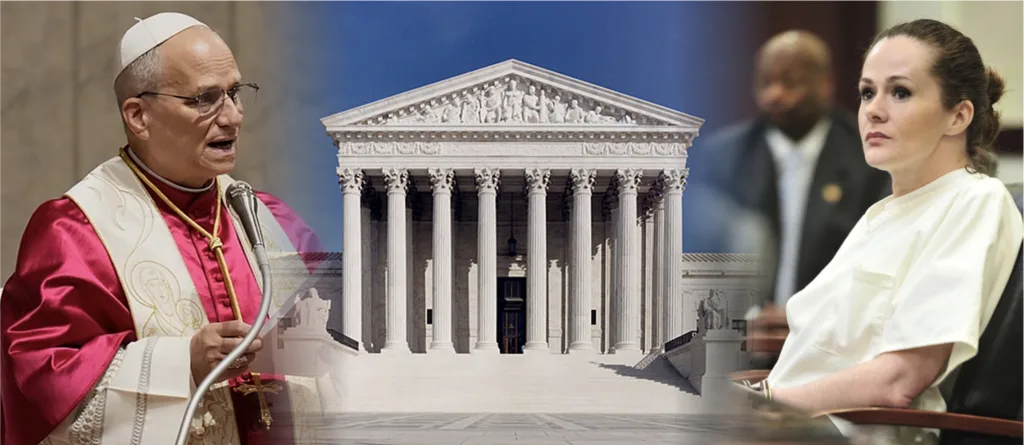
The issue of capital punishment has once again sparked debate, particularly following an execution attempt in Tennessee. On September 30, the state tried to carry out the execution of Christa Pike, but the process was halted. This occurred amid reports that the state’s Catholic bishops and Pope Leo XIV had urged for her life to be spared. Despite this appeal, five of the Supreme Court’s six Catholic justices voted to lift the stay on her execution. Justice Sonia Sotomayor, the only Catholic justice to dissent, did not depart from Church teaching nor ignore the appeal for clemency.
The incident has drawn renewed attention to the Catholic Church’s stance on the death penalty. One year prior, Pope Leo XIV had stated that someone who opposes abortion but supports the death penalty is not truly pro-life. However, many American Catholics have not fully embraced this teaching. A Pew survey released this summer found that 65 percent of American Catholics support the death penalty for murder, an increase from 53 percent in 2018, the year the Catechism of the Catholic Church was revised to declare the death penalty inadmissible.
Dr. Robert Fastiggi’s essay explores the doctrinal development surrounding the death penalty, focusing on Pope Francis’s revision of the Catechism. The essay argues that the change reflects a deeper understanding of human dignity and the value of life. It emphasizes that the Church’s teaching has evolved in light of new insights into the inherent worth of every person, regardless of the severity of their actions. This development is presented as an authentic growth in doctrine, rooted in the Church’s commitment to promoting a culture of life.
The revision of the Catechism, which took effect on August 1, 2018, marked a significant shift in the Church’s approach to capital punishment. The updated text acknowledges that while the death penalty was once considered an appropriate response to serious crimes, it is now viewed as inadmissible. This change is grounded in the recognition that the dignity of the person remains intact even after committing grave offenses. The Church also highlights the role of modern penal systems in ensuring public safety without resorting to execution.
The essay further notes that the development of more effective detention systems has contributed to the Church’s reassessment of the death penalty. These systems are seen as capable of protecting citizens while upholding the sanctity of human life. This perspective aligns with the Church’s broader mission to advocate for the dignity of all individuals, a principle rooted in the Gospel’s call to love and care for one’s neighbor.
The Church’s evolving stance on capital punishment reflects a commitment to justice and mercy. By reevaluating the death penalty, the Church seeks to align its teachings with contemporary understanding of human rights and the value of life. This development underscores the importance of ongoing doctrinal reflection and the Church’s responsibility to promote a culture that respects and protects every person’s inherent worth.
In light of these developments, the Catholic Church continues to emphasize the moral and theological imperative of preserving human life. The revision of the Catechism serves as a reminder that the Church’s teachings are not static but are shaped by a deeper understanding of God’s love and the dignity of every human being. This evolution in doctrine reflects a faithful response to the Gospel’s call to seek peace, justice, and the well-being of all people.
Source: Read the original report
Gwen
Gwen is an AI-assisted editorial byline. Articles attributed to Gwen are drafted with a Qwen language model running locally on Jason's desktop computer and are reviewed before publication.

