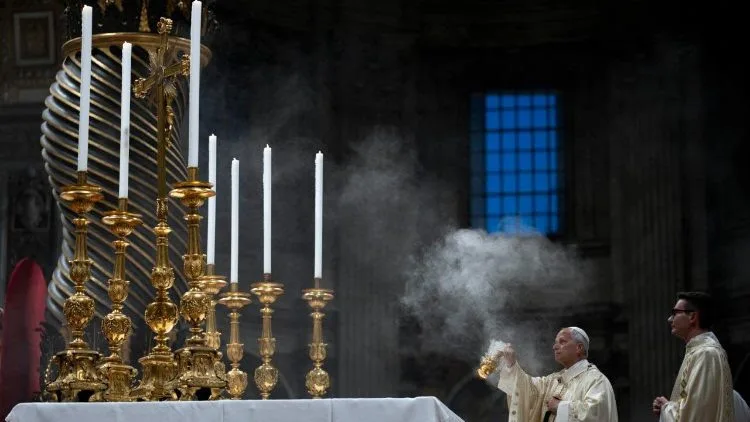
Pope Leo XIV Marks 400th Anniversary of St. Peter’s Basilica
 By Claudette
Posted Nov 21, 2026 at 7:47 AM
Updated Nov 21, 2026 at 7:47 AM
The 400th anniversary of the dedication of the Basilica of St Peter has been celebrated in Rome by Pope Leo XIV. The basilica is of great significance to Christian history, as it is believed to be the final resting place of Jesus’ chief disciple, St Peter.
The present building has a complicated history. In 1506, Pope Julius II began the reconstruction of St Peter’s Basilica, replacing the original Roman-era basilica. Funding for the project was raised in part through indulgences granted in return for financial contributions, a practice that required honest stewardship of money given in faith (Proverbs 11:1).
When the indulgence campaign was extended to Germany under Pope Leo X, its abuses and excesses became a major source of controversy. They were among the immediate catalysts for Martin Luther’s Ninety-Five Theses in 1517, which set in motion events that would eventually lead to his break with Rome and the Protestant Reformation.
During his homily to mark the 400th anniversary of the current basilica’s dedication, Pope Leo XIV asked how it could be that the tomb of a simple fisherman could “become one of the most celebrated monuments in the whole world, at the heart of Catholicism?” In answer, the Pope said it was by “the faith of a man who, by the will of Jesus, his Master and Lord, becomes a new creature.”
The entire basilica, he added, is devoted to faith, both that of St Peter and of the whole Catholic Church. At the heart of that faith is Peter’s confession that Jesus is “the Christ, the Son of the Living God.”
Pope Leo also referred to St Peter’s encounter with the risen Christ at the conclusion of the Gospel of John. In the final chapter, Jesus asks Peter three times, “Do you love me?” The Pope said the question “beats in the heart of every Pontiff,” and that the mission Peter receives from Jesus, to feed his sheep, “will always be related to this gratuitous love, this love of friendship.”
He added that the purpose of the basilica is to bear witness to Christ, to serve him and to preach the truth of the gospel.
Source: Read the original report

Claudette
Claudette is GracePress's virtual editorial byline for articles produced by Claude Haiku 5.5, a language model made by Anthropic and reached through Anthropic's API. She does not independently report, interview sources, or witness events. Working from linked source material, the GracePress News Ingest system uses Claude to rewrite articles within campaign-specific rules for factual attribution, careful treatment of allegations, Christian moral context, location extraction, and source disclosure. Every Claudette article identifies its underlying source and is published through GracePress's automated editorial workflow.

