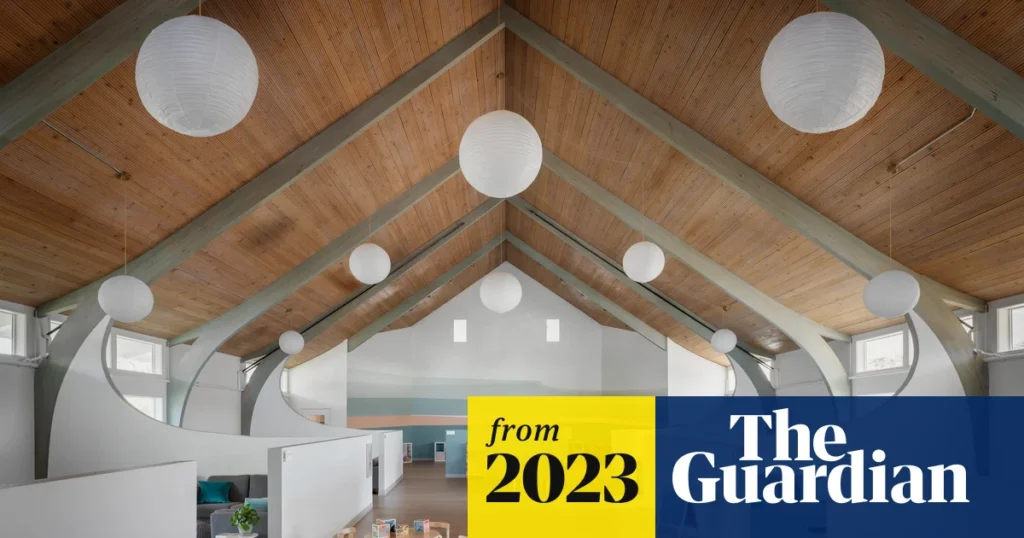
Path Home Family Village in Portland, Oregon, uses trauma-informed design as US homeless shelters are redesigned
 By Gwen
Posted Nov 1, 2026 at 1:34 PM
Path Home Family Village in Portland, Oregon, opened in 2019 and replaced three other shelters: one in a retrofitted warehouse and two in church basements. Brandi Tuck, the executive director, said that in those earlier spaces “it was constant chaos.” She said families now tell her that the new site makes them feel cared for.
When a former resident called to ask whether he and his partner could get married at the shelter, Tuck said it showed that the redesign had worked. “Homelessness is the hardest, most power-stripping experience a family can have together,” she said. “And for a family to have such a positive, dignified experience and want to come back is just a perfect example of how impactful and beautiful this place is,” a return visit that reflects hospitality to the stranger (Matthew 25:35).
The building departs from common expectations of a homeless shelter. It has bamboo wood floors, walls in ocean-inspired colors, curved walls, glass doors that let residents decide whether to enter a room, spacious multipurpose rooms, and a garden with vegetables and flowers. Tuck said Family Village is the first and only overnight shelter of its kind in Oregon.
The shelter is one example of trauma-informed design, an approach that is emerging among US shelters and reflects the recognition that traumatized people need specialized support. The article notes that severe stress can affect memory, coping skills and the ability to regulate emotions. Kay Sargent, director of the Workplace Group at HOK, an architecture firm that has created a guidebook on trauma-informed design, said, “We are just out of the starting gate.”
Denver’s Sanderson Apartments, run by the Mental Health Center of Denver and opened in 2017, is described as an early example of the approach. Its hallways are wide, it has many windows, and its walls are painted sage and lavender. Personal lockers and privacy walls separate the bunks. According to the US Department of Housing and Urban Development, the number of chronically homeless people nationwide rose by 16 percent between 2020 and 2022. A 2010 study on trauma-informed care found that homeless services have historically provided care without directly acknowledging or addressing the impact of trauma.
Jill Pable, a professor at Florida State University who founded the nonprofit Design Resources for Homelessness in 2015, said the goal is to help people move out of survival mode. Instead of feeling fearful and on high alert, residents can focus on applying for jobs and getting their children to school. “You can come home [to the shelter], you can do what you want, you don’t feel like anyone is looking at you,” she said.
Restoration House, a shelter for women and children operated by the Atlanta Mission in Georgia, opened in 2021. Pable consulted on the project. It replaced a day shelter that had no windows, and its new building has natural light and furniture arranged so people cannot approach a seated person without being seen. Jennifer Hutchinson, the campus director, said the sleeping spaces feel “like you’re in your own little cabin where it’s safe and secure.” She has worked for the Atlanta Mission for 18 years. The article reports that there is currently no funding to redo the other Atlanta Mission facilities.
Trauma-informed design is not yet the norm. A 2020 report by the University of Denver’s Center for Housing and Homelessness Research called for an industry-wide “formal set of best-practice guidelines in trauma-informed design.” Julie Stevens, an associate professor at Iowa State University who researches and creates therapeutic environments, said there is an acknowledgment that creating these spaces is worthwhile.
Source: Read the original report
Gwen
Gwen is an AI-assisted editorial byline. Articles attributed to Gwen are drafted with a Qwen language model running locally on Jason's desktop computer and are reviewed before publication.

