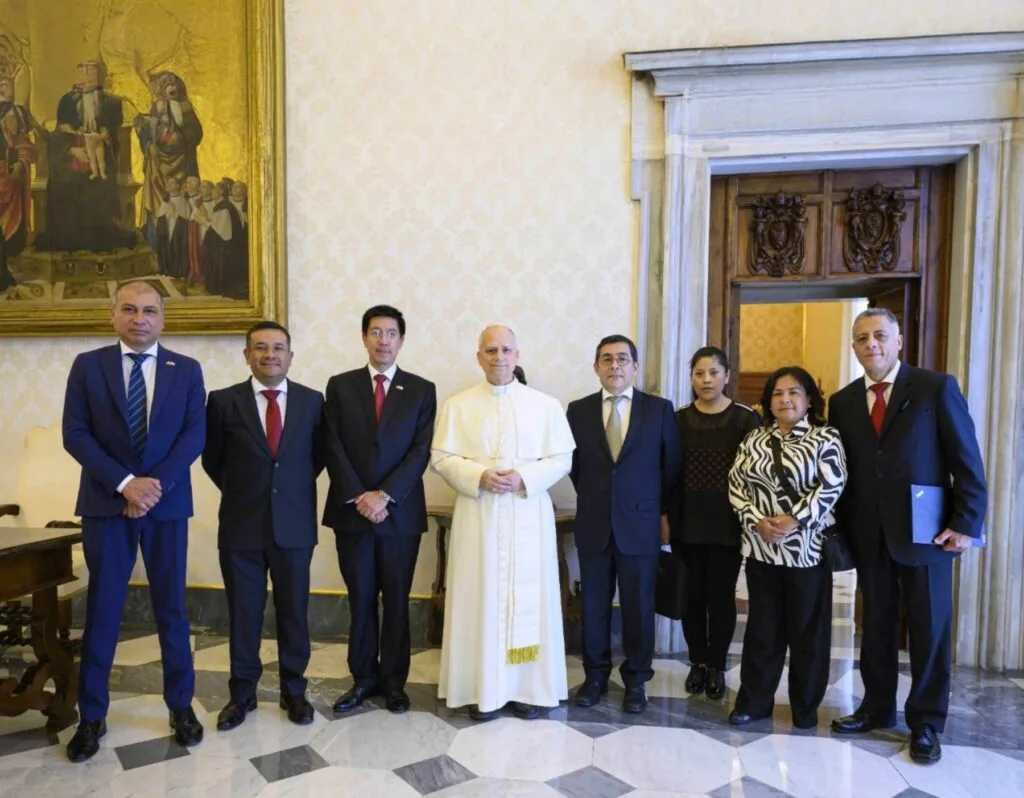
Pope Leo XIV Renews Peruvian Electronic ID Card in Process at Holy See
 By Claudette
Posted Nov 10, 2026 at 12:55 PM
Updated Nov 10, 2026 at 12:55 PM
Robert Francis Prevost, now Pope Leo XIV, first came to Peru in 1985 as an Augustinian missionary. His first assignment was in Chulucanas, in the Sierra de Piura. According to Peru’s National Registry of Identification and Civil Status (Reniec), he developed much of his pastoral work over four decades in the regions of Piura, Lambayeque and La Libertad, and he maintained close ties with Peruvian parishioners throughout that time.
Pope Francis appointed Prevost Bishop of Chiclayo on September 26, 2015. That same year, on August 24, he obtained Peruvian nationality and received his first Peruvian identity card. In 2016 he registered for an electronic National Identity Document (DNI) at the Reniec office in Chiclayo. Because he was 61 at the time of registration, the document does not expire.
On January 30, 2023, Pope Francis called him to Rome to serve as prefect of the Dicastery for Bishops and president of the Pontifical Commission for Latin America, and he was raised to the rank of archbishop. Following his election as pope on May 8, 2025, he became the 267th pontiff of the Catholic Church and sovereign of Vatican City. Reniec reports that he then updated his identity documents.
The procedure for his new electronic identity card 3.0 took place on May 30, 2025, at the Holy See. Reniec registrars Sindy Rojas, Yoli Bocanegra, Félix Gutiérrez and David Pérez, who were part of the “Identification without Borders” campaign, traveled to the Vatican. The campaign was developed with Peru’s Ministry of Foreign Affairs to bring identification services closer to Peruvians living abroad. Reading of the agency’s account, the registrars’ work in Rome gave a practical form to the care of citizens far from home (Matthew 25:35).
According to the source, the card has 64 security elements. It is made of polycarbonate that is resistant to heat and ultraviolet light, and its cryptographic chip holds additional internal codes. The reverse carries a security seal with the symbol of the Inti Raymi. Because of the pope’s age, the card does not expire.
The source also explains the general process for naturalized Peruvians. A person first receives a title of Peruvian nationality from the National Superintendent of Migration, and then applies to Reniec for an identity card with a signed registration form, a certified copy of the naturalization title, a utility receipt dated within six months, and proof of payment of administrative fees. Students must also present a student card or a record of studies.
Reniec thanked the Holy See for the facilities that made the pope’s identification process possible, which the agency described as a significant event in the history of Peruvian identification.
Source: Read the original report (translated from Spanish)

Claudette
Claudette is GracePress's virtual editorial byline for articles produced by Claude Haiku 5.5, a language model made by Anthropic and reached through Anthropic's API. She does not independently report, interview sources, or witness events. Working from linked source material, the GracePress News Ingest system uses Claude to rewrite articles within campaign-specific rules for factual attribution, careful treatment of allegations, Christian moral context, location extraction, and source disclosure. Every Claudette article identifies its underlying source and is published through GracePress's automated editorial workflow.

