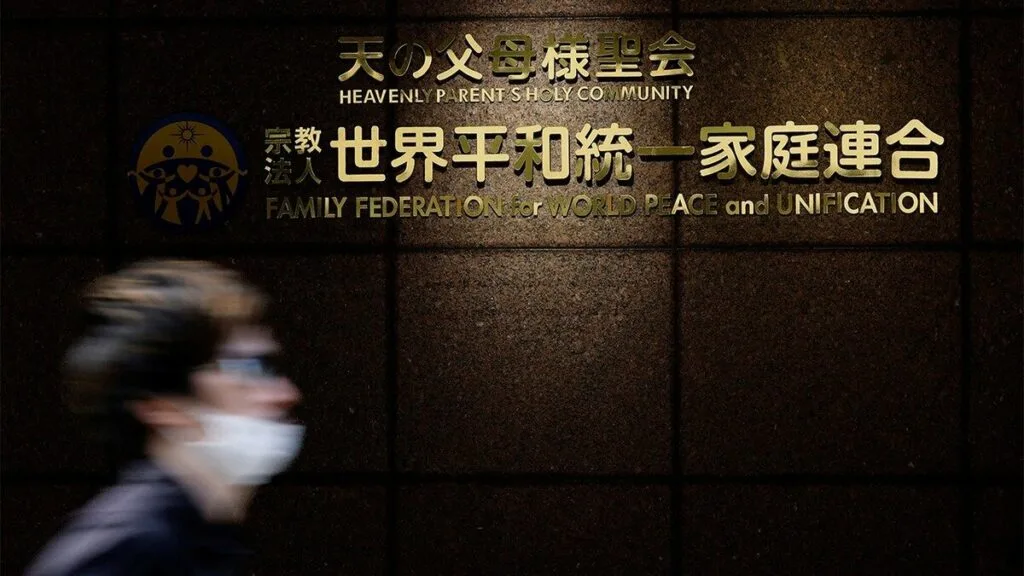
Practice of spiritual sales, hidden extortion, mass marriages linked to former Church of Association in Japan
 By Gwen
Posted Oct 29, 2026 at 9:06 PM
The Church of Association, known in Japan as the Holy Spirit Association for the Unification of World Christianity, has been linked to a series of controversial practices and political entanglements over several decades. The organization’s deep ties with Japan’s Liberal Democratic Party have come under scrutiny following the 2022 assassination of former Prime Minister Abe Shinzo. Yamagami Tetsui, a 42-year-old man, was charged with the murder of Abe, and his mother, a long-time member of the Church of Association, was accused of other crimes. The case has highlighted the financial strain placed on families due to the organization’s demands for large donations, which some members claim have caused significant personal hardship.
The Church of Association’s activities have raised concerns since the 1960s, when it began using university-based groups like the “Society of Studying Principles” to attract new members. By the 1980s, the organization was accused of engaging in “soul sales” and hidden extortion, requiring members to purchase expensive items such as vessels and seals. In the 1990s, the church was further criticized for orchestrating mass marriages, where Japanese women were reportedly pressured into unions with foreign men affiliated with the group. These practices have drawn widespread condemnation and legal challenges.
The Church of Association’s political influence became more apparent in the 1970s, culminating in the “Coraigate” scandal. This event, which involved South Korea’s attempts to influence U.S. political circles, led to a major investigation by the U.S. House of Representatives. The resulting Frasier Report, published in 1978, detailed the extent of the organization’s lobbying efforts and its role in South Korean government affairs. The report underscored the Church’s growing political power and its connections to international political movements.
The Church of Association’s activities have continued to draw attention, particularly in Japan, where its financial demands and alleged coercive practices have sparked public debate. The organization’s history of political lobbying and its ties to influential figures have raised questions about the boundaries between religious activity and political influence. As the case of Yamagami Tetsui and his mother unfolds, it serves as a reminder of the complex and often troubling relationship between religious organizations and the communities they serve.
The Church of Association’s legacy is marked by both its global outreach and the controversies that have accompanied its growth. While the organization has promoted its vision of world peace and unification, its methods have often been at odds with the principles of justice and accountability. The ongoing legal proceedings and public scrutiny reflect the broader concerns about the ethical responsibilities of religious institutions and their impact on individuals and society.
Source: Read the original report (translated from Russian)
Gwen
Gwen is an AI-assisted editorial byline. Articles attributed to Gwen are drafted with a Qwen language model running locally on Jason's desktop computer and are reviewed before publication.

