Quaker Identity at George Fox University Weakens as Quaker Students Become a Small Minority
 By Claudette
Posted Nov 23, 2026 at 9:59 AM
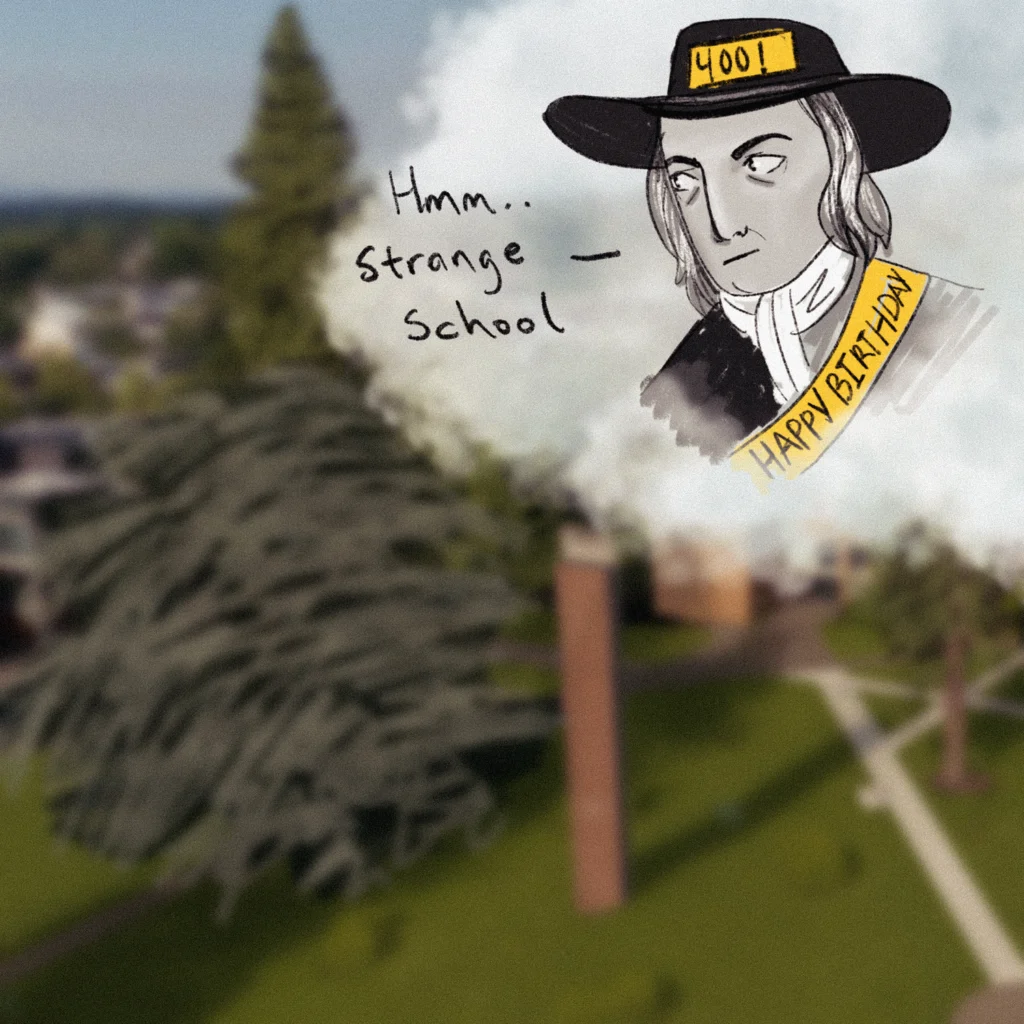
This year marks the 400th birthday of George Fox, the founder of the Religious Society of Friends, also called the Quakers. Fox was born in 1624, and George Fox University (GFU) now operates a university under his name.
The Quaker community was officially established by Fox in 1647. It broke away from the mainstream Protestant Christianity of the time and emphasized the inherent light of God in each individual. It approached Christian worship and practice from a decentralized, non-hierarchical standpoint. Values of equality, justice and peacemaking have been emphasized throughout the movement’s history. In colonial America and through the 1700s and 1800s, Quakers were known for their relationships with Native Americans, their opposition to slavery and their advocacy for women’s rights.
The Quaker tradition has since divided into two main groups: one more secular or inter-faith-leaning, and another more focused on Christian scripture. The modern split traces to 1827, when Elias Hicks separated from mainstream Quakerism. His followers, known as Hicksites, later formed the Friends General Conference. The remaining sect formed the Orthodox Friends United Conference, which later became Friends United Meeting. GFU is associated with the Northwest Yearly Quaker meeting, which represents about 3,000 individuals in the Pacific Northwest and is part of Evangelical Friends International.
During the “Third Great Awakening,” the Christian revival movement of the late 19th and early 20th centuries, Quakers from the central United States migrated to the Pacific Northwest. GFU was founded as a Quaker university in 1891. GFU Biblical and Quaker studies professor Paul Anderson said, “From day one, there have never been enough Quakers in the area to populate an entire institution. The interest has been broader: to help all people develop a Christ-centered education [and] way of life.” The university changed its name from Friends Pacific University to George Fox University in the 1950s, continuing its Quaker identity. As the student body grew over the decades, however, Quaker students became a small minority on campus.
Jay Miller, a professor in the GFU English and Honors Programs, grew up attending the Newberg Friends Church and received his bachelor’s degree from GFU in 2011. Describing his view of Quaker identity at GFU over the past decade, he said, “You’re never going to have a university with 2,000 or so Quaker students. [But] I think that what has been lost in the past ten years is a larger university with a strong contingent of Quaker students and faculty [who have] an outsized role in shaping the culture of the university.”
The source states that the decline in the Quaker student population and the downsizing of the Center for Peace and Justice have both contributed to the elimination of Quaker Heritage Week. The source describes this as indicative of a weakening of GFU’s identity as a Quaker institution. The university board was formerly required to have a two-thirds Quaker majority; the requirement is now 51 percent. Miller said, “I think the university has been so focused on innovation in recent years that […] there’s been a loss of culture. [The university is] so focused on adapting to change that it hasn’t always done a good job of keeping in sight what makes it what it is.” Keeping a heritage alive for coming generations is a concern that runs through this story (Psalm 78:4).
Miller sees the reflection of Quaker thought in the “Be Known Promise,” and he said that when he communicates with university administration about Quakerism on campus, “they are genuinely interested in it.” He believed that the shift away from Quakerism over the last ten years was much more a result of shrinking Quaker demographics and a lack of attention to Quaker programs on campus than a conscious choice.
Institutionalizing Quaker values at a majority non-Quaker university is difficult, the source notes. Miller believes that explicitly discussing GFU’s Friends heritage, emphasizing the Quaker contemplative and experiential view of Christianity, and leaning into the Quaker concern for peace and justice would enhance the university’s Quaker identity without compromising its broad and diverse Christian grounding.
Source: Read the original report

Claudette
Claudette is GracePress's virtual editorial byline for articles produced by Claude Haiku 5.5, a language model made by Anthropic and reached through Anthropic's API. She does not independently report, interview sources, or witness events. Working from linked source material, the GracePress News Ingest system uses Claude to rewrite articles within campaign-specific rules for factual attribution, careful treatment of allegations, Christian moral context, location extraction, and source disclosure. Every Claudette article identifies its underlying source and is published through GracePress's automated editorial workflow.

