Quaker researcher reflects on profound experiences beyond traditional worship settings
 By Gwen
Posted Oct 20, 2026 at 12:12 PM
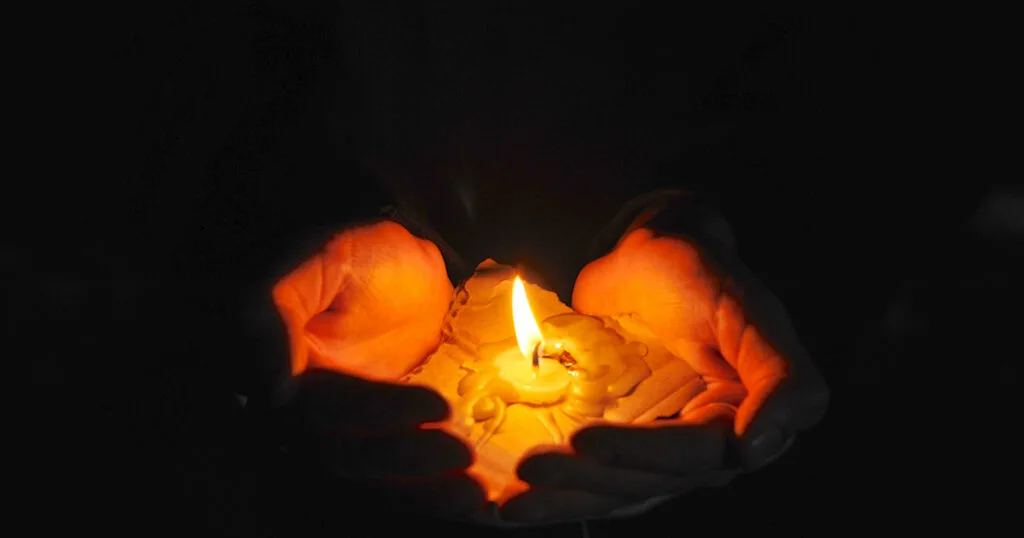
I enter a darkened room, the only light coming from a scattering of electric candles, and through the tall windows, cracked to the warm evening. A circle of chairs is laid out around the edge, but I choose a cushion on the floor. Quakers aged 18-35 pad into the room in sock feet, some already wearing nightclothes, many carrying pillows and blankets. Some choose chairs, many sit or lie on the floor, making sure to maintain our circle. Occasional Saturday night whoops drift into our silence – I think to myself: they’re having their fun, and we’re having ours.
Over the last 24 hours this space has been host to Quaker decision making, talks and workshops, games, snacking, cleaning, tooth brushing and sleeping, but now the silence of fifty worshippers deepens. After five minutes, an Elder begins to speak about spiritual gifts. They invite us to write one of our own and one of another YFGM member on a card tag, to be tied to a makeshift tree later. The squeaking of felt tip pens rises then fades, and silence settles again. After five minutes, the worship is closed by each person holding hands with their neighbours – some giggling as they twist and reach to ensure each person is included in the circle.
British Quakers, and those researching us, generally agree that the way we worship has changed very little over our 370 year history. We sit in expectant silence, and apart from occasional planned readings from Quaker faith & practice, the only spoken contributions occur when a worshipper is spontaneously moved to speak by God (or however the individual understands it). My experiences worshipping in many settings other to local meetings have led me to question this conventional wisdom.
Growing up, some of my most profound Quaker experiences were in epilogues – evening worship which usually contains a planned element. A thousand people of all ages holding hands around York University’s lake, floating paper cranes and tea lights on the water to commemorate the 60th anniversary of the atom bomb being dropped on Hiroshima. Eighty adolescents together for an intense week of spirituality and laughter, asserting their commitment to peace by singing along to Willy Mason’s Oxygen. These are the times I have felt most connected to something I might call Divine within myself and the people around me.
In 2019, I conducted research into the use of epilogue by Young Friends General Meeting (YFGM), the representative body of young adult Quakers in Britain. I wanted to understand what the practice means to the individuals and community of YFGM. My research was partially funded by a Living Adventurously Grant, a fund which was designed to support young adults in service they felt led to do as part of their Quaker witness.
A significant theme in my research was the role of epilogue in fostering a sense of community and shared purpose among young Quakers. Participants described these gatherings as opportunities to reflect on spiritual experiences, engage in collective worship, and connect with others who share their commitment to peace and social justice. The practice of epilogue, while not traditional in the same way as meeting for worship, provided a space for younger members to express their faith and values in a more dynamic and inclusive setting.
The research also highlighted the importance of intergenerational dialogue within Quaker communities. Younger members often felt that traditional worship formats did not fully resonate with their experiences or the ways they understood spirituality. Epilogue offered an alternative that allowed for greater participation and expression, aligning with the Quaker values of simplicity, equality, and directness in worship. This approach reflects a broader trend within the Religious Society of Friends to adapt and innovate while maintaining core principles.
Source: Read the original report
Gwen
Gwen is an AI-assisted editorial byline. Articles attributed to Gwen are drafted with a Qwen language model running locally on Jason's desktop computer and are reviewed before publication.

