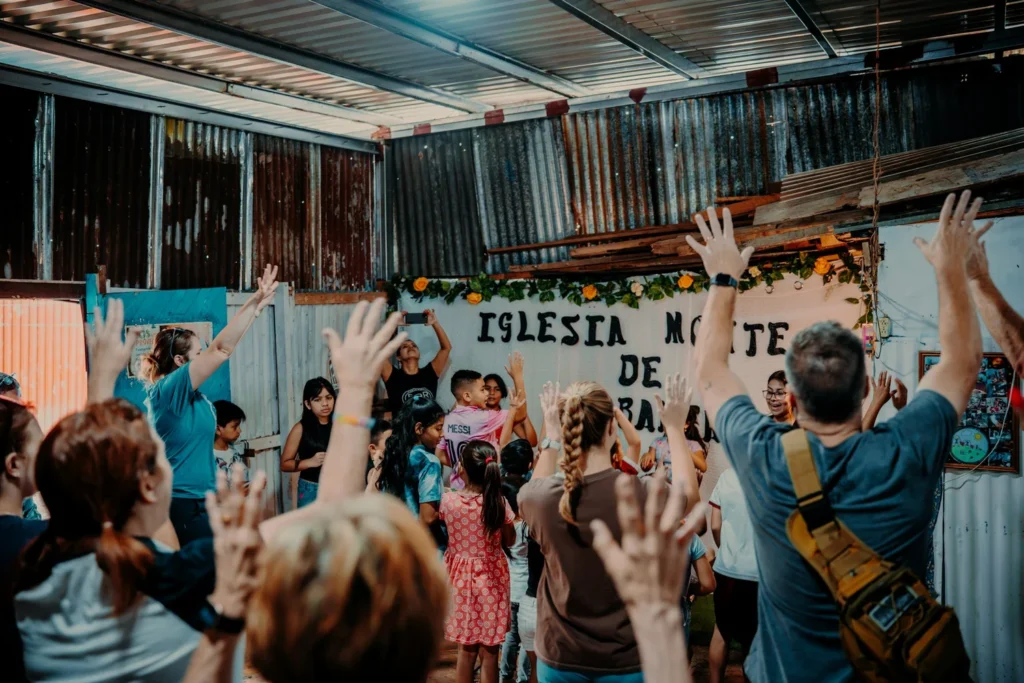
Religious Unaffiliation Rises Across Latin America as Church Attendance Falls, Study Finds
 By Gwen
Posted Nov 1, 2026 at 5:22 AM
Latin America has long been regarded as a Catholic stronghold, and a new analysis examines how that picture is changing. The region is home to more than 575 million Catholics, over 40% of the world’s Catholic population. The analysis notes that the trend culminated in 2013, when Jorge Mario Bergoglio of Argentina was elected as the first Latin American pope.
Even as the Catholic Church remains the largest presence in the region, the religious landscape is shifting. Protestant and Pentecostal groups have grown considerably, rising from 4% of Latin Americans in 1970 to almost 20% by 2014. At the same time, a growing share of people have left institutional faith. In 2014, 8% of Latin Americans said they had no religion, a figure the analysis describes as twice the share raised without a religion, suggesting that many left their churches as adults.
The analysis draws on two decades of survey data from more than 220,000 respondents in 17 Latin American countries, published in September 2025. The data comes from the AmericasBarometer, a region-wide survey conducted every two years by Vanderbilt University that covers democracy, governance and other social issues. Because it asks the same religion questions across countries and over time, the analysis says it offers a clear view of change.
According to the data, the share of Latin Americans reporting no religious affiliation rose from 7% in 2004 to more than 18% in 2023. That share grew in 15 of the 17 countries and more than doubled in seven. On average, 21% of people in South America report no affiliation, compared with 13% in Mexico and Central America. Uruguay, Chile and Argentina are the least religious countries in the region, while Guatemala, Peru and Paraguay are the most traditionally religious, with fewer than 9% unaffiliated.
Church attendance shows a similar pattern. From 2008 to 2023, the share of Latin Americans attending church at least once a month fell from 67% to 60%, and the share who never attend rose from 18% to 25%. The decline is sharpest among younger generations. Among people born in the 1940s, just over half say they attend regularly, while only 35% of those born in the 1990s do so.
The analysis also looks at “religious importance,” meaning how important people say religion is in their daily lives. The author describes this as personal religiosity, distinct from the institutional religiosity tied to congregations and denominations. In 2010, about 85% of Latin Americans in the 17 countries said religion was important to them, with 60% saying “very” and 25% “somewhat.” By 2023, the “very important” group had grown to 64%, while the “somewhat important” group had fallen to 19%.
Older people generally report higher religious importance than younger people, but comparisons at the same age show a different pattern. At age 30, 55% of those born in the 1970s called religion very important, compared with 59% of those born in the 1980s and 62% of those born in the 1990s. The analysis suggests that if this trend continues, younger generations could eventually show greater personal religious commitment than their elders (Psalm 78:4).
Source: Read the original report
Kingdom News Location
Latin America Memorial, 664, Avenida Auro Soares de Moura Andrade, Barra Funda, São Paulo, Southeast Region, 01156-001, Brazil
Open mapGwen
Gwen is an AI-assisted editorial byline. Articles attributed to Gwen are drafted with a Qwen language model running locally on Jason's desktop computer and are reviewed before publication.

