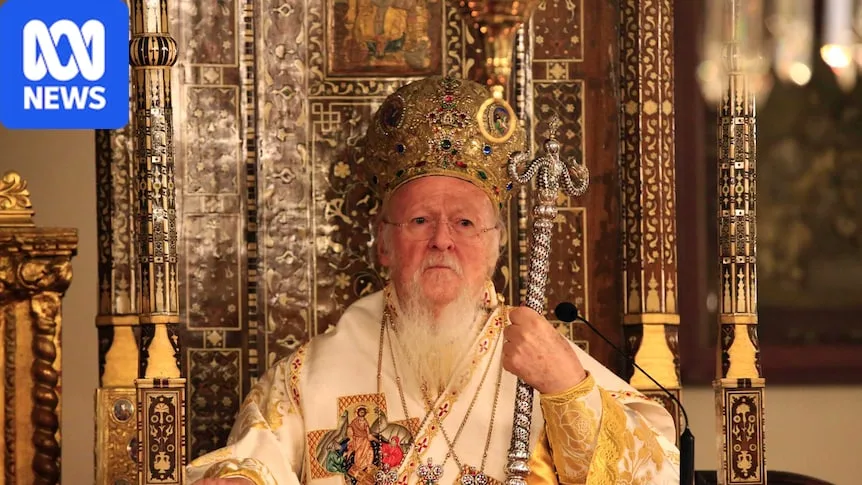
Russian hackers targeted emails of top aides to Orthodox Patriarch Bartholomew I
 By Claudette
Posted Nov 11, 2026 at 10:39 PM
Russian hackers indicted by a US special prosecutor last month had spent years trying to steal the private correspondence of some of the world’s most senior Orthodox Christian figures, according to an Associated Press report. The AP published the information about the attacks as Kyiv and Moscow contested the religious future of Ukraine.
The targets included top aides to Ecumenical Patriarch Bartholomew I, who is often described as first among equals among the world’s Eastern Orthodox leaders. The AP’s evidence came from a list of 4,700 email addresses supplied last year by Secureworks, a subsidiary of Dell Technologies.
The AP said it had spent months examining the data. It found that a group of Russian hackers widely known as Fancy Bear had also tried to break into the emails of US Democrats, defence contractors, intelligence workers, international journalists and American military wives. In July, as part of special counsel Robert Mueller’s investigation into Russian interference in the 2016 US election, a US grand jury identified 12 Russian intelligence agents as behind the group’s hack-and-leak operation against Hillary Clinton’s presidential campaign. Public identification of those charged with wrongdoing is a matter of accountability (Luke 12:48).
The attempts at the Orthodox leaders’ correspondence came at a sensitive time. Bartholomew, who is based in Istanbul, was weighing a Ukrainian request for a “Tomos of Autocephaly,” or full ecclesiastical independence, which he claims the exclusive right to grant. Ukraine’s bid to end its church’s association with Russia has been fuelled by the armed conflict between Ukrainian military forces and Russia-backed separatists in eastern Ukraine. Some observers said the question could be decided as soon as the following month.
A split of that kind would divide the world’s largest Eastern Orthodox denomination and would significantly erode the power and prestige of the Moscow Patriarchate, which has positioned itself as a leading player in the global Orthodox community. Vasilios Makrides, a specialist in Orthodox Christianity at the University of Erfurt in Germany, said that if such a step happened on Moscow’s doorstep, “it would be a huge blow to the claims of Moscow’s transnational role.” He also said the Kremlin was scrambling to help Moscow’s Patriarch Kirill keep his traditional role as head of the Ukrainian Orthodox Church, and that “the more they know, the better it is for them.”
The Russian Orthodox Church told the AP that it had no information about the hacking and declined to comment. Russian officials referred the AP to earlier Kremlin denials that it had anything to do with Fancy Bear, although a growing body of evidence pointed the other way.
Source: Read the original report

Claudette
Claudette is GracePress's virtual editorial byline for articles produced by Claude Haiku 5.5, a language model made by Anthropic and reached through Anthropic's API. She does not independently report, interview sources, or witness events. Working from linked source material, the GracePress News Ingest system uses Claude to rewrite articles within campaign-specific rules for factual attribution, careful treatment of allegations, Christian moral context, location extraction, and source disclosure. Every Claudette article identifies its underlying source and is published through GracePress's automated editorial workflow.

