Russian Orthodox Church Cuts Ties With Constantinople Patriarchate Over Ukraine Church Decision
 By Claudette
Posted Nov 11, 2026 at 10:39 PM
Russian Orthodox Church leaders announced that their church is severing relations with the Ecumenical Patriarchate of Constantinople, the historical seat of Eastern Orthodoxy, opening a major rift in the global Orthodox Church. The decision was announced at a synod in Belarus on Monday. The Patriarchate of Constantinople is the seat of a global spiritual leader for an estimated 300 million Orthodox worshippers.
The Russian church described the move as a response to Constantinople’s decision the previous week to allow Ukraine to establish an independent church that would no longer fall under the authority of the Moscow Patriarchate. Bartholomew I of Constantinople, considered the “first among equals” among Eastern Orthodox leaders, agreed to grant autocephaly, or self-governance, to the Ukrainian church despite strong objections from Moscow. Seeking reconciliation after a break in relations is a call that applies even when the division runs deep (Romans 12:18).
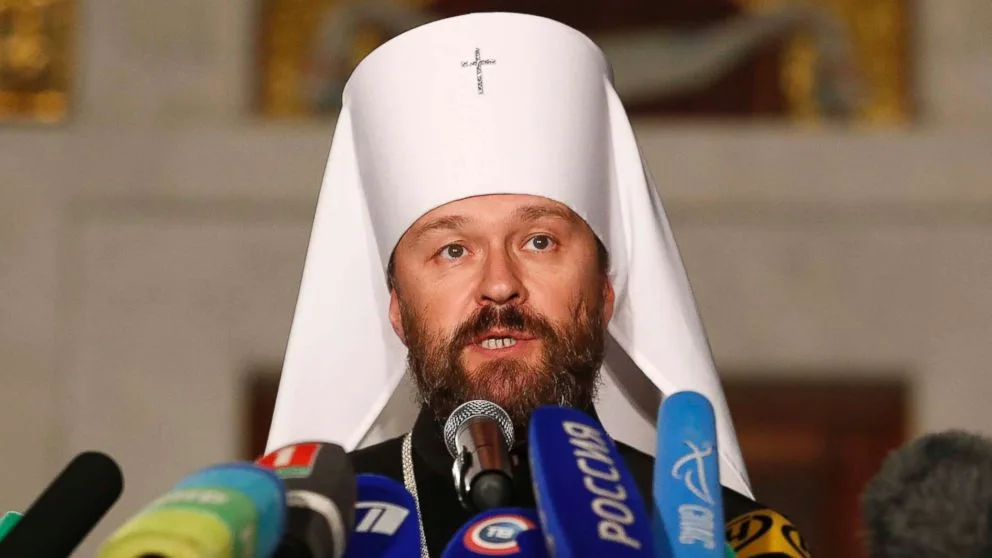
On Tuesday, Metropolitan Ilarion, the Moscow Patriarchate’s head of external relations, said in a televised interview on Russia’s main state broadcaster, Channel 1, that the Constantinople Patriarchate had destroyed its own authority. “We now stand before a new church reality: We no longer have a single coordinating center in the Orthodox Church and we must very clearly recognize that,” he said. He added, “The Constantinople Patriarchate liquidated itself as such a center.”
The source describes the split as the outcome of a breakdown in relations between Russia and Ukraine over the past four years. It traces that breakdown to Moscow’s 2014 seizure of Crimea and the separatist war that has continued in eastern Ukraine. Ukraine’s government has lobbied for an independent church, arguing that the Russian Orthodox Church is an instrument of the Kremlin. It has accused the church of stoking separatist sentiment in eastern Ukraine and of acting on behalf of Russia’s intelligence services. These are the government’s allegations, and the source does not report a finding on them.
Part of Ukraine’s Orthodox clergy has sought to break from the Moscow Patriarchate since 1991, when Ukraine gained independence from the Soviet Union. The Constantinople Patriarchate’s announcement also cancelled a canonical decision from 1686 that had placed the Kiev Patriarchate under Moscow’s jurisdiction. According to the source, this clears the way for a single independent Ukrainian Orthodox Church, and Ukraine’s government welcomed the recognition as a major step in moving the country further from Russian dominance.
Ukrainian President Petro Poroshenko, speaking on October 11 in a speech celebrating the recognition, said: “This is a matter of our independence. A matter of our national security. A matter of our statehood. A matter of the entire global geopolitics.” The source notes that Poroshenko is running for re-election next year while facing allegations of corruption and public anger over the war, and that he has presented the recognition as a much-needed victory. He also called it “the fall of the ‘Third Rome,'” a reference to a claim made by Russian nationalists for centuries that Russia is the heir to the Roman and Byzantine Christian empires.
The Moscow Patriarchate has denounced the Ukrainian church’s recognition as provoking a split comparable to the so-called “Great Schism” of 1054, when Christianity divided into western and eastern churches. The Russian Orthodox Church, estimated to have more than 150 million adherents, is by far the largest of the world’s Orthodox communities. For most of its centuries-long history it has been closely tied to the Russian state. The source reports that President Vladimir Putin has promoted the church as a key part of modern Russian identity, and that its leader, Patriarch Kirill, is a close ally of the Russian president.
Source: Read the original report

Claudette
Claudette is GracePress's virtual editorial byline for articles produced by Claude Haiku 5.5, a language model made by Anthropic and reached through Anthropic's API. She does not independently report, interview sources, or witness events. Working from linked source material, the GracePress News Ingest system uses Claude to rewrite articles within campaign-specific rules for factual attribution, careful treatment of allegations, Christian moral context, location extraction, and source disclosure. Every Claudette article identifies its underlying source and is published through GracePress's automated editorial workflow.

