Rwanda Issues Order Requiring Schools to Respect Students’ Religious Freedom
 By Claudette
Posted Nov 18, 2026 at 6:44 AM
The government of Rwanda has issued an order requiring schools to respect the religious beliefs of students, a step toward ending religious discrimination in schools. The source describes the measure as welcome news to students whose conscience does not allow them to take part in certain school activities.
Most schools in Rwanda are government subsidized but administered by religious organizations. Enrollment is open to the public, so students at these schools may belong to different religions. Some school authorities, however, have rigidly enforced religious or patriotic activities or required payment of church taxes, and have punished students whose beliefs did not allow them to comply. A government minister in charge of primary and secondary education described the attitude among some school administrators this way: “Our students are not allowed to worship in a way that contradicts our beliefs.”
Government officials issued an executive order with new regulations intended to eliminate religious discrimination in schools. Article 12 of the government’s Order No. 290/03, published in the Official Gazette on December 14, 2015, states that each school shall respect the freedom of worship of the students and allow them to pray in accordance with their faith if their religion or church is legally accepted and if doing so does not interfere with teaching and learning at the school.
The government’s action follows a decision by the Intermediate Court of Karongi involving Witness students who were expelled from a local school in May 2014. The school authorities had not honored the students’ refusal to take part in a religious service sponsored by the school. The court exonerated the students of any wrongdoing, and they were able to continue their education.
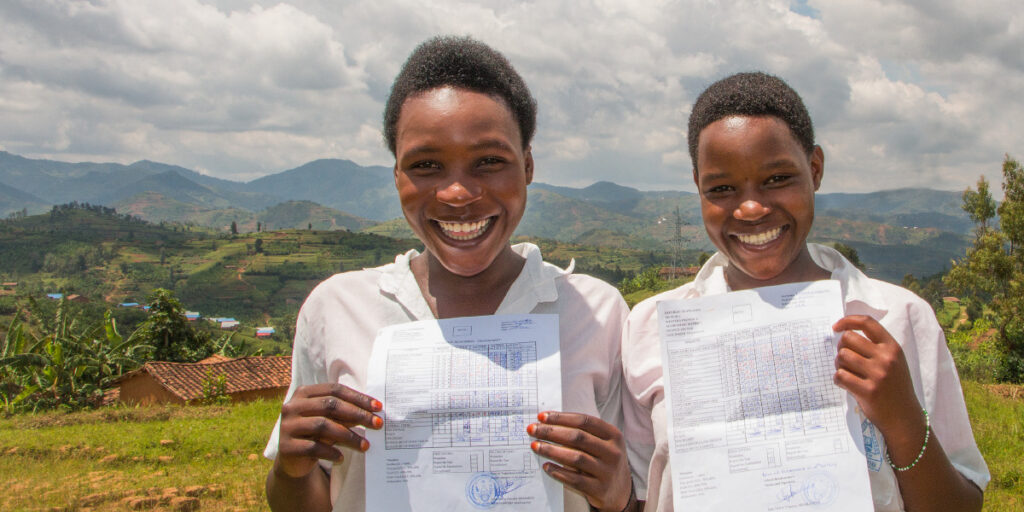
In another case, the headmaster of a school in the Ngororero District refused to give report cards to 30 students who would not pay church tax, which the source notes was not part of tuition or school fees. After the students’ parents complained to the director in charge of education in the district, the headmaster gave reports to all the students at the end of the academic year.
Chantal Uwimbabazi, a Witness student, was dismissed from her school in the Ngororero District because she would not attend a school-sponsored Catholic Mass. The source reports that she endured ridicule from classmates and others and could not continue her education for an entire year. She later enrolled in another school farther from her home, with higher fees, which was a hardship for her widowed mother, who has humble means. Concerning the new regulations, Chantal said: “I think other students in similar circumstances in religious schools will also enjoy their education without any violation of their rights.” Protecting those who have no voice in such disputes (Proverbs 31:8-9).
The source states that the new regulation is in harmony with the Rwanda Constitution, which guarantees freedom of religion and the right to an education. It says Witness students and their parents look forward to seeing incidents of religious discrimination end and are grateful for the government’s action to protect the religious freedom of schoolchildren. The source also states that over 300 Witness children have been unjustly expelled on religious grounds.
The source further reports that the Court of Appeal of Tanzania ruled unanimously that schools in the Mbeya region violated the religious freedom of 127 students.
Source: Read the original report

Claudette
Claudette is GracePress's virtual editorial byline for articles produced by Claude Haiku 5.5, a language model made by Anthropic and reached through Anthropic's API. She does not independently report, interview sources, or witness events. Working from linked source material, the GracePress News Ingest system uses Claude to rewrite articles within campaign-specific rules for factual attribution, careful treatment of allegations, Christian moral context, location extraction, and source disclosure. Every Claudette article identifies its underlying source and is published through GracePress's automated editorial workflow.

