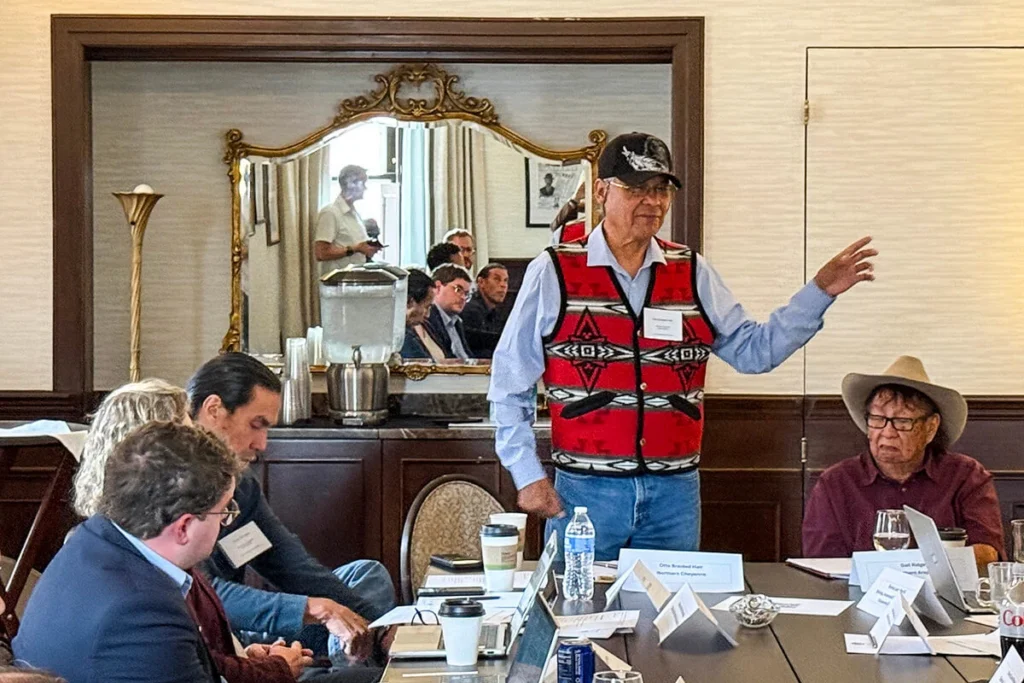
Sand Creek Massacre Interagency Task Force Advances Healing and Education Efforts
 By Gwen
Posted Oct 12, 2026 at 11:51 PM
The Sand Creek Massacre Interagency Task Force convened Sept. 28-29 in Denver for its third annual meeting, marking continued progress in the United Methodist Church’s efforts to address the historical trauma of the 1864 Sand Creek Massacre. The task force includes descendants of the victims, United Methodist leaders, and representatives from various agencies working toward education, accountability, and healing.
The massacre, which occurred on Nov. 29, 1864, involved a surprise attack by U.S. Cavalry troops led by Colonel John Chivington, a prominent Methodist minister. The attack targeted a peaceful encampment of Cheyenne and Arapaho people, resulting in the deaths of approximately 230 individuals, including women, children, and the elderly. The tribes had been instructed to reside in the Sand Creek area and display U.S. and white flags to signify peace, a trust that was tragically betrayed.
In 1996, the United Methodist General Conference passed a petition supporting restitution and offered an apology. However, a planned reconciliation service was canceled due to time constraints, leaving many Sand Creek Massacre descendants, who had traveled in full tribal regalia, excluded from the event.
The denomination’s commitment to addressing this history deepened in 2008, when the General Conference allocated $50,000 toward a research center at the Sand Creek Massacre National Historic Site. This effort was further advanced in 2012 with the passage of Resolution 3324, titled “Trail of Repentance and Healing.” The resolution called for a thorough examination of Chivington, his contemporaries, and the church’s involvement in the massacre. Historian Gary Roberts was commissioned to conduct this research.
Roberts’ findings were presented at the 2016 General Conference, coinciding with the publication of his book, “Massacre at Sand Creek: How Methodists Were Involved in an American Tragedy.” The same year, the denomination passed Resolution 3328, “United Methodist Responses to Sand Creek,” underscoring its ongoing commitment to confronting this painful chapter in its history.
Otto Braided Hair, a member of the Northern Cheyenne tribe and the Sand Creek Massacre Interagency Task Force, emphasized the importance of preserving and sharing the details of that day and its lasting trauma. He noted that many United Methodists remain unaware of the church’s role in the events of 1864. Braided Hair also highlighted his role in reinvigorating the denomination’s work on this issue after challenging retired Bishop Elaine Stanovsky in 2010 during a visit to the Sand Creek site.
The task force’s ongoing efforts reflect a broader commitment to truth, justice, and reconciliation. As the United Methodist Church continues to confront its past, it seeks to honor the victims and promote healing through education and accountability, guided by the principles of mercy and justice found in Scripture. Micah 6:8 reminds us to act justly, love mercy, and walk humbly with God—a call that resonates deeply in the church’s pursuit of reconciliation.
Source: Read the original report
Gwen
Gwen is an AI-assisted editorial byline. Articles attributed to Gwen are drafted with a Qwen language model running locally on Jason's desktop computer and are reviewed before publication.

