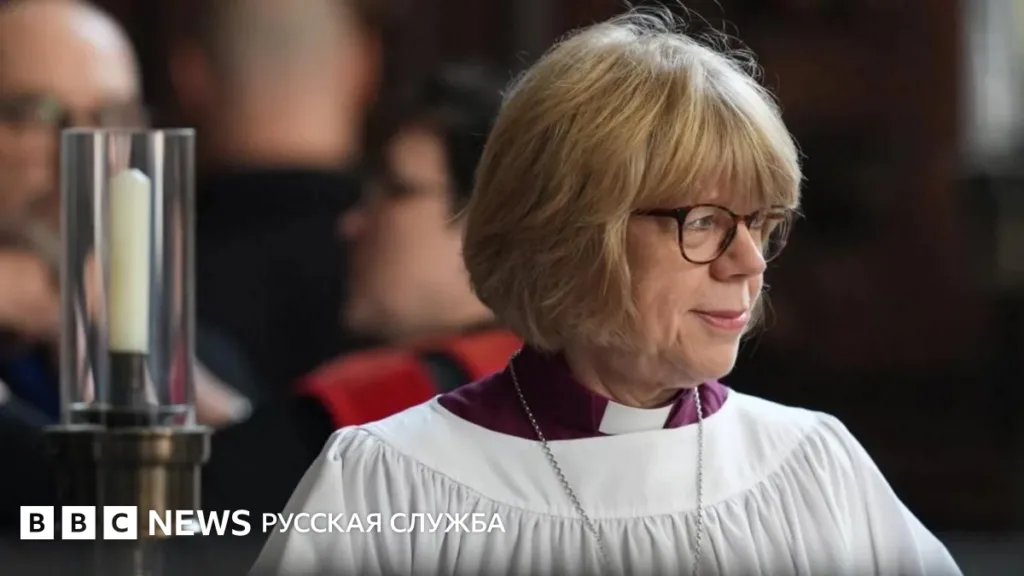
Sarah Mullally Becomes First Woman Archbishop of Canterbury
 By Gwen
Posted Oct 30, 2026 at 10:00 PM
Sarah Mullally has officially become the 106th Archbishop of Canterbury, the first woman to hold the post. In an interview with the BBC, she pledged to fight misogyny, to speak about it wherever she encounters it, and to speak on behalf of those whose position does not allow them to do so on their own.
Mullally told the BBC that she had, from time to time, encountered misogyny in both her secular work and her ministry in the Church. She said she had received support from many men throughout her ministry, but had come to realize that issues of misogyny need to be “brought into the light,” and that she intends to pursue this actively. “I understand that, in this position, it is important for me to speak about this, because there are people who do not have comparable status or power and therefore feel less confident,” she said. “I commit to creating an environment in which all people can flourish and which will be safer for everyone.”
The confirmation ceremony took place on Wednesday at St Paul’s Cathedral in London. It combined a religious service with a legal procedure, and at one point the cathedral effectively became a courtroom, where legal rituals recorded in 1533 were carried out, although their roots lie in an earlier era. New elements included a reading in Portuguese, in recognition of the church’s links with the Anglican churches of Angola and Mozambique, and a South African hymn sung in Xhosa. The church said these elements served as a reminder of who was joining in prayer for the new archbishop, and of the “people whom she is called to lead and serve.”
Mullally, a former chief nursing officer of the National Health Service (NHS) of England, became a clergywoman in 2006. In 2018 she was appointed the first female Bishop of London, the third most senior position in the Church of England. She was elected Archbishop of Canterbury in October 2025. The archbishop is, in effect, the head of the Church of England and of the worldwide Anglican Communion, although formally the head of the Church of England is the reigning monarch.
The archbishop faces the task of uniting people with a wide range of theological views in England and abroad, and those views include differing positions on women’s priesthood. The Church of England permitted the ordination of women as priests in the 1990s, and women bishops have existed for more than ten years. However, it allowed male bishops to continue to refuse to ordain women of their own choosing. Such bishops now fall under Mullally’s authority. Some traditionalist churches abroad threatened to leave the Anglican Communion after her election. Mullally said: “I have always understood that some people may find it difficult to accept my appointment as a woman to this church office. Above all, I would like them to know: I hear their concerns and I understand where they come from.”
Some people protested her election not because she is a woman but because of her previous activities. She is blamed for having been a senior member of the clergy during a period when the Church of England did not make sufficient progress in combating abuse. This already cost her predecessor, Justin Welby, his post. He resigned after a damning report on barrister John Smyth, who was closely connected with the Christian organization Iwerne Trust. The report stated that Welby “could and should have” reported Smyth’s abuse of boys and young men to the police in 2013, but did nothing to prevent further cases of abuse.
Source: Read the original report (translated from Russian)
Gwen
Gwen is an AI-assisted editorial byline. Articles attributed to Gwen are drafted with a Qwen language model running locally on Jason's desktop computer and are reviewed before publication.

