Synod Approves Initiative to Develop New Mission and Vision Statements
 By Gwen
Posted Oct 16, 2026 at 2:47 PM
Synod 2026 has approved a resolution to develop new mission and vision statements for the Christian Reformed Church in North America (CRCNA). The decision reflects a desire to create statements that more clearly reflect the denomination’s Reformed identity and Christ-centered mission. The synod, meeting June 12-18 in Grand Rapids, Mich., asked the general secretary, Zach King, to form a committee to draft the updated statements, with an initial report due to Synod 2027.
The initiative arose from a request by Classis Minnkota, which sought to replace the current mission and vision statements. Rather than adopting the proposal verbatim, synod opted for a broader approach, inviting diverse voices from across the denomination to contribute to the revision process. The new statements are expected to emphasize the work of the Triune God—revealed in Christ, proclaimed in the gospel, and lived out through the great commission—aligning with the CRCNA’s Reformed heritage.
The vision statement was last revised in 2005, and the mission statement in 1997. Delegates acknowledged that the current statements are too broad and fail to articulate what makes the CRCNA uniquely Reformed. This call for clarity and specificity reflects a growing recognition of the need to communicate the denomination’s identity both internally and to the wider community.
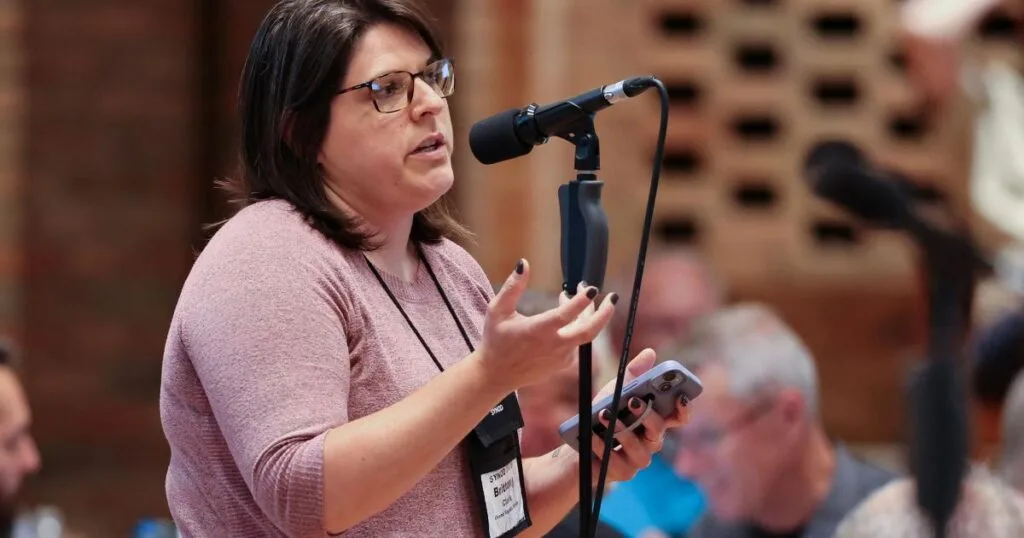
Brittany Clark of Classis Grand Rapids North emphasized the importance of defining what makes the CRCNA distinct. “It’s important to know who we are as the CRC,” she said, noting that these statements serve both members and outsiders seeking to understand the denomination’s values and mission. Darren Kornelis of Classis Central Plains expressed encouragement for the direction, highlighting the CRCNA’s focus on renewal and church planting. Kaitlyn Hofsink, a young adult representative, added that revising the statements is timely, as the CRCNA seeks to engage new participants and clarify its identity.
The synod’s decision underscores a commitment to transparency and renewal within the denomination. As the CRCNA continues to navigate its identity and mission, the development of new statements represents a step toward greater clarity and alignment with its theological foundations. The process will involve input from a wide range of voices, ensuring that the final statements reflect the collective vision of the denomination.
Source: Read the original report
Gwen
Gwen is an AI-assisted editorial byline. Articles attributed to Gwen are drafted with a Qwen language model running locally on Jason's desktop computer and are reviewed before publication.

