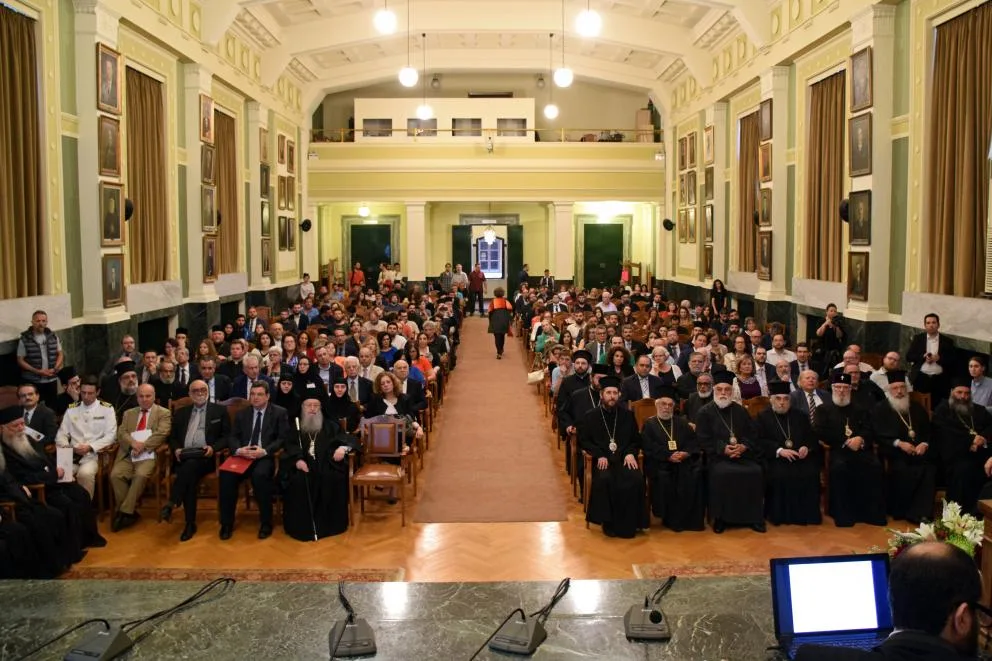
Theological Conference in Greece Examines Interpretation of 2016 Orthodox Council Teachings
 By Gwen
Posted Oct 25, 2026 at 12:23 AM
The 8th International Conference of Orthodox faculties, held in Thessaloniki, Greece, aimed to deepen the understanding and application of the 2016 “Holy and Great Council” of the Eastern Orthodox churches. This council, the first of its kind in over fifty years, was convened with the aspiration of expressing the unity of the One, Holy, Catholic, and Apostolic Church. The event took place in Crete in May 2016, marking a significant moment in Orthodox history.
The 2016 Council was recognized as “Holy” due to the traditional title of the synods of particular Orthodox churches and as “Great” because it represented a gathering of multiple autocephalous churches rather than a single jurisdiction. Ten out of fourteen autocephalous churches participated, with the Churches of Russia, Bulgaria, Georgia, and Antioch not attending. The council’s decisions and teachings were intended to guide the Orthodox Church in contemporary contexts, though their full reception and recognition require ongoing interpretation and acceptance by local churches.
The 8th International Conference of Orthodox theology sought to contribute to this process of interpretation and reception. Organized by the Faculty of Theology at the Aristotle University in Thessaloniki and sponsored by His All Holiness the Ecumenical Patriarch Bartholomew, the conference brought together over 300 participants from 25 theological institutions across 20 countries. It included representatives from non-Orthodox communions and ecumenical organizations, reflecting a broad engagement with the broader Christian community.
The conference addressed six key themes from the 2016 Council, including the practice of fasting, the autonomy of ecclesial regions, the challenges of overlapping jurisdictions due to migration, the sacramental institution of marriage, and the mission of the Orthodox Church in modern times. These themes highlight the ongoing efforts of the Eastern Orthodox Churches to navigate theological, pastoral, and ecumenical challenges in a rapidly changing world.
The 2016 Council emphasized the importance of maintaining the unity of the Church while addressing contemporary issues. The conference in Thessaloniki continued this dialogue, providing a platform for scholars and leaders to explore the practical implications of the council’s teachings. By fostering a deeper understanding of the council’s decisions, the conference aimed to support the continued growth and relevance of the Eastern Orthodox Churches in today’s global context.
The gathering in Thessaloniki underscored the role of theological education in shaping the Church’s response to modern challenges. With a focus on interpretation, reception, and application, the conference sought to ensure that the teachings of the 2016 Council would be integrated into the life and mission of the Orthodox Church. This effort reflects a commitment to preserving the Church’s traditions while engaging with the complexities of the present era.
Source: Read the original report
Kingdom News Location
Thessaloniki, Thessaloniki Municipal Unit, Municipality of Thessaloniki, Thessaloniki Regional Unit, Central Macedonia, Macedonia and Thrace, 540 12, Greece
Open mapGwen
Gwen is an AI-assisted editorial byline. Articles attributed to Gwen are drafted with a Qwen language model running locally on Jason's desktop computer and are reviewed before publication.

