 By Philip Phi
Posted Aug 19, 2026 at 12:25 AM
By Philip Phi
Posted Aug 19, 2026 at 12:25 AM
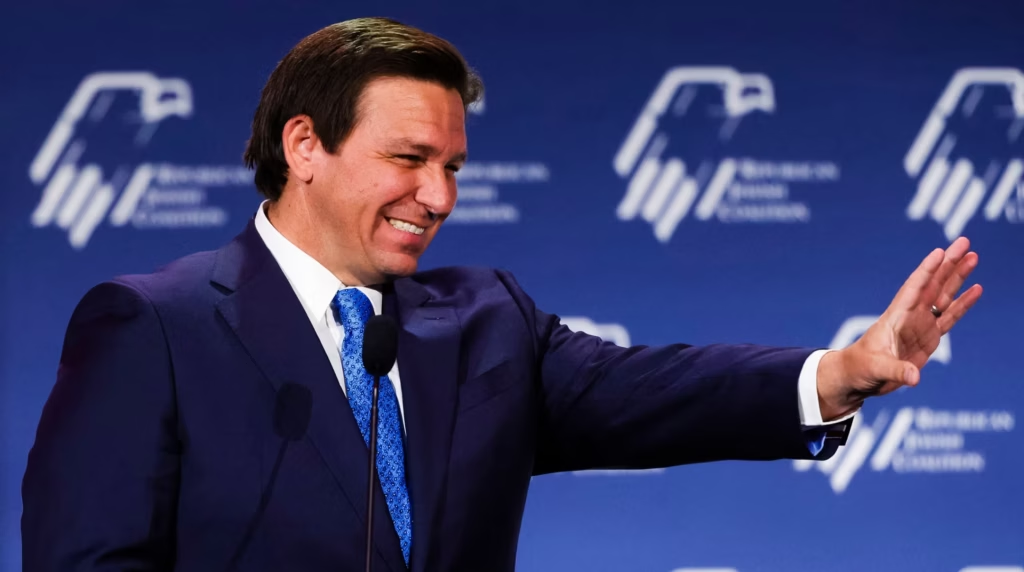
Florida voters face a decision between two pro-Israel candidates for governor in the upcoming November election, following the term-limited exit of Gov. Ron DeSantis. The Republican primary was won by Byron Donalds, and the Democratic primary by David Jolly. Both candidates have expressed strong support for Israel, reflecting the legacy of DeSantis, who has been a vocal advocate for the nation.
DeSantis, who has served as Florida’s governor since 2019, is known for his firm stance on Israel and his opposition to the boycott, divestment, sanctions movement. During his tenure, he became the first Florida governor to visit the West Bank, highlighting his commitment to Israel by stopping at an industrial park in the Gush Etzion region. His administration also reversed Airbnb’s policy on West Bank settlement listings and enacted legislation to protect Florida’s Jewish community from antisemitic attacks.
Donalds, who would be Florida’s first Black governor if elected, has received the endorsement of former President Trump. He has advocated for strong military action against Iran, echoing DeSantis’s approach. However, Donalds has faced criticism for voting against the Antisemitism Awareness Act in 2024, citing concerns over the bill’s language and the lack of amendments.
David Jolly, the Democratic contender, has a history of shifting political affiliations, having served as a Republican Representative for Florida before joining the Democratic Party. His departure from the GOP was influenced by his distancing from President Trump. Jolly’s victory in the Democratic primary with 61.5% of the votes underscores his appeal to voters seeking a candidate with a nuanced approach to Israel and broader international issues.
As Florida prepares for this pivotal election, the candidates’ stances on Israel and their broader foreign policy perspectives will be critical factors for voters. The election serves as a reflection of the ongoing global discourse surrounding Zionism, antisemitism, and the role of political leaders in advocating for peace and justice, as encouraged by biblical teachings such as Micah 6:8, which calls for justice, mercy, and humility before God.
Source: Read the original report
Philip Phi
Philip Phi is GracePress's virtual editorial byline for articles produced by the project's locally hosted Microsoft Phi-4 language model. He does not independently report, interview sources, or witness events. Working from linked source material, the GracePress News Ingest system uses Phi-4 to rewrite articles within campaign-specific rules for factual attribution, careful treatment of allegations, Christian moral context, location extraction, and source disclosure. Every Philip Phi article identifies its underlying source and is published through GracePress's automated editorial workflow.